Book Review: Stakeknife's Dirty War - tales of collaboration and sacrificing of informers
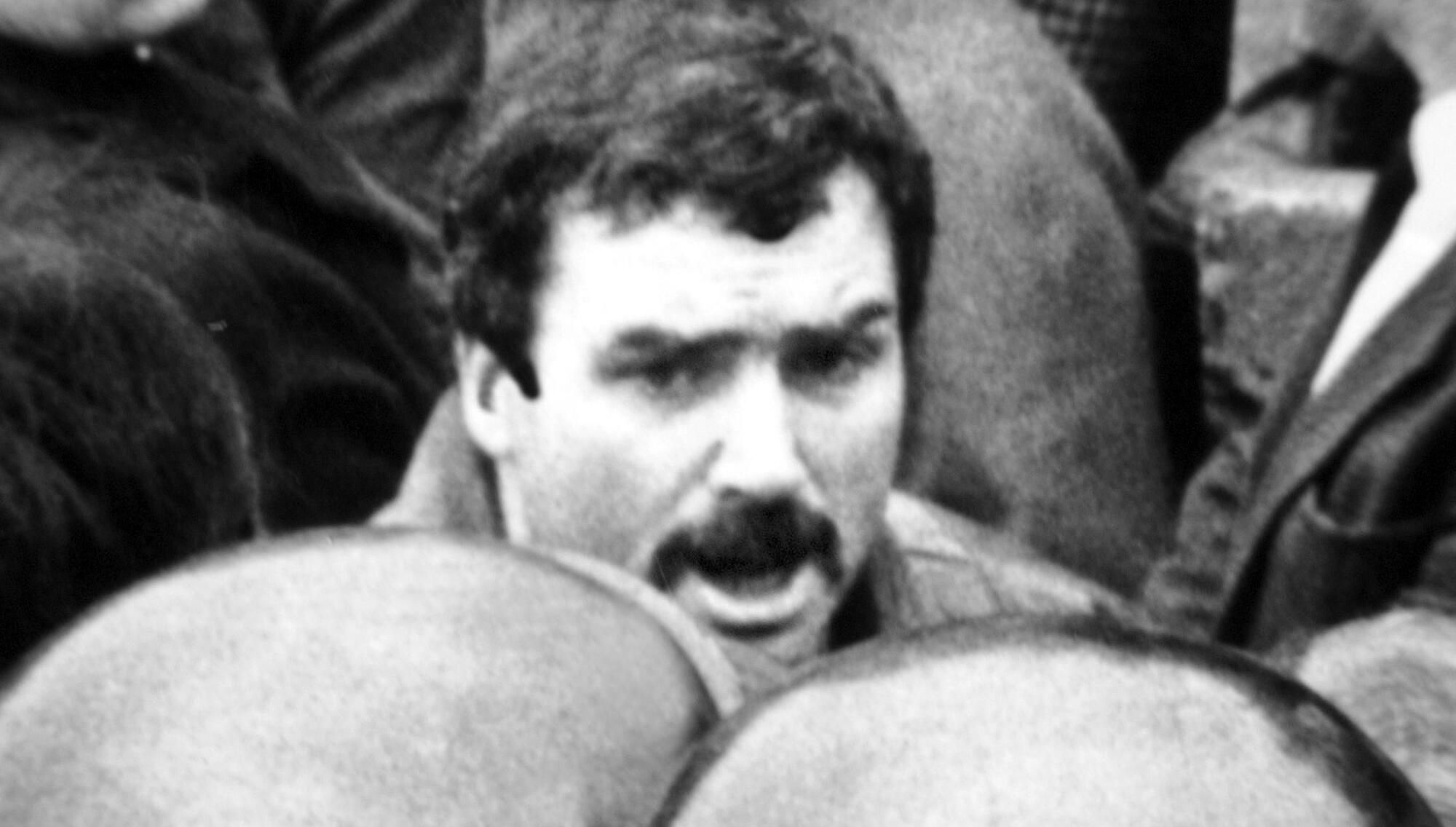
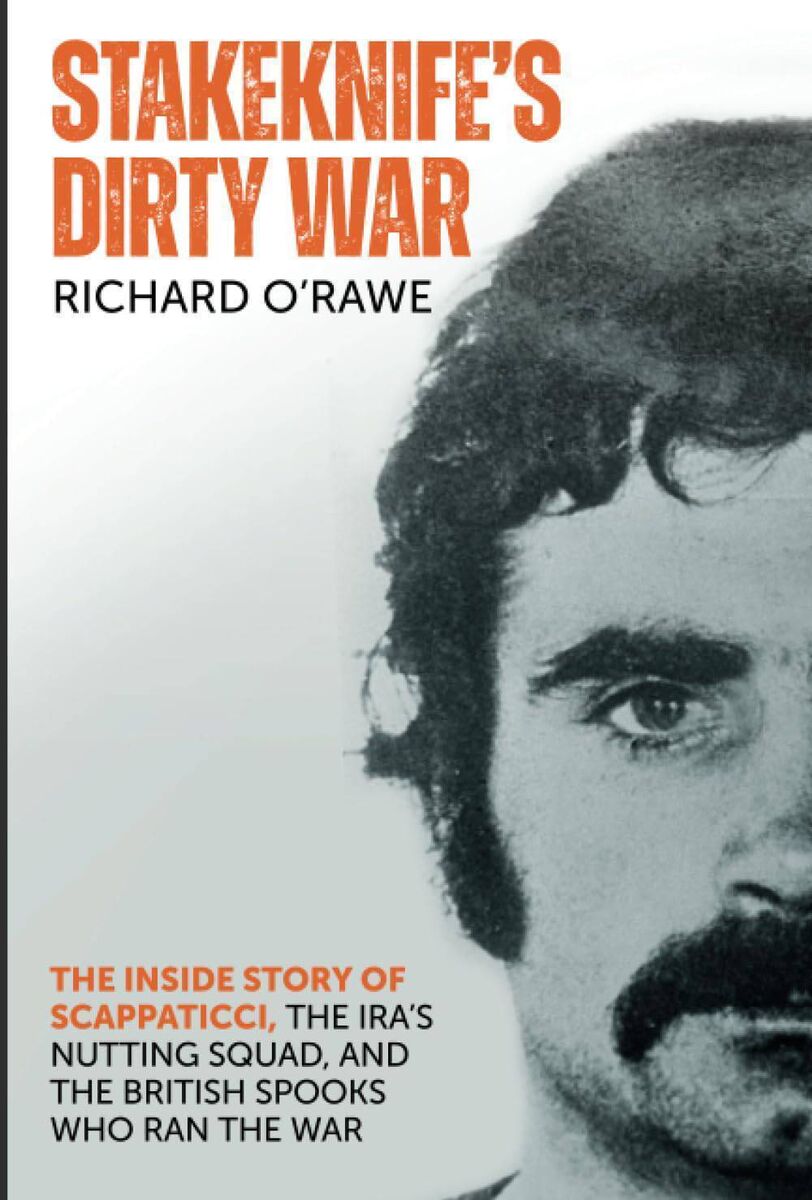
Alfredo 'Freddie' Scappaticci, codename 'Stakeknife' (circled) pictured at a republican funeral addressed by Sinn Fein's Martin McGuinness in 1987 - and later exposed as the British Army's top mole inside the IRA.
- Stakeknife’s Dirty War
- Richard O’Rawe
- Merrion Press, €17.99
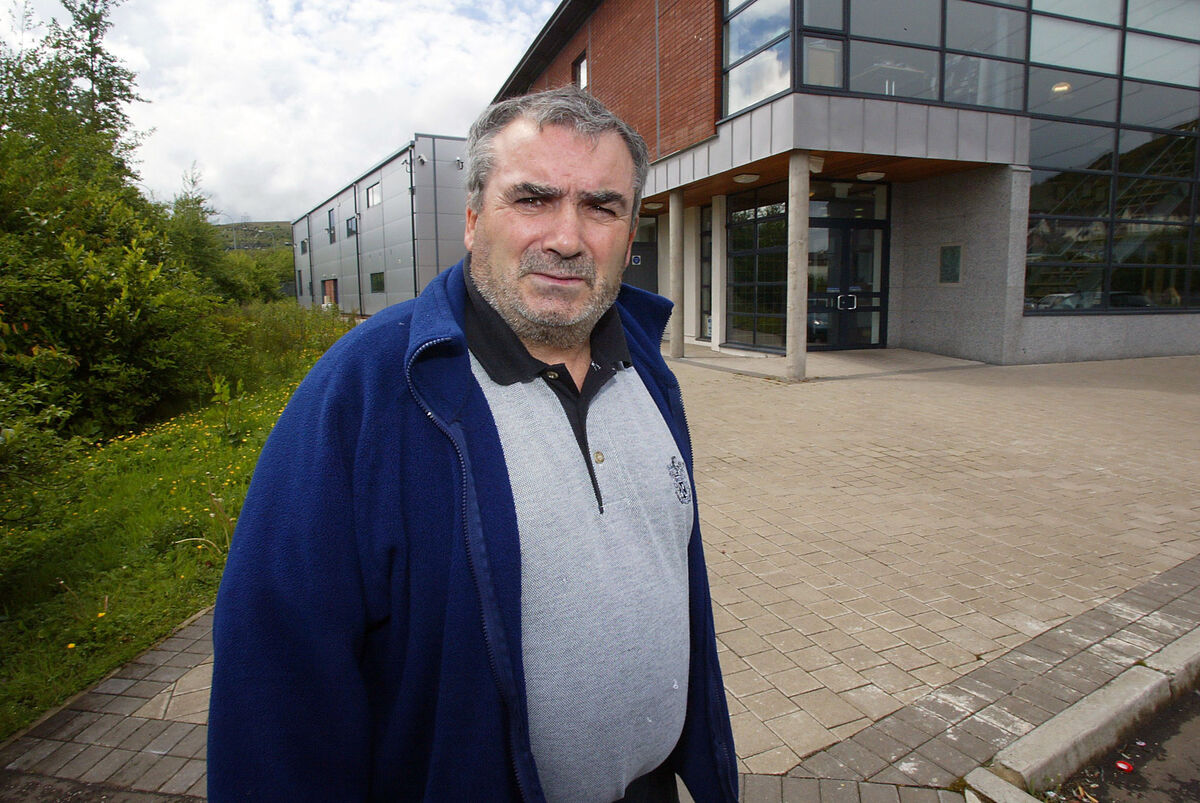
John Corcoran’s body was found in a sleeping bag on a road outside Ballincollig, Co Cork, on March 23, 1985.
He had been a member of the IRA, and had for some time been informing on the organisation to the gardaí. He had gone missing a few days previously.
It is believed that he was lured to Kerry where he was interrogated and shot.
Sean O’Callaghan, who was a high-level garda informer in the IRA, afterwards maintained that he had warned the gardaí that Corcoran’s life was in danger.
There has always been a major suspicion that the gardaí sacrificed Corcoran’s life in order to maintain O’Callaghan’s cover as the latter was a highly valuable source of information.
Such a vista would have the gardaí deciding who among their agents would be allowed to live and who would be sacrificed to die. It is the only known incident of this sort of thing arising south of the border during the Troubles.
Richard O’Rawe’s book illustrates how, in the North, this callous attitude towards the lives of informers by the British security apparatus was widespread.
Up to three dozen people, most but not all of them informers, were killed by the IRA as informers despite the British having prior knowledge that their deaths were imminent.
In nearly all cases, British security services declined to intervene to save lives in order to protect the jewel in their dirty war with the Provos — Freddie Scappaticci, codenamed Stakeknife.
And for many of those who died, their executioner was usually Scappaticci, a fellow informer, weeding out touts on behalf of the IRA army council, while he was the biggest, most valuable tout of them all.
Scappaticci’s activities had such repercussions that a special investigation known as Kenova was set up in 2017 to examine his activities for the possibility of bringing criminal charges against anyone, including members of the security services.
The investigation is due to report in the coming months, but has already been beset by repeated delays.

O’Rawe is a former IRA member, who was the spokesperson for the prisoners in the H-Blocks during the 1981 hunger strikes.
His contacts in the IRA, and the broader Republican community, provide ballast to this account of Scappaticci’s activities and the wider impact of the intelligence war between the British and the Provos.
Scap, as he was known, enjoyed a meteoric rise within the Provos before being recruited as an agent. When the security unit was formed in the late seventies, he was given the job of deputy head. His boss, John Joe Magee, is also believed to have been a long time informer. If you ended up in a room with Scap and Magee, the chances were you wouldn’t be going home. The unit was known as the ‘nutting squad’ because those who encountered it usually ended up being shot in the nut, or head.
“Most of the victims had two bullet holes in the back of their heads, the second bullet making sure of the kill,” O’Rawe writes. “Given the strategic importance, infiltration of the ISU would become a major priority for British intelligence.”
O’Rawe doesn’t get to the bottom of how Scap was recruited. There is speculation that he had been caught having sex with a minor. Another theory was he wanted to get revenge on somebody senior in the organisation.
Whatever the reason, he managed to go undetected for over a decade, during which time he had unprecedented access to the inner workings of the Provos.
In this respect, O’Rawe does not shy away from the possibility that the informer may have saved lives, even if he was believed to have been personally responsible for many murders himself.
A number of different sources, including some from the security services, are adamant that Scap would have tipped off his handlers whenever an informer was due to be interrogated. Usually, nothing was done and the informer left to his fate. Sometimes, the person who was tortured — often to the point where he would admit to anything — wasn’t an informer at all. Either he was set up by Scap on behalf of the British or he was just wrongly suspected. In at least two cases, the Provos admitted decades later that they had executed the wrong man.
What comes across with chilling regularity in this book is the casual disregard for lowly operatives in the conflict from both the Provos and the British.
“With this cancerous ethos at the heart of policy,” the author notes, the British forces “did not seem to have any trouble turning a blind eye to Scappaticci’s involvement in the series of murders of British citizens”.
The author also examines whether the main men in the nutting squad were the only high-level informers in the Provos. Here, he delves further into a long-floated theory that Martin McGuinness may have been an even higher-level tout.
One IRA commander in Derry put it like this: “See, years ago if somebody said to me that Scap was a dodgy boy, I’d have said you’re full of shit. Same thing with Martin. In fact, if somebody had told me Martin was a tout, I might have shot his accuser. Not so sure now. People are afraid to say anything about Martin McGuinness but everybody is saying the same thing now, they’re not saying it loudly but they’re all saying it.”
Ultimately, O’Rawe concludes that there is not definitive proof that McGuinness was a tout and he is “entitled to the presumption of innocence”.

Informers have always been regarded with particular opprobrium in the Irish story but what comes across in this highly readable and insightful account is that they are not all the same.
Scap gained huge wealth from his activities and even when he was uncovered, he escaped the fate of all his fellow touts.
Others, like Joe Fenton, a West Belfast estate agent, was, like many, given the choice of a prosecution with a long prison sentence or working for the crown.
Fenton tried to extricate his young family from the whole thing by applying to emigrate to Australia.
The British ensured that he wouldn’t get a visa as he was too useful to them, and he continued to be, right up to the time he was rumbled, tortured, and shot dead.
Caroline Moreland found herself in a similar situation. She allowed her west Belfast home to be used by the IRA. In July 1994, a rifle was found there.
A mother of three, she was suffering from terminal cancer and didn’t want to spend her last years in prison. She co-operated with the British and the following month the nutting squad shot her dead.
O’Rawe speculates that the killing was as much about letting the hard men in the organisation know that nobody was going soft despite a pending ceasefire.
“Nothing,” O’Rawe writes, “crystalises the wickedness of the IRA more than this appalling killing.”
And that’s from a man who spent a good chunk of his younger self either working for the cause or spending time in prison for it.
This book demonstrates that the dirty war, as it has come to be known, was filthy, particularly in how it further cheapened human life in a pointless conflict.

Subscribe to access all of the Irish Examiner.
Try unlimited access from only €1.50 a week
Already a subscriber? Sign in