War correspondent Sally Hayden: 'In a crisis situation, you will always find love'
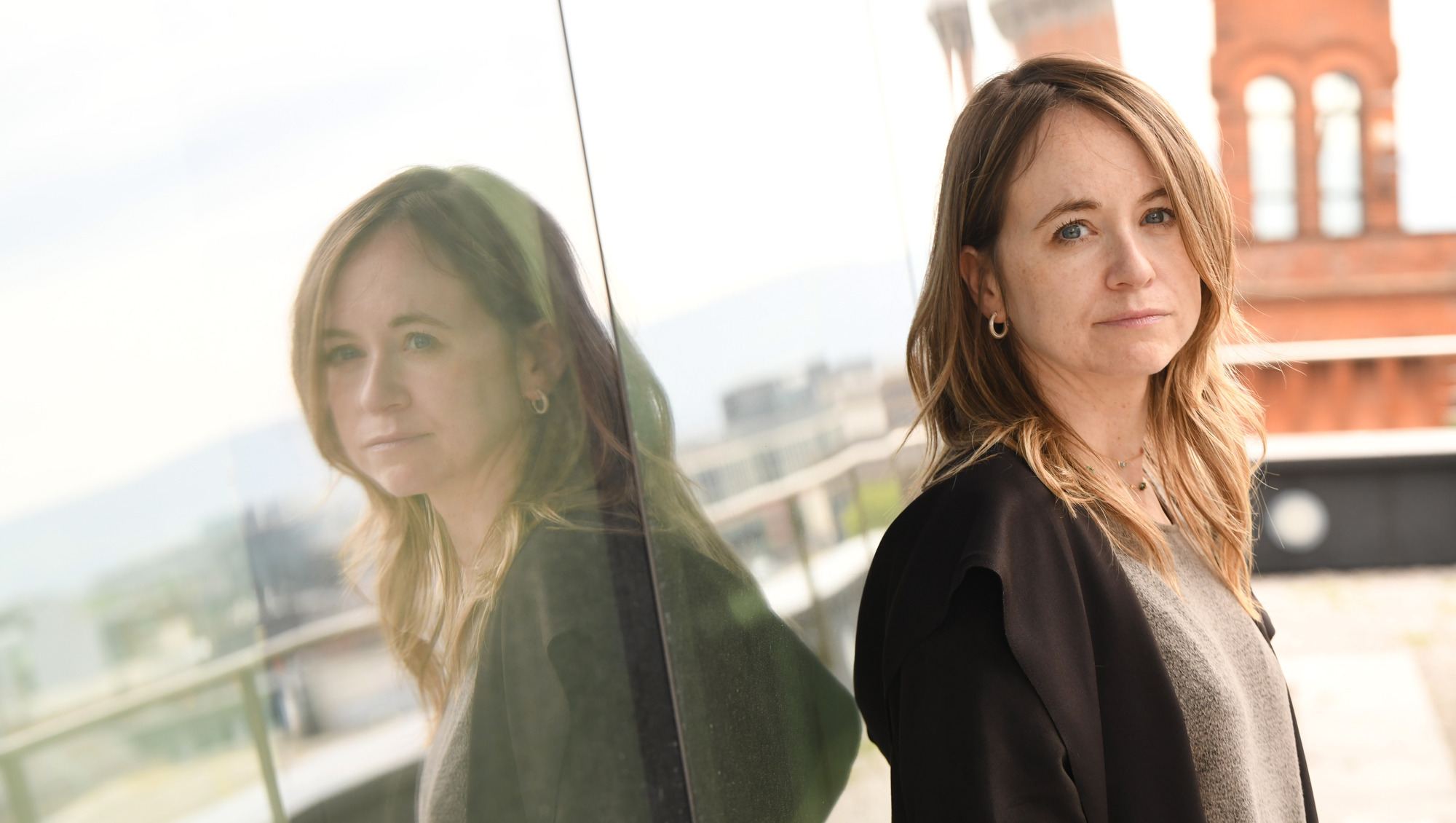
TIME OF REFLECTION: Sally Hayden, author and journalist, will discuss her latest book at the West Cork Literary Festival on July 13. Picture: Moya Nolan
The Dublin writer has lived in the Lebanese capital for more than two years, and the bookshop had got an advance copy of and circulated it among locals.
Hayden had misgivings about doing the event, with Lebanon under renewed bombardment from Israel since the end of February. “I was thinking, ‘Well, is it kind of strange to do an event with the war ongoing, and to even think about books?’
“I was also thinking, ‘Does this feel a bit irrelevant’, or ‘what will they even think of me having written this?’, and, actually, it was the most beautiful event that I’ve ever done,” she says.
In the book, we meet couples separated by war, orphaned survivors of the 1994 Rwandan genocide who have formed ‘artificial families’, Nigerian families traumatised by the murders and enslavements carried out by Boko Haram, and gay soldiers who fight for their homeland when they dare not hold hands in public.
The book follows Hayden’s 2022 Orwell prize-winning , which looked at the experiences of refugees seeking sanctuary.
is, in some ways, not just a meditation on love, but also a powerful defence of the innate decency of humanity, even against all of the overwhelming evidence to the contrary.
That bookshop event in Beirut last month was a beautiful moment, she says, because the attendees told her they were grateful that somebody was showing not just a one-sided version of what it’s like to live through war and hardship, but also the complexity of life in adversity.
I first met Sally Hayden last December, in Beirut, when we were accompanying Taoiseach Micheál Martin to visit Irish Unifil troops stationed in Camp Shamrock. After our doorstep interview with Mr Martin, he took her aside, telling her how much he admires her work.
Former president Michael D Higgins is also a fan, and it has been reported President Catherine Connolly has been seen reading .
Hayden is thoughtful, low-key, almost shy, and seemingly entirely without ego. She says when she was young, she read “all the time”, initially fiction, before discovering non-fiction, and she became “quite obsessed with the news” after the 2003 US invasion of Iraq, when she was 13.
In transition year, an essay competition won her a week’s work experience in the , and in university she began writing for the student paper, but “only in second year. In first year, I was too shy to approach them”.
After university, she worked in various internships, including at the BBC in London and at CNN. Winning the Simon Cumbers Media Fund award brought her to Malawi and later to Rwanda.
Although she had long believed she was the first journalist in her family, she recently discovered her great- great-grandfather was Tim Harrington, who was born in Castletownbere in 1851, and in 1877 founded the nationalist and pro-tenant newspaper the . He later became lord mayor of Dublin, serving from 1901 until 1903.
Like many reporters, Hayden routinely falls a little out of love with her vocation, and says she writes to try and understand the world.
“A lot of this book is me making sense of what I’ve witnessed and what I’ve seen over more than a decade now as an international reporter.
“I think the one thing about crisis situations is that love always exists in them; you always see love in these situations.
“When you’re in these situations, people always begin talking about love. Even if they don’t explicitly say they’re talking about love, they are. It is always present.”
- Sally Hayden will discuss her book at the West Cork Literary Festival on Monday, July 13. See westcorkmusic.ie. is available in bookshops now.
BOOKS & MORE
Check out our Books Hub where you will find the latest news, reviews, features, opinions and analysis on all things books from the Irish Examiner's team of specialist writers, columnists and contributors.