Cork Midsummer review: 1975 gets bodies moving to sounds of the Bothy Band
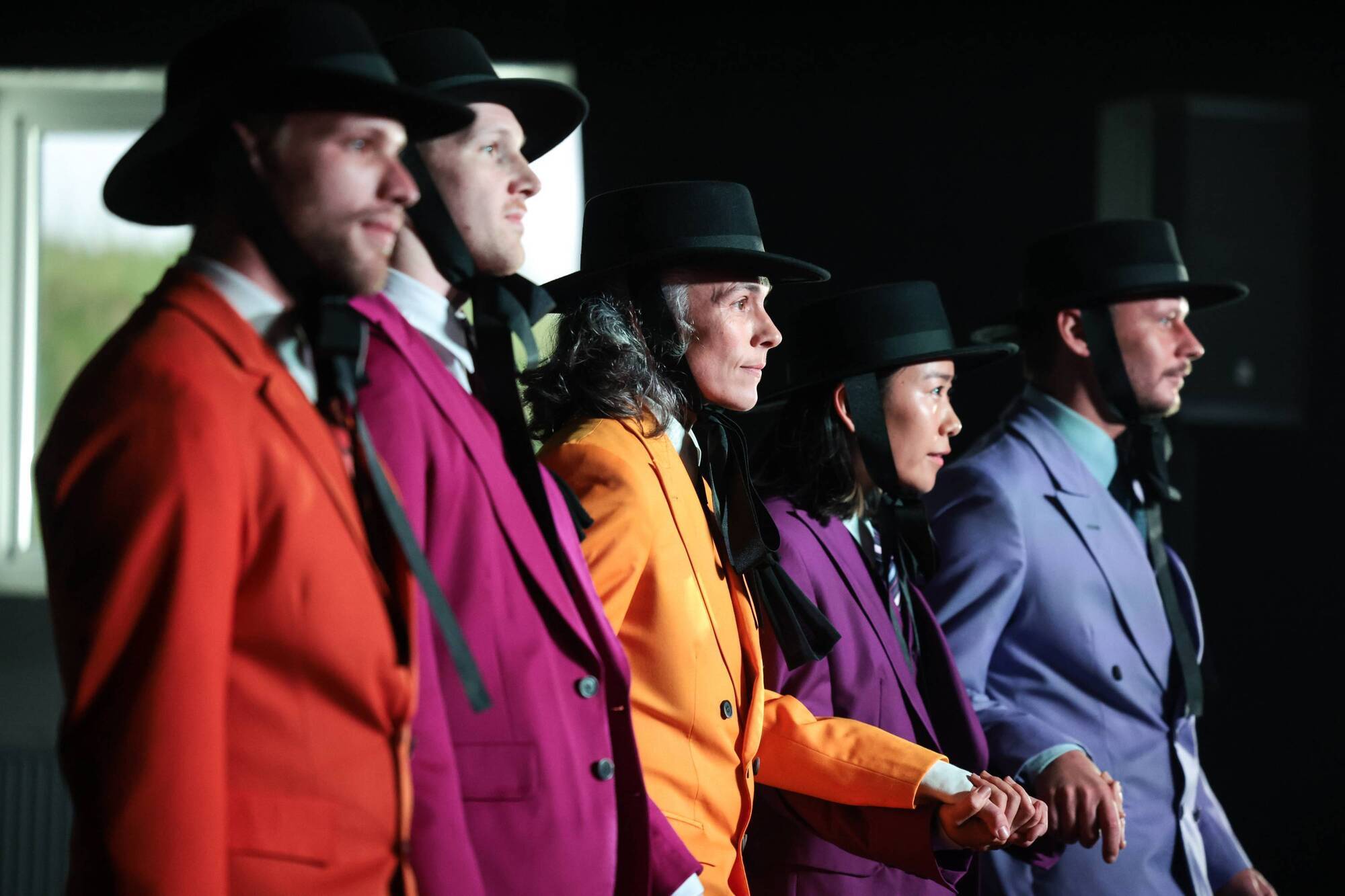
1975/Naoi Déag Seachtó Cúig is at Cork Opera House for the Midsummer Festival. Picture: Emilija Jefremova
Cork Opera House The choreographer Michael Keegan-Dolan's work has long been about narrative and movement entwined: dance and story and myth. From shows like through he has for over two decades now dug – sometimes literally – into legend and memory, place and culture, to create wild and raw vistas of dramatic, elemental movement.
If dance is about the body speaking, Keegan-Dolan’s work has included him actually speaking too, nowhere more so than his recent stage autobiography, . Text, too, was central to 2024’s a work packed with Romantic poetry and folksong.
With the latest work from his Teac Damsa company, staged at the Opera House for the Cork Midsummer Festival, we are more in the territory of 2019’s which showcased Cormac Begley’s virtuosity on the concertina. Here, however, the music is recorded, not live. We get to hear in full the Bothy Band’s debut, which gives the piece its title. Narrative is loosened. This is Keegan-Dolan the responder rather than the storyteller, in a more intimate undertaking.
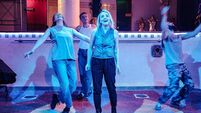
The choreography unfolds with lightness and fluidity in dialogue with the album. The dancers – Rachel Poirier, Aki Iwamoto, Danuel Myers, Amit Noy, James O'Hara, Jimmy Southward and Holly Vallis – appear in brightly coloured suits, initially topped with black wide-brimmed hats. We find them in a row, on wooden classroom chairs, sharing a shot of clear liquid around between them in comical fashion. is, after all, among the opening jigs on the album.

Later, as Triona Ni Dhomhnail sings “Still I love him, I can't deny him/I'll be with him wherever he goes,” an absurd and bawdy pieta is recreated. has a fitting sadness and yearning, as bodies appear wind- or wave-tossed in exile. That visceral quality one might expect emerges later, as hands grab at flesh through sweat-soaked clothing, melting and grappling into a crowded tangle.
Between the jigs and the reels, literally, the sound is refracted, distorted, or paused. Sometimes those pauses are filled with deserved applause, at others the chairs are rearranged for the next tableau.
The piece lacks some of the startling eruptions of character and strangeness that are often Teac Damsa hallmarks. Yet there is a purity in that restraint, the simplicity of the staging focuses attention on bodies in motion, the collective act of performance. It’s witty too, alive to the Bothy Band’s playfulness.
A final coup de theatre reminds us that this is special. As the curtain falls away, the backstage area is revealed. One could call it a gimmick, but it’s an effective gesture: a reminder that something rare has been created between dancers and audience. A beautiful illusion, its subtlety fully apparent only when it is suddenly and starkly broken. For an hour or so, takes us somewhere else.
- Ends Sunday