Tom Dunne: Pretty In Pink and the soundtracks of my life
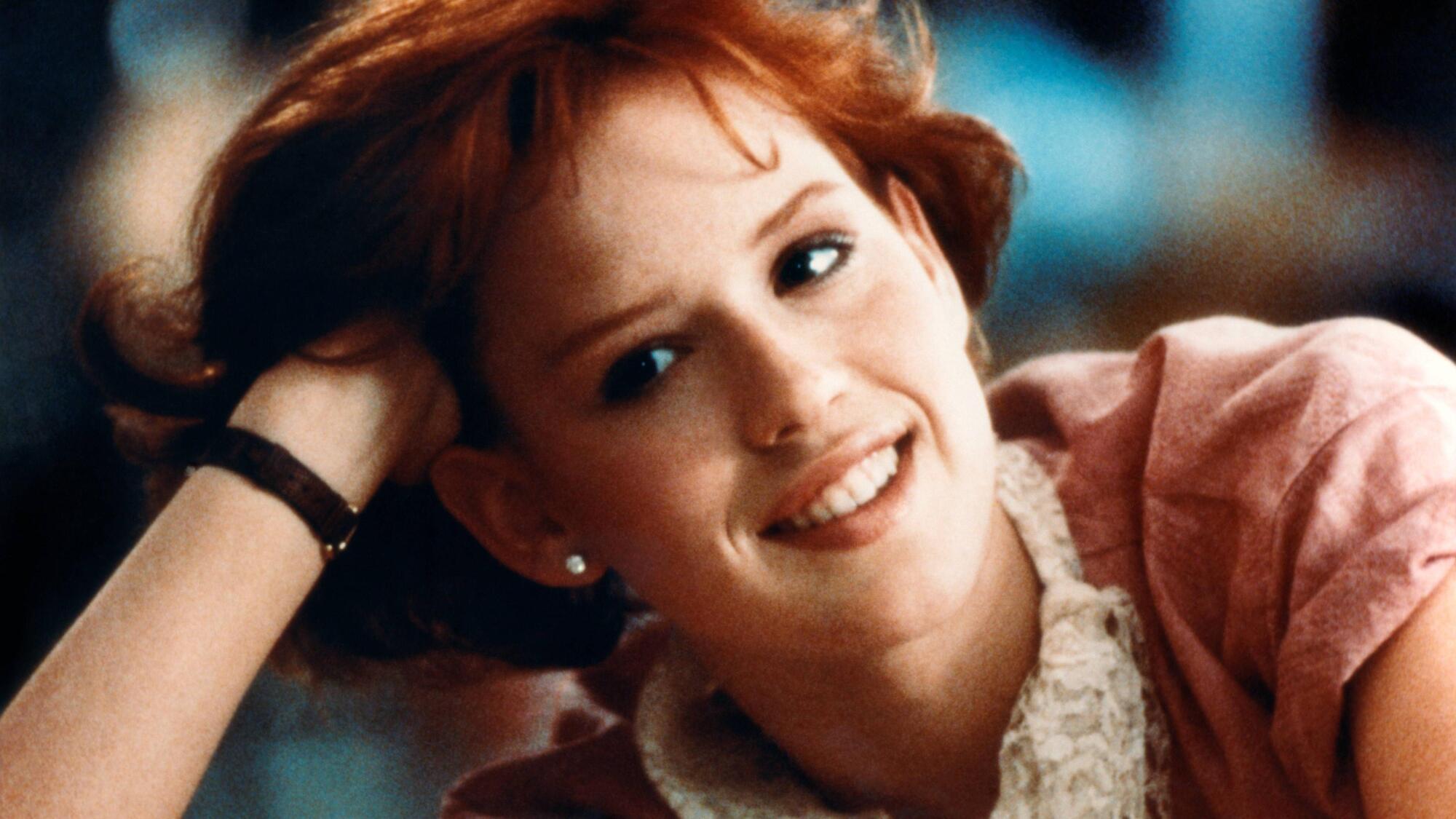
Molly Ringwald in a scene from Pretty in Pink in 1986. She had become something of a muse to director John Hughes.

The soundtrack is getting a 40th anniversary re-issue at the minute on the basis of being, as said, “amongst the most brilliant in modern cinema”.
I can’t disagree with that. Forty years on, the film, I kind of remember; the soundtrack, every song! Only question: is there vinyl?
It is a film by John Hughes. In reading more about him I was surprised by how many of his films I absolutely adore. , , , and, above all others, are films that I will watch each and every time they are on.
But what is even more surprising is how many of them, for me at least, pivot on the songs from being simply memorable to unforgettable. apart from Steve Earle and Emmylou Harris hinges on the Stars of Heaven’s version of . Ray Charles’ illuminates .
And that is not even including the trilogy of teenage ‘coming of age’ films on which so much of Hughes’s reputation sits. It started with in 1984, the first film in which he cast a young Molly Ringwald, this time opposite the equally young John Cusack. The soundtrack — Altered Images, The Vapours, The Specials — was spectacular.
Its follow-up, in 1985 was a superior film. The soundtrack was less impressive but its central song, Simple Minds' version of was both the making of the band in America and the film at the box office. Would we now recall a film about five students on detention otherwise?
Hughes at this stage was becoming increasingly fascinated by Ringwald. Observers say she had become something of a muse to him. He decided to write his next film, , specifically for her and the fact that he was listening to her ideas — she suggested the Psychedelic Furs track to him — speaks volumes.
It makes for an unusual film, one in which the female lead part is written entirely by a man. Ringwald became the poster girl for a huge late teens, early 20s female audience. They identified with her while fancying the male cast, Andrew McCartey, John Cryer, James Spader and maybe somewhat surprisingly Harry Dean Saunton, the dad!
But for everyone else it was the soundtrack. The Furs, Echo and the Bunnymen, The Smiths, OMD, New Order, Suzanne Vega, Nik Kershaw. It was “very heaven”, as a poet might say. It also put the film firmly at the forefront of all that was cool musically in 1986, even if the film itself wasn’t quite that cool.
I remember at the time thinking that at last the outside world was catching up with all that was brilliant in the music world, waking up to a kind of music that we’d known about, in our bedsits and damp venues since about 1980. “Our secret is out,” we thought, but secrets like this were always going to escape.
Hughes of course is not alone in making music central to his films. It would be hard to imagine either a Quentin Tarantino movie or a Sofia Coppola one without their wonderfully informed music choices. Name one of their films and it will probably a be a song that comes to mind first.
With Tarantino can you imagine without The Delfonics' or Bobby Womack’s ? without Dick Dale’s ? And for Coppola can you imagine either or without Air?
, , , , … I could go on. Films that you simply can’t separate from their soundtracks. Films your memory can recall from one simple, unforgettable coda.
Credit for this entire genre, at least in the modern world, I lay at the feet — and feel free to contradict me — of Dennis Hopper. The soundtrack is essentially the music he was listening to in 1968. Cool dude, cool soundtrack, no surprise there.