Pat Galvin: 'I photographed Rory Gallagher's famous Cork City Hall gig in 1974'
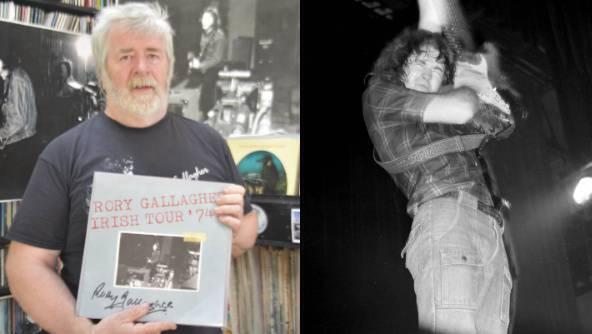
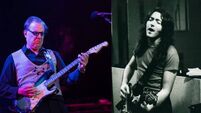
Pat Galvin holding a signed copy of the Irish Tour '74 album; right, one of the images of Rory Gallagher he took in Cork City Hall on that tour.
In January 1974, blues guitarist Rory Gallagher ripped through an incendiary set at Cork City Hall. He played like a wizard conjuring with lightning and those lucky enough to be in the venue overlooking the River Lee were immediately aware they were witnessing something special: a genius in full flow, a maestro at the height of his powers.
“The thing with Rory is that it was never the same gigs two nights in a row. He was always pushing the envelope. He wasn’t afraid of going to the edge,” recalls photographer Pat Galvin, who was at City Hall that night, snapping Gallagher as he worked his miracles on stage and who would go on to snap artists such as Microdisney and U2.
The concert would be immortalised on Gallagher’s album — widely regarded as one of the greatest live LPs of all time, and a record that has become a sacred relic among connoisseurs (it has charted twice, 40 years apart, in the United States). Now, Gallagher fans can come together to celebrate its legacy at a new exhibition that will bring things full circle when it runs at Cork City Hall from June 11 to July 3.
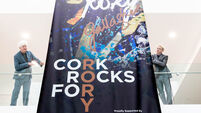
'On The Boards of City Hall' is part of the Cork Rocks for Rory event the council is staging across the city and will feature Gallagher’s very first guitar (a wooden acoustic given to him by his parents) and a recreation of his famous 1961 Stratocaster.
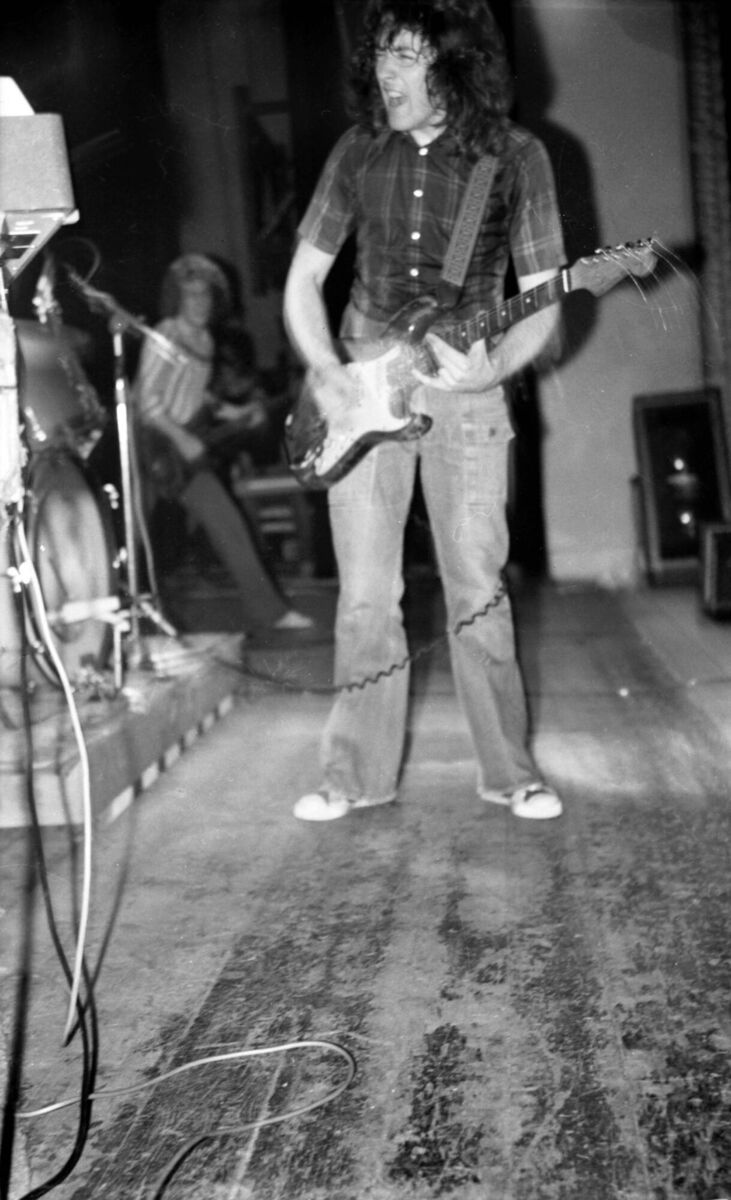
But pride of place will go to the photographs of the City Hall show taken by Galvin, who in 1974 was a fresh-faced sometime musician, DJ and photographer. He remembers the City Hall performance as something special: even as a young man, the native of Ballyphehane on the southside of Cork knew he was witnessing rock’n’roll history.
“Sometimes I’d be side of the stage. With the Irish tour, it was nearly all backstage,” he says. “You always try to move around, trying to get the optimal one. He is really, really into what he is doing. He’s absorbed. That comes across in the photographs. He’s not coasting at all.”
Rock photography in 1971 was not for the faint of heart. Galvin shot the show on an old school 120mm camera gifted to him by his mother which didn’t have a focus — you just pointed and clicked. He had to think carefully about what he photographed: film was expensive so you could not snap away to your heart’s content.
He didn’t even know if the pictures were any good: the moment of revelation had to wait until the images were developed at MacSweeney’s photography shop on the corner of Academy Street.
Galvin was a few years younger than Gallagher, but already a seasoned face in Cork live music. He roadied with his friends’ band, Smog, and was house DJ at the Shandon Boat Club.
He had also gone out of his way to make himself familiar to the bouncers around the big venues in Cork, so that he could slip backstage and photograph artists such as Gallagher at his leisure — though things would change when thieves made off with one of Gallagher’s guitars during a tour of the UK and his management became more serious about security.
“Because I was a roadie with a band, I consciously made my face known to all the bouncers. I’d walk up to the stage and go behind, from one side to the other. I did what I felt like. Up to the time Rory’s guitar was stolen in Sheffield, that was all cool. There was no such thing as a stage pass. Then the stage pass came in. That was the end of walking backstage.”
Gallagher's performances were like nothing else — a unique coming together of fan and musician. Rory had no airs and graces: he wasn’t striking a pose. His playing was raw and from the heart. Only later would Galvin realise how unique that made him.
“A Rory Gallagher concert was a party,” he says. “What surprised me afterwards, when I got to see other acts like Eric Clapton, Dire Straits, Frank Zappa, Santana… I was like, that’s it? I feel sorry for anyone who didn’t see Rory in his prime.”
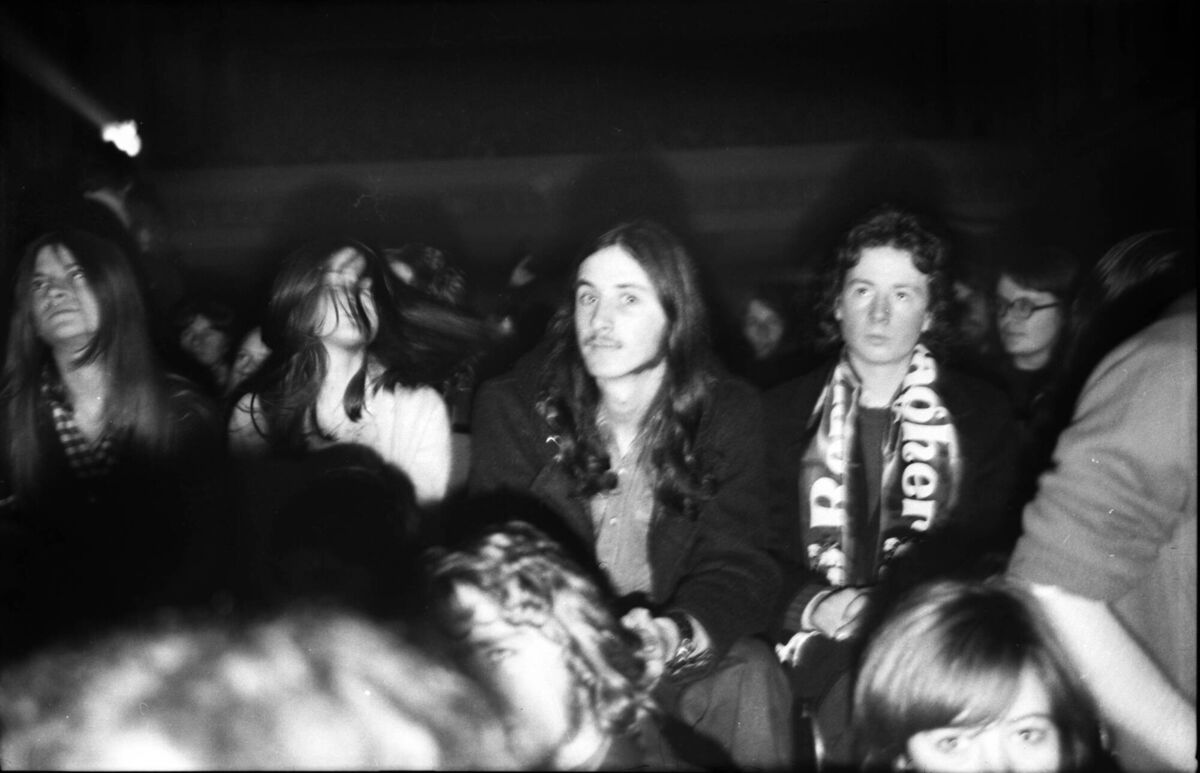
Gallagher was also a Cork person on the world stage — an all too-rare sight in the 1970s. “I grew up in an age where people were looking over their shoulder at what was happening in England. And then you had Rory come along and a few others like Van Morrison. You could be proud of being from Cork, you could be proud of being from Ireland.”
He wasn’t close to Gallagher, but he met him backstage after the Cork show. He recollects the contrast between the mercurial figure on stage and the softly spoken, retiring young man off it.
“I went up afterwards, thanked him. He was very graceful. Always very nice to his fans. That’s the paradox — total wild man on stage, off it… Even [Thin Lizzy guitarist] Gary Moore said that he was an incredibly shy person. He was very, very respectful to everyone. Michael Crowley in Crowley’s Music Centre was only two years older than Rory — but Rory always referred to him as 'Mr Crowley'. That was him.”
Gallagher wasn’t the only rock star he photographed. Years later, he was working in pirate radio when he became friends with Cathal Coughlan of Microdisney, who called to his studio on the northside of the city to congratulate Galvin for playing the Doors on Jim Morrison’s birthday (it had been a coincidence — he had no idea it was Morrison’s birthday). He was also one of the first photographers to shoot U2, who regularly played the Arcadia close to Kent Station. “I told Bono that they were going to be big,” he says. “He laughed at me.”
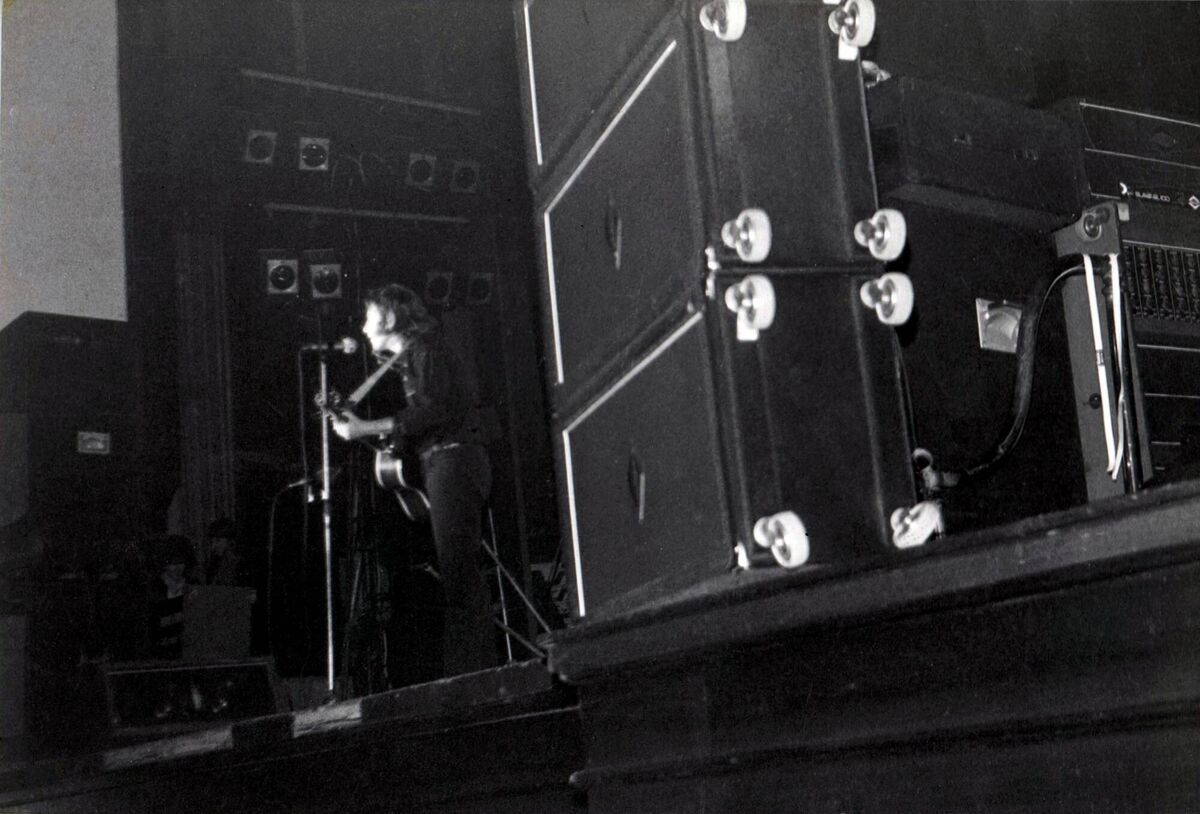
He is thrilled his work will be on view at the City Hall and feels Cork should do more to honour the legacy of Rory Gallagher. “I’m so happy. I’m not the only fan to feel the frustration. We should be celebrating his life in Cork, in his hometown, as he said [Gallagher paid tribute to Cork on the track ]. Cork Rocks for Rory should be an annual event.”
Why has Gallagher’s playing endured? Because it was real and unfiltered, says Galvin. At a time when so much in life is artificial, that authenticity burns brighter than ever. “The fact is that there is a certain integrity to his music — no slick showmanship, you got what you saw. When he was on stage, he wanted to see people's faces.”
- Cork Rocks for Rory takes place across the city from June 11. The On The Boards Exhibition is at the Atrium of Cork City Hall
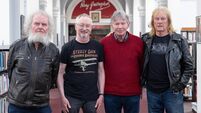
The 50th anniversary of Gallagher’s album is celebrated with an exhibition featuring the work of photographer Michael Putland, who also worked with The Cure, David Bowie and The Rolling Stones. The display will include handwritten lyrics from Gallagher’s own notes made during the recording of the LP.
Opening on the anniversary of Gallagher’s death in 1995, Cork Public Museum is expanding its pre-existing exhibition that celebrates Gallagher’s legacy. Additions include memorabilia from the Gallagher estate and a new audio visual instillation.
Some of Gallagher’s most iconic tunes will be recreated live by bands Tres Hombres, The Crew, Hot Guitars and Dying Breed, during this free concert.