Culture That Made Me: Cork musician Paul Dunlea looks back on Sir Henry's, and other touchstones 
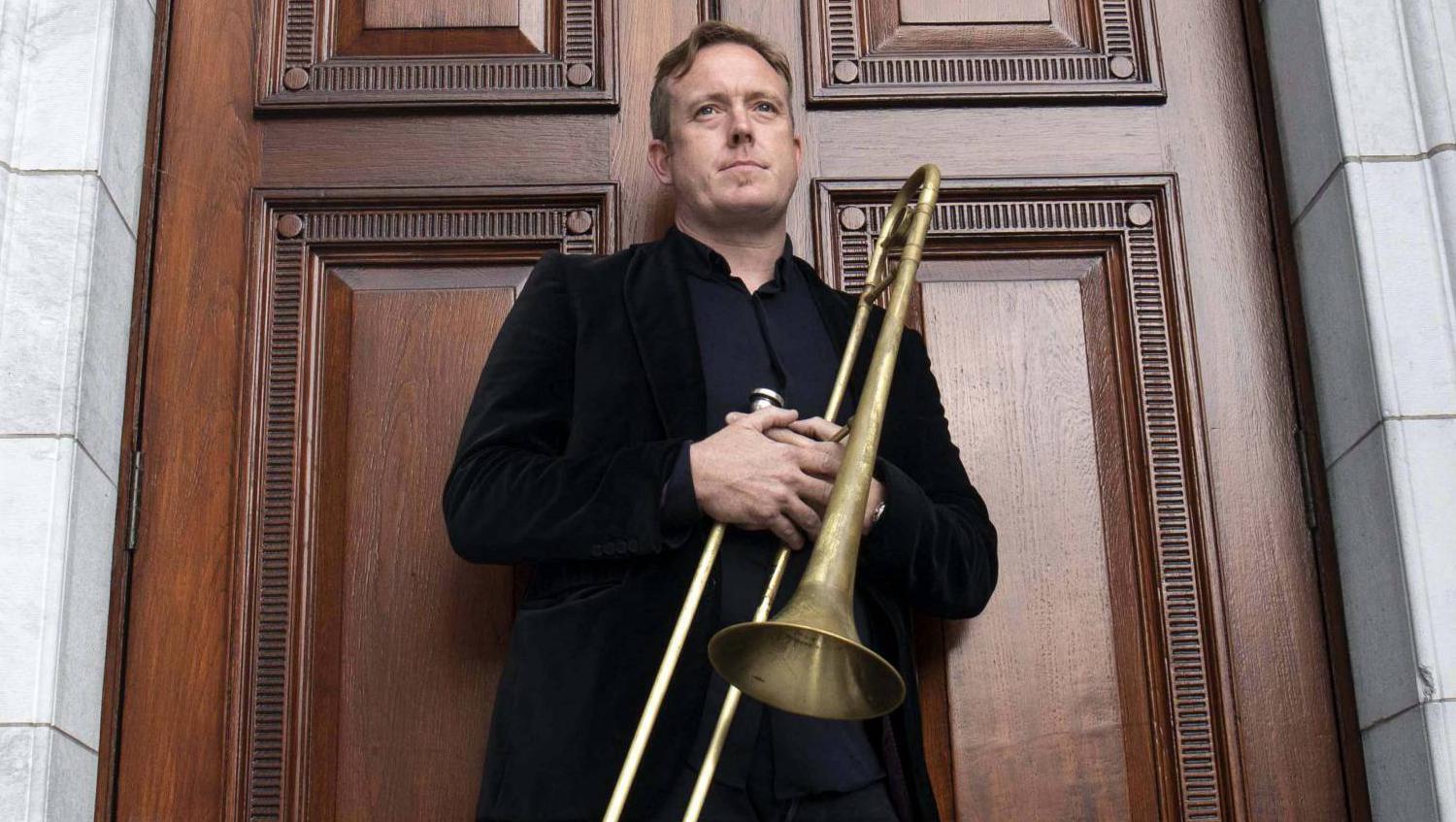
Paul Dunlea also includes Stevie Wonder, Herbie Hancock and a production of West Side Story in his selections 
Culture That Made Me: Cork musician Paul Dunlea looks back on Sir Henry's, and other touchstones 

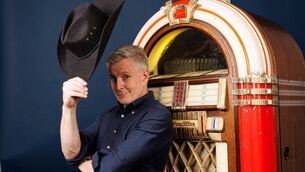
Paul Dunlea is curating lunchtime jazz gigs at Triskel, and is also playing at the Ballydehob Jazz Festival. Picture: Clare Keogh

Paul Dunlea, 46, grew up in Mayfield, Cork. He held the chair of principle trombone with the Band 1 Brigade – Irish Defence Forces from 2001 until 2022. In 2011, he released his debut album Bi-polAr. 

He has performed and composed music for Michael Bublé, Frankie Valli, Camille O’Sullivan and other music stars. He’s curating the Triskel Lunchtime Jazz Series, which kicks off with a session involving himself and keyboard player Scott Flanigan, 1pm, Saturday, March 28. 

He will also play at the opening concert of Ballydehob Jazz Festival on April 30 at Ballydehob Community Hall. See: triskelartscentre.ie 

Cork Barrack Street Band

I joined the Cork Barrack Street Band when I was six years of age. My earliest memory is from 1987, playing for Sean Kelly winning the Nissan Classic, which was like an Irish version of the Tour de France. 

The cyclists used to have to climb Patrick’s Hill a few times. The finish line was on the Straight Road and the band played for the prize giving, a fanfare when Sean Kelly got up on the podium. 

And I remember my first St Patrick's Day parade with the band trying to keep up. I was seven. My stride wouldn’t have been the longest!

The Prodigy 

The first time I had a Walkman, and I'd be on my own at 12-13 years old, was on the number 8 bus from Mayfield out to Wilton. I remember getting The Prodigy’s Experience and Music for the Jilted Generation on tape. Keith Flint was the front man, but Liam Howlett at the back was the genius coming up with all these beat patterns. Even though it was dance music, it was their rhythmic patterns that blew my mind.

Phil Collins

The first record that blew my mind from a brass point of view was Phil Collins’s Serious Hits … Live! album. It had an amazing horn section called the Phenix Horns. They weren't members of the band; they were subcontracted in, joining them on their live tours. There were instrumental tracks on the album, just the horn section or the band’s rhythm section that you wouldn't have seen elsewhere at the time. I remember there was a carousel on the album’s cover. I burnt a hole through that CD.

Sir Henry's 

Sir Henrys in Cork. 
Sir Henrys in Cork. 

At 18-19 years old, I used to go to Sweat at Sir Henry's – Greg & Shane, Stevie G, Keith Synott, all those lads. I went to the back bar on a Friday night because it was hip-hop heavy. I was mad into that stuff. Henry's had its own vibe. There was always a mystique about this magic room at the back at 2am. This Narnia that may or may not be there! It was a special time, something unique to Cork, busloads of lads and ladies coming from Limerick and Dublin every weekend. The club scene in Cork was the Irish version of what was happening in Manchester at the time, but it was absolutely its own thing.

Trombone idols

Growing up, I idolised JJ Johnson, Frank Rosolino and Bill Watrous. JJ was a pure jazz bop player. Frank Rosolino was flamboyant. He made a noise that was unmistakable. Bill Watrous was a session guy on TV shows like CHiPs and Starsky & Hutch. The breakthrough improvising scene that I was mostly interested in from the States came from the East Coast, whereas all the session work, film stuff and commercial pop, horn section-type stuff was LA-based. There were two schools. These three guys essentially could have played either school. They were amazing.

Stevie Wonder

 I saw Stevie Wonder live last year in Manchester. The man is in his seventies and still he played for the bones of two and a half hours. I went into the concert with a wish-list of tunes he might do, but he's got so many bangers that he didn't get through half of my list. He played at a new music venue, an indoor arena, next to Manchester City's Etihad Stadium. It's a big black box. There were 25,000-30,000 people there and he blew the roof off the place.

The show must go on

I played with the band Fred for a few years. I remember playing with Fred at the Opera House and we sold it out. There was a water shortage in Cork at the time. There was an absolute bang of BO inside the venue on the night. No one had had a shower in a few days.

Herbie Hancock at the Savoy

Herbie Hancock. File picture: Larry Busacca/WireImage

I remember seeing Herbie Hancock in the Savoy in 2008. He's played the Cork Jazz Festival a number of times as well, but when he does the Jazz Festival, it's a formal, sit-down concert type. Whereas in the Savoy, it was a stand-up concert, more of an informal rock out. He played a keytar, the electric keyboard that looks like a guitar. It was mind-blowing to know that Herbie Hancock was playing on Patrick’s Street in a place that was an Adventureland for kids two years beforehand.

West Side Story

 I saw West Side Story in New York when it was revived for the 50th anniversary. I’ve played in West Side Story a bunch of times, but in Europe they always condense the orchestra – possibly for budgetary reasons – so to see it in New York with the full force of the orchestra as imagined by Leonard Bernstein was incredible. I'm a big fan of Stephen Sondheim. His lyrics are one thing, but it's the melodies that are mind-blowing. The harmony can be complex, but the melodic line is as simple as ever. They’re just gorgeous.

ESPN: 30 for 30

I’m a massive sports fan, so I was drawn to watching all those ESPN 30 for 30 documentaries. They went across a broad spectrum. The one that caught me was The Two Escobars. It’s about Andrés Escobar, the guy who scored an own goal against America in the ’94 World Cup, and Pablo Escobar [cocaine baron, no relation]. Those documentaries are so good. It doesn't matter what the subject matter is or what sport. It could be about curling or two flies walking up a wall, or a referee taking bribes, or a college doping up their athletes, you’re drawn in straight away.

Coen Brothers 

Frances McDormand in Fargo.

I’m a massive Coen Brothers fan. Films like The Ladykillers. Their dark humour is amazing. They set these dark contexts where there's no space for levity and then a goofball thing happens, like someone's about to get hacked to bits, but then someone will say something that's completely out of leftfield. Like there's a scene in Fargo. A dude has gone missing. The cops are looking for him. Two lads are after getting rid of him in a woodchipper. Behind them is 100 feet of red snow because of trailing blood. There's a foot with a Converse runner sticking out of the woodchipper and they're trying to convince a cop they haven't seen him!

Wind of Change

 Wind of Change by Patrick Radden Keefe is a really cool podcast. It's a true story about how the Scorpion's tune, Wind of Change, was written towards the end of the Cold War. It’s about how the CIA apparently used music as a kind of subliminal delivery tool. Seems preposterous but there’s probably a grain of truth in there.

x

More in this section

Scene & Heard

Newsletter

Music, film art, culture, books and more from Munster and beyond.......curated weekly by the Irish Examiner Arts Editor.

Cookie Policy Privacy Policy Brand Safety FAQ Help Contact Us Terms and Conditions

© Examiner Echo Group Limited