Book review: The Irish pub: Evolving and reinvented itself through time
Consisting of 20 scholarly but accessible essays, the book explores its subject through the prism of history, design, sociology, literature, and psychology
Book review: The Irish pub: Evolving and reinvented itself through time

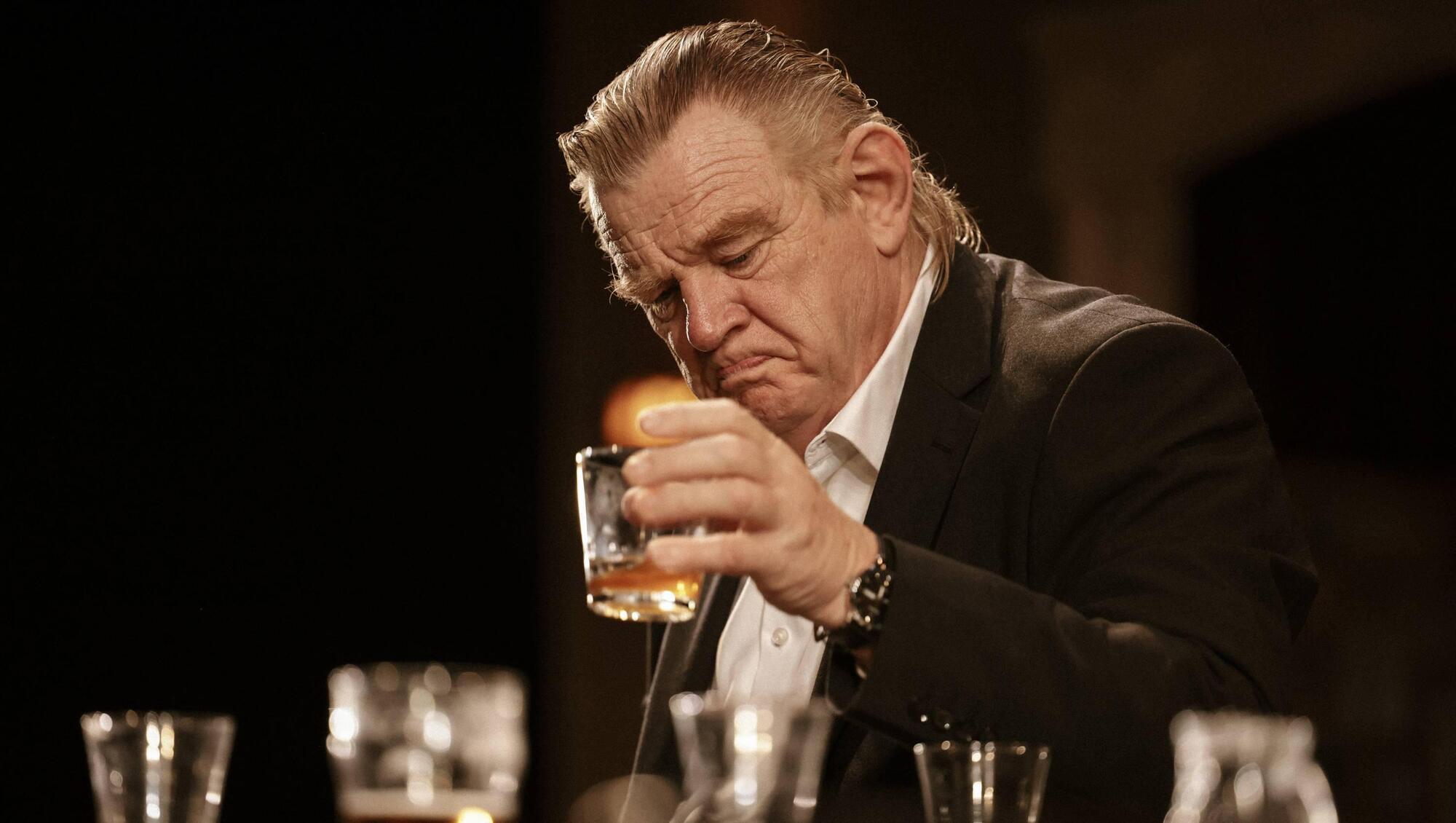
Brendan Gleeson in a stage production of Conor McPherson’s ‘The Weir’, where the pub serves as a refuge for the play’s five central characters. File picture: Rich Gilligan

  • The Irish Pub: Invention and Reinvention
  • Moonyoung Hong and Perry Share
  • Cork University Press, €59

“I was in the dream Irish pub of the popular imagination — dimly lit, past midnight, shelves piled with obscure groceries, a buzz of conversation, and a whoosh of energy coming off the crowd.”

That’s how Pete McCarthy evokes an after-hours birthday gathering in a pub in his 2001 travelogue McCarthy’s Bar.

Blending memoir with wry national portrait, the writer journeys across Ireland scrupulously adhering to his unshakable rule of travel: “Never Pass a Bar That Has Your Name On It”.

Mining its prized role in our culture, the Irish pub is now central to how the country markets itself to international tourists. But this is a significant turnaround.

First published in 1952, originally by Bórd Fáilte, Ireland of the Welcomes is dedicated to promoting Ireland as a tourist destination.

In the opening decades of the magazine and in the tourism body’s early publicity campaigns, the pub was conspicuously absent because of an anxiety it would perpetuate the national stereotype of the drunken Irishman.

Arguably, McCarthy’s Bar embodies how far this approach has been upended.

The pubs he visits aren’t eccentric or curious diversions — they are the source of McCarthy’s adoration, the ultimate destination of the pilgrimage.

For the first time, this cultural jewel receives its — long overdue — full-length academic treatment.

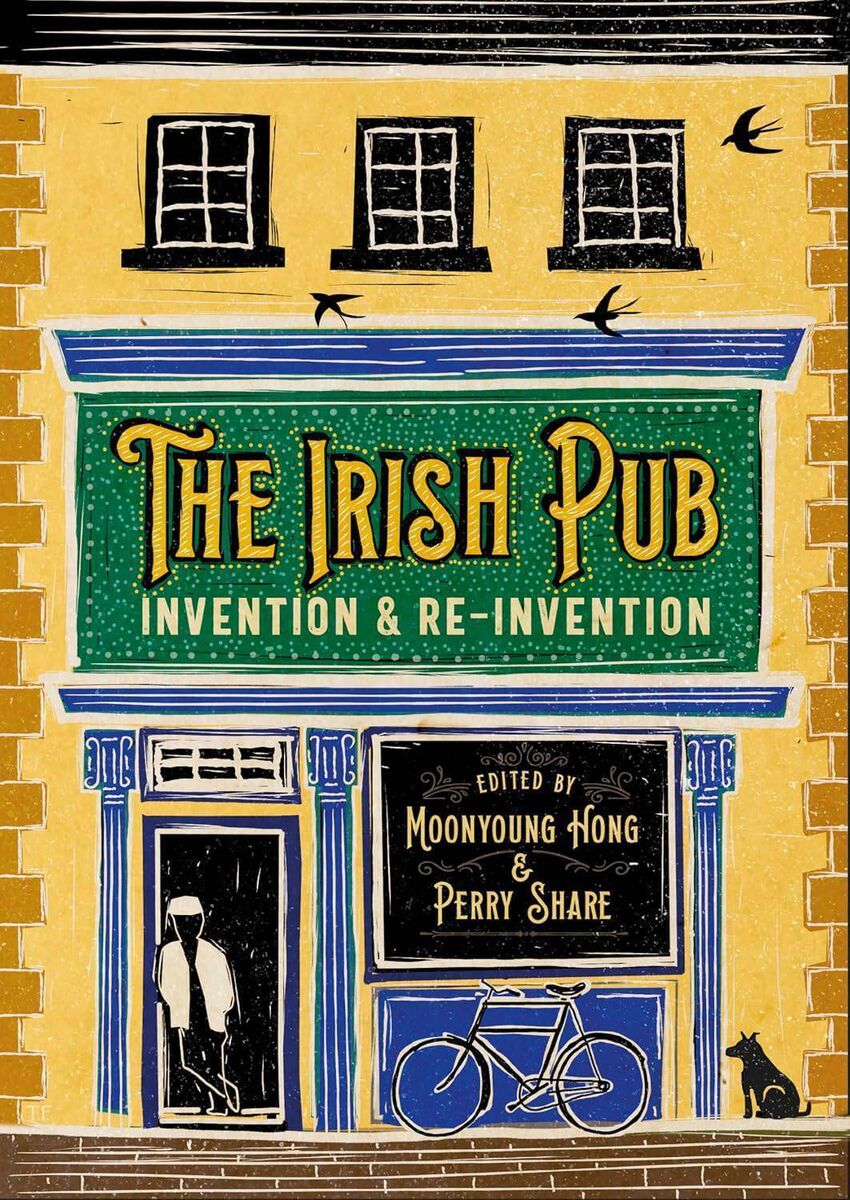
Co-edited by Moonyoung Hong and Perry Share, The Irish Pub: Invention and Reinvention explores its subject through the prism of history, design, sociology, literature, and psychology.

Consisting of 20 scholarly but accessible essays, the book’s focus is kaleidoscopic.

Its breadth ranges from how today’s pubs are evolutions of inns that emerged after the Norman invasion in the 12th century to the pub’s place in the founding of groups like the Irish Gay Rights Movement in the 1970s to its importance as a setting for cultural touchstones — from JM Synge’s The Playboy of the Western World to the music videos of Kneecap.

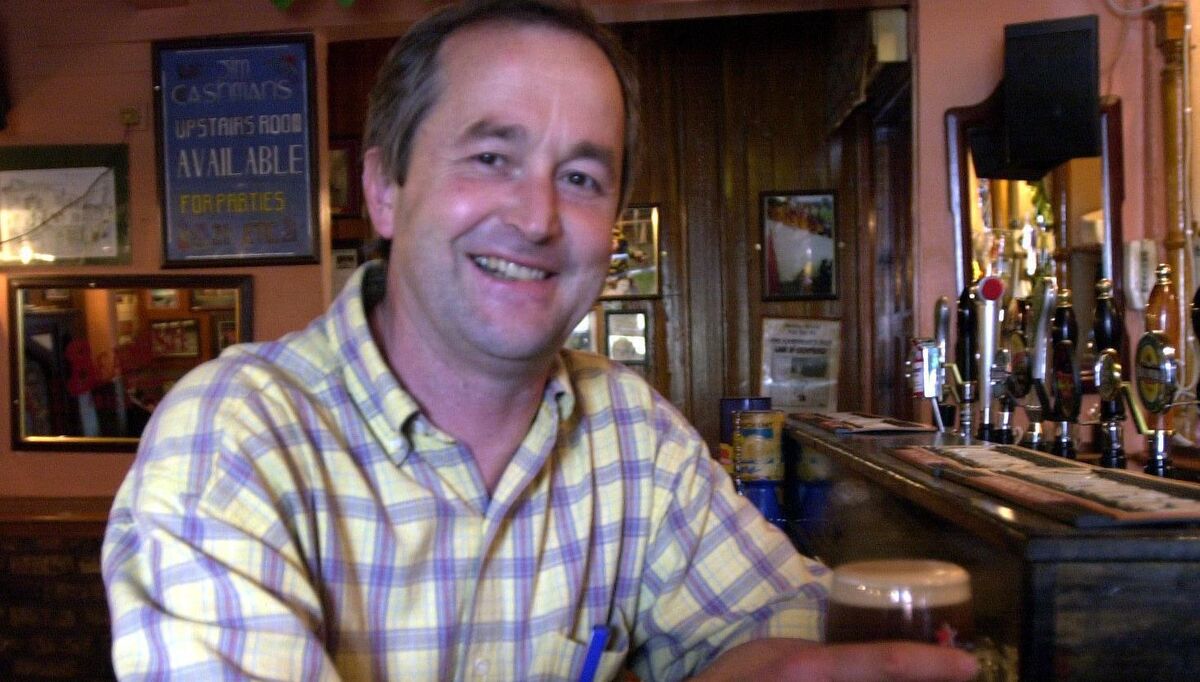
 Pete McCarthy in his 2001 travelogue 'McCarthy’s Bar' journeys across Ireland scrupulously adhering to his unshakable rule of travel: 'Never Pass a Bar That Has Your Name On It.'
Pete McCarthy in his 2001 travelogue 'McCarthy’s Bar' journeys across Ireland scrupulously adhering to his unshakable rule of travel: 'Never Pass a Bar That Has Your Name On It.'

A throughline of McCarthy’s Bar was the author’s rumination on identity — he was born in the north of England, the child of an English father and Irish mother — and how the pubs he visits offer a sense of belonging.

It’s a theme that runs like a watermark through The Irish Pub.

In Conor McPherson’s play The Weir, the pub is a refuge for its five characters, a crucial backdrop that prompts them to attempt to reconcile with their pasts (where they can “share their private matters in a public setting”) — a place where they feel they can belong.

It’s also a mainstay in Two Pints, Roddy Doyle’s play revolving around two men in their 60s talking over Guinness in a pub.

In an Ireland seared by breakneck social, economic, and political transformations, the unchanging background provides the displaced characters with a rare sanctuary.

But productions of Two Pints also overturned the trope of the stage as an Irish pub: In 2017, the Irish pub became the stage when the Abbey Theatre and the Vintners Federation of Ireland collaborated to perform the play in 22 pubs in 16 counties.

Reflecting this collection’s subtitle, it cites that initiative as an example of the alternative strategies pubs must consider to retain existing customers — and entice new ones.

About 20% of pubs in Ireland have closed since 2005

Pubs in Ireland are operating in a turbulent environment: Since 2005, 1,829 pubs — about 20% of the total — have closed.

The shuttering is driven by the intersection of disparate forces: The smoking ban, cheaper supermarket alcohol, stricter drink-driving legislation, declining alcohol consumption, and the spiralling cost of property.

If the idea of pubs adapting to meet the demands of fluctuating circumstances seems novel, the book’s contributors show us otherwise.

It’s encapsulated in the changing names of what became today’s ‘pub’: Taverns, alehouses, shebeens, gin palaces.

Far from an immutable concept, the ‘traditional’ Irish pub only dates from the late 19th century.

Initially a single room converted into a bar in private homes, pubs realised they could expand their clientele by supplying provisions as well as alcohol — and for more than a century the grocery pub became a fixture of Irish liquor retail.

Another myth the book debunks is the perception that there’s an innate relationship between the Irish pub and traditional music sessions.

In fact, this phenomenon only emerged after 1950.

The draw of traditional music

As the era of the traditional social dance declined, publicans recognised the economic value of paying musicians a fee to perform in their establishments on certain days as a way of attracting punters who would buy alcohol while listening to the music.

The book’s drumbeat is deeply researched, fastidiously marshalled arguments that probe and reveal.

Occasionally the writing style is opaque, but mostly the prose is crisp and lucid, appealing to both a specialist and general audience.

The coda to each essay is the author’s valentine to their favourite Irish pub.

Illuminated by more than 100 images, the production design is sumptuous.

The Irish Pub would complement the book-lined shelf of any of the cosy, stout-smelling establishments featured between its covers.

A companion piece to Donal Fallon’s recent The Dublin Pub: A Social and Cultural History, this book’s alchemical ingredient is the way its antenna is fine-tuned to offbeat frequencies, including sociological analyses of the craic (a response to church oppression) and the strict rounds system (an exemplar of social conformity).

Underlining the broadness of the book’s perspectives, Trish Murphy identifies how the skills she honed interacting with combative customers while working in her family’s pub in Abbeyfeale were instrumental in her future career as a psychotherapist: Managing conflict and deploying soothing body language — “calm breathing, quiet voice, non-threatening stance” — to alleviate tense encounters in prisons.

The book highlights how pubs are, though often unnoticed because of their prevalence, a connecting thread in the “vernacular architecture” of Ireland’s streetscapes.

Despite the sobering number of pub closures in the last 20 years, 75% of people in Ireland live within 300 metres of a licensed premises and the country has the third-highest number of pubs per capita in the OECD.

Yet estimates suggest there are more than 7,000 Irish pubs abroad — meaning that there are now more Irish pubs outside than inside Ireland.

From Mongolia to Peru, from Iraq to Nepal, Irish pubs are found in more than 160 of the world’s 195 countries.

The founders of Ireland of the Welcomes might demur at this emblem of Irishness, but it provided the inspiration for the follow-up to McCarthy’s Bar.

In The Road to McCarthy (2003), the author embarks on another knockabout romp, but this time he widens his lens: Instead of seeking McCarthys and Irish pubs in Ireland, he searches for — and finds — them in Alaska and Australia, in Morocco and Montserrat.

x

BOOKS & MORE

Check out our Books Hub where you will find the latest news, reviews, features, opinions and analysis on all things books from the Irish Examiner's team of specialist writers, columnists and contributors.
More in this section

Scene & Heard

Newsletter

Music, film art, culture, books and more from Munster and beyond.......curated weekly by the Irish Examiner Arts Editor.

Cookie Policy Privacy Policy Brand Safety FAQ Help Contact Us Terms and Conditions

© Examiner Echo Group Limited