Book review: Family’s quest for truth behind Zac Brettler’s mysterious death

'London Falling' goes beyond a meticulous investigation into death of the 19-year-old and looks at a city which has a porous boundary with the criminal underworld
Book review: Family’s quest for truth behind Zac Brettler’s mysterious death

Patrick Radden Keefe: The book explores the historical forces that deposited someone like Zac in the company of people like Sharma and Shamji in a place like 21st-century London. File picture: Craig Barritt/Getty/The New Yorker

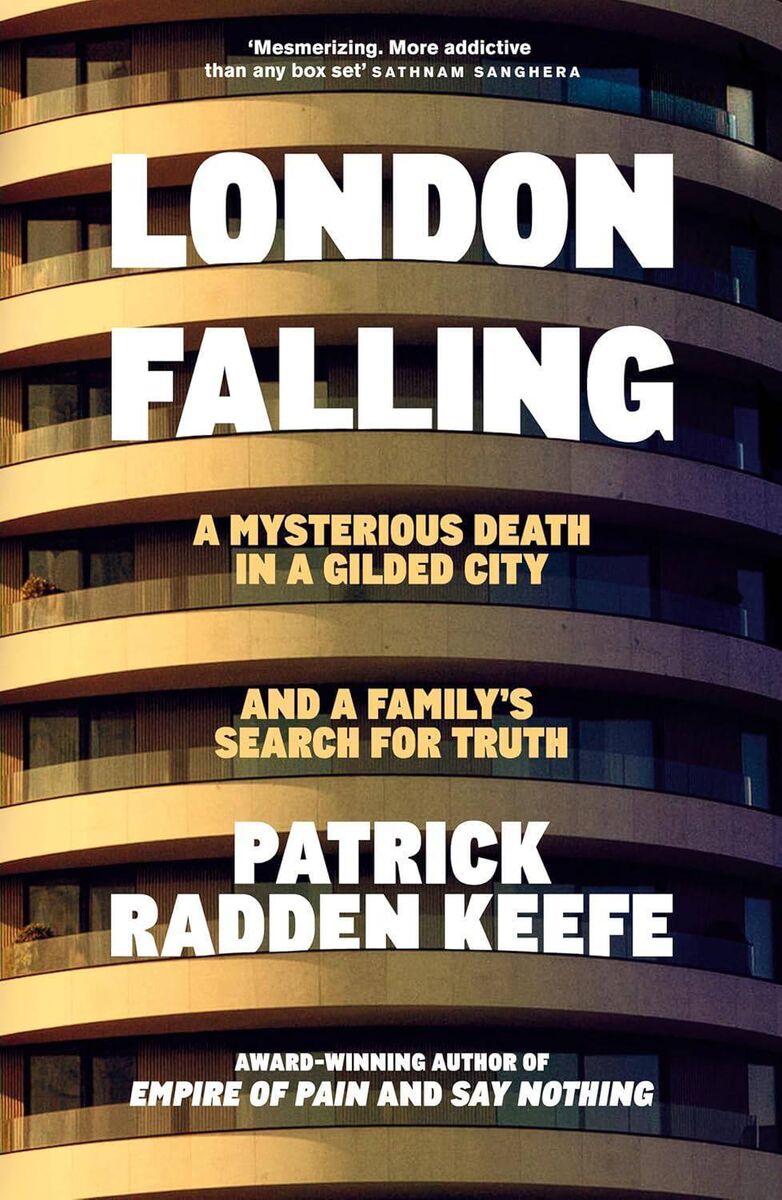
  • London Falling: A Mysterious Death in a Gilded City and a Family’s Search for Truth 
  • Patrick Radden Keefe 
  • Pan Macmillan, €17.99 

On November 29, 2019, a 19-year-old Londoner named Zac Brettler paced from one side to the other of a fifth-floor balcony on Riverside, a luxury apartment block overlooking the River Thames, next to Vauxhall Bridge, in London. And then he jumped.

On the way down, Zac hit the embankment wall, breaking his hip, before careening into the water. 

His fall was captured by a surveillance camera on the building on the opposite bank of the river (which happened to be the headquarters of MI6). 

Zac’s dead body was spotted by a passerby the next morning.

When Zac Brettler stood on that balcony, peering down at the deep, dark waters of the Thames, what forces were at his back, pressing him forward towards oblivion?

Most immediately, behind him in the fifth-floor apartment was its occupant, a man named Verinder Sharma, widely known as ‘Indian Dave’: “a carnivore in London’s criminal ecosystem”. 

Sharma was a gangster with no compunctions about using extreme violence when things needed to get done or even just speeded up. 

He claimed later to have been asleep at the time Zac jumped; yet the MI6 cameras captured movement inside the flat at the time of the fall.

Earlier in the evening, Zac and Indian Dave had been joined by Akbar Shamji, a serial entrepreneur and man about Mayfair, a slick spoofer with a string of ever more grandiose but failed business ventures behind him. 

He returned to Riverside not long after Zac’s fall and was captured by the building’s CCTV peering over the river wall towards the very spot where Zac would have entered the water.

Both Sharma and Shamji had for a long time believed Zac to be, by his own account, the son of a Russian oligarch with access to untold wealth and connections. 

He wasn’t. He was from an affluent, middle-class London family, and no more.

There are clues — all of them grim — to what may have transpired inside the apartment before Zac’s fall. 

These, along with much else about this astounding case, are carefully explored in London Falling, a remarkable new book by Patrick Radden Keefe (whom readers may remember as the author of Say Nothing, the 2018 bestseller about Jean McConville and the Troubles in Northern Ireland).

Meticulous investigation into the proximate causes of Zac Brettler’s death

But London Falling is much more than a gripping and meticulous investigation into the proximate causes of Zac Brettler’s death. 

It explores the historical forces that, churning together like the waters of the Thames at Vauxhall, deposited someone like Zac in the company of people like Sharma and Shamji in a place like 21st-century London. 

The Holocaust (Zac’s family is Jewish); Idi Amin’s cruel expulsion of Asians from Uganda in 1972; Margaret Thatcher’s deregulation of the City of London; the collapse of the Soviet Union; the rise of the internet: all of these were somehow also at Zac Brettler’s back as he stood at the edge of the Riverside balcony, desperate either to pull off a fantastical escape or to end his own life. (We can’t be sure which.)

The London that Zac Brettler attempted to lie his way into is, in Boris Johnson’s words, “to the billionaire as the jungles of Sumatra are to the orangutan”. 

This is the London in which an old establishment bastion like the Connaught Hotel ends up in hands of the ruling family of Qatar. 

The London of Annabel’s nightclub in Mayfair, of mega property developers like the Candy Brothers, of cruising around Knightsbridge in Maseratis. 

The London of apartment blocks “fitted out in the antiseptic fashion of the superrich”, of the Abramovich years at Chelsea. (At one point, Zac actually suggested that he wished his father had been Roman Abramovich.) 

This London is a giant melting pot too (with the Irish one of the few nationalities now commonly found in London that don’t show up somewhere in the story).

Porous boundary with the criminal underworld

But this is also a London which has, as Keefe expertly shows, a porous boundary with the criminal underworld. 

When they were trying to piece together what had happened to their son — something the Met Police seemed unable or unwilling to do — Zac’s parents, Matthew and Rachelle started “to feel alienated in their own city, to see the whole metropolis in a more sinister light”. 

Rachelle remarked that it was “a strange sensation to move around St John’s Wood, picking up groceries or stopping for a cup of tea in a café, and knowing that there might be people around them, people from their own community, who had connections to (…) elements of London’s criminal subculture and who perhaps knew more than they did about their son’s death”. 

It was eye-opening. “Sometimes it really makes me hate London,” Matthew said. “It makes me want to leave.”

Zac Brettler’s transformation from an idiosyncratic but popular boy to “a pathological huckster” is carefully traced, but the essential mystery of it remains. 

His parents found themselves in a “curious, liminal zone” with their own son: they never knew exactly what to believe. 

From the moment they took a call from a staff member at Zac’s school when he was 15 to let them know that he had left the campus not on foot to catch a train or bus, but in a chauffeured limousine, they repeatedly plunged through trapdoors in their knowledge and understanding of their own child.

But as Keefe notes: “One reason that it is so difficult to know precisely what happened at Riverwalk is that Zac was by no means the only impostor in the apartment that night.

“Verinder Sharma was a leg-breaker posing as a benevolent mentor. Akbar Shamji was a dilettante posing as an accomplished entrepreneur. And Zac was just a London teenager, posing as the son of an oligarch.

“Each was pretending to be something he wasn’t, and each was caught up in the glitzy, mercenary aspirational culture of modern London.” 

As Zac’s mother put it: “It was three bullshit artists, selling air.”

Patrick Radden Keefe weaves together the back stories of all of the characters, and plots the collision course all were set upon, with enormous judgement and skill, always switching the perch from which we view events at just the right juncture. 

(My only mild gripe with the book would be some of the political analyses Keefe presents, which can have a stale, off-the-shelf feeling to them.) 

He knows he has a compelling story on his hands but is respectful of the suffering at the heart of it. 

He reveals the fissures in the Brettler family — between Zac and his brother and between Zac and his parents — and subtler splits and differences are also laid bare: both Zac and his father abandoned family therapy after one session, for instance, leaving Rachelle to go to the other six on her own.

All of this is done without a moment of undue lingering on pain or scandal.

London Falling is a tremendous example of the craft of writing about real life at it most unreal: a balancing act that few could pull off. 

But Patrick Radden Keefe knows those moments when all the digging for clues, the ramping up of tension, the stripping away of lies, must fade away; and when the power of a story about the mystery of the human condition must have its say:

“For at least a year after Zac’s death, Rachelle felt as though she were living on that balcony with him, shivering in the cold night air, locked out of the normal existence she once knew, trapped in a kind of limbo between life on solid ground and the abyss.”

BOOKS & MORE

Check out our Books Hub where you will find the latest news, reviews, features, opinions and analysis on all things books from the Irish Examiner's team of specialist writers, columnists and contributors.


More in this section

Scene & Heard

Newsletter

Music, film art, culture, books and more from Munster and beyond.......curated weekly by the Irish Examiner Arts Editor.

Cookie Policy Privacy Policy Brand Safety FAQ Help Contact Us Terms and Conditions

© Examiner Echo Group Limited