Book review: Giving recognition to IRA leader and politician Moylan
Eamonn Duggan has delivered an excellent synopsis of Sean Moylan’s life, especially of the active years of 1918 to 1923
Book review: Giving recognition to IRA leader and politician Moylan

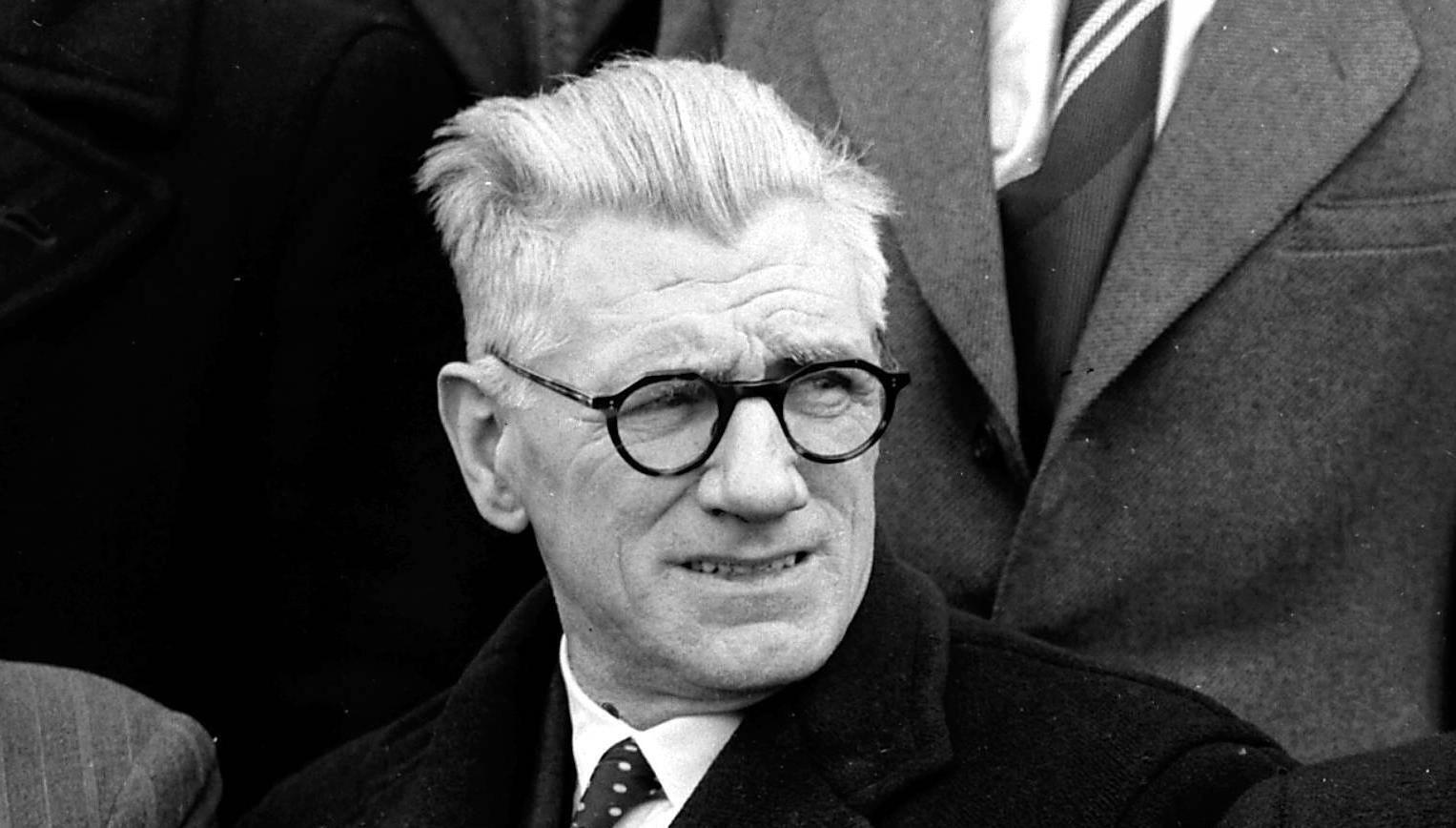
Sean Moylan, when he was education minister, at the official opening of Midleton Vocational School, Cork. He had a very successful political career and served as minister for lands (1943 to 1948) and minister for education (1951 to 1954).

  • Sean Moylan: An IRA Revolutionary at War
  • Eamonn Duggan 
  • Pen and Sword, £25 

It is more than a hundred years since the War of Independence and the Civil War. The fall-out from that era, 1918 to 1924, has dominated Irish politics until very recently. 

Following the election of 2020, the chief opposing sides in the Civil War, Fine Gael and Fianna Fáil, finally decided to focus on their common policies rather than their historical differences.

One consequence of this will be that, as right-wing and left-wing politics replace the pro- and anti-treaty view, the events and personalities of the 1918 to 1924 era will be consigned to just another chapter in our history. 

In other words, the causes and consequences will be discussed, as are the rebellions of 1798 and 1867, but the stories of the individuals, their motivations, their sacrifices, and their remarkable fortitude in the face of extreme adversity will fade away.

The War of Independence and Civil War leaders, such as de Valera, Collins, Griffith, Brugha, O’Malley, and Cosgrave, may have been based in Dublin, but the war was chiefly fought and won in rural Ireland. 

This is where the local brigade leaders stamped their authority and took untrained, but enthusiastic, volunteers and turned them into effective fighting men.

Sean Moylan from Newmarket in north Cork was one of these leaders. 

Moylan played an important role in the events of 1918 to 1924, and according to Eamonn Duggan, author of a new book, Sean Moylan: An IRA Revolutionary at War, he has not been given the recognition he deserves for his leadership, effectiveness, and commitment both as a soldier and later as a politician.

Eamonn Duggan shines a light on the life and reputation of Sean Moylan in 'An IRA Revolutionary at War'.

Moylan never committed his memoir to paper, but he did provide the Irish Military Bureau with an extensive and detailed witness statement in 1953 (W.S.838). 

The statement is 287 pages in length and Eamonn Duggan has based his book primarily on this statement.

Sean Moylan was born at his grandparents’ farm near Kilmallock, Co Limerick, in 1889. His mother moved there before the birth because she had suffered previous miscarriages. 

She returned to Newmarket after the birth, but it is not known why baby Sean remained in Kilmallock to be reared by his aunts and grandparents. 

His Limerick relations had strong connections with the Fenian Rising and Moylan grew up listening to political discussion focused on the ideal of an independent Ireland.

Moylan was just 12 years of age when his father died of pneumonia. As he was the eldest of the five Moylan children, he returned to Newmarket to help his mother. 

At aged 14, he returned to Kilmallock to take up an apprenticeship as a carpenter. 

During his apprenticeship, he was active in the Gaelic League and won senior county football medals with Kilmallock. 

He joined the Kilmallock branch of the Irish Volunteers in 1913 before moving back to Newmarket in 1914.

There was no tradition of republican activity in the Newmarket area, and it was largely due to the efforts of Moylan, and a few like-minded individuals, that a Newmarket battalion was formed.

Moylan proved to be an excellent commander. His emphasis was on drilling and manoeuvres. Through his genuine interest and care for his men, he had developed a very competent unit by the end of 1918.

With the escalation of the War of Independence in 1919, Moylan was struck down by Spanish Flu. He returned to lead his men in mid-summer. 

The unit was continually on the move, sleeping wherever they could get safe houses, spending days lying in wait in dirty damp ditches and suffering terrible afflictions such as scabies. 

The unit was involved in some heroic ambushes, the most famous of which took place at Clonbanin in March 1921.

Also, during this 1919-1921 period, Moylan played a significant role in ensuring that the Sinn Féin courts of arbitration in his area were effective and fair.

IRA HQ aware of Moylan's leadership

Moylan’s leadership came to the attention of IRA HQ in Dublin. It was particularly noted that through his attention to detail and his excellent planning the casualty count in his unit was very low. 

HQ wanted to move him to a more administrative role. Moylan resisted as he wanted to remain in the thick of the action.

It had become obvious during the last year of the War of Independence that the leaders in various brigades and battalions around the country were often at odds with IRA HQ. 

At one meeting between HQ and the southern leaders, Tom Barry was quoted as saying “we started off this war with hurleys and [if HQ get their way] we will finish it with fountain pens”. 

The indications were there that the differences which became obvious during the Civil War were emerging even during the War of Independence.

Moylan did eventually become officer-in-command of the No 2 Cork Brigade where he continued to lead actively and successfully.

Moylan was elected to the second Dáil in May 1921. The week before the election he was captured by the British army. 

Upon his capture Moylan believed that he would be sentenced to death, but the imminent truce, in July 1921, and a robust defence from his legal representatives, resulted in a 15-year prison sentence on Spike Island.

Being a military man with a distrust of politicians, Moylan took the anti-treaty side in the Civil War, although he did have qualms about fighting fellow Irishmen. 

In 1923, the anti-treaty forces sent Moylan to the US and Germany on fund-raising expeditions. He was not in Ireland when the Civil War ended.

Years later, when reflecting on the War of Independence, Moylan made the very pertinent point that the British did not help their cause by allowing the Black and Tans and the Auxiliaries to do their thuggery. 

He also believed that the British lost because they fought a “conventional war” against the guerrilla forces of the IRA. 

He felt that the IRA could not have outlasted smaller, fighting-fit, well-trained, and flexible British army units.

Moylan returned to civilian live, as a builder, after the Civil War. By then he was married with a child. He was eventually enticed to join de Valera in Fianna Fáil and won a seat in the 1932 election. 

At his very first parliamentary meeting, he clashed with the party leader, Dev, who was still pondering removing the British from Ireland. 

At this stage, Moylan’s politics were essentially Labour/socialist as shown by his concern about the welfare, poverty, and lack of opportunity of people across Ireland. 

At the time, however, the country was divided into pro- and anti-treaty opinion, and it was only through those alignments that any progressive politician could hope to advance their ideas.

Moylan had a successful political career

Moylan went on to have a very successful political career. He served as minister for lands (1943 to 1948) and minister for education (1951 to 1954). He lost his seat in 1957 and died suddenly in November of that year.

Eamonn Duggan has delivered an excellent synopsis of Sean Moylan’s life, especially of the active years of 1918 to 1923. 

His desire to keep Moylan’s reputation from being washed away with the passing of time has been achieved. 

He has also left the door open for further exploration in terms of Moylan’s social conscience, his politically left leaning, and his legacy.

Sean Moylan: An IRA Revolutionary at War reminds us that as a nation, we no longer understand what that remarkable generation did to help establish our country, and while we cannot live in the past, we need to keep the past in mind.

x

BOOKS & MORE

Check out our Books Hub where you will find the latest news, reviews, features, opinions and analysis on all things books from the Irish Examiner's team of specialist writers, columnists and contributors.
More in this section

Scene & Heard

Newsletter

From music and film to books and visual art, explore the best of culture in Munster and beyond. Selected by our Arts Editor and delivered weekly.

Cookie Policy Privacy Policy Brand Safety FAQ Help Contact Us Terms and Conditions

© Examiner Echo Group Limited