‘I’ve lived here my whole life but still fell through the cracks’
‘I’ve lived here my whole life but still fell through the cracks’

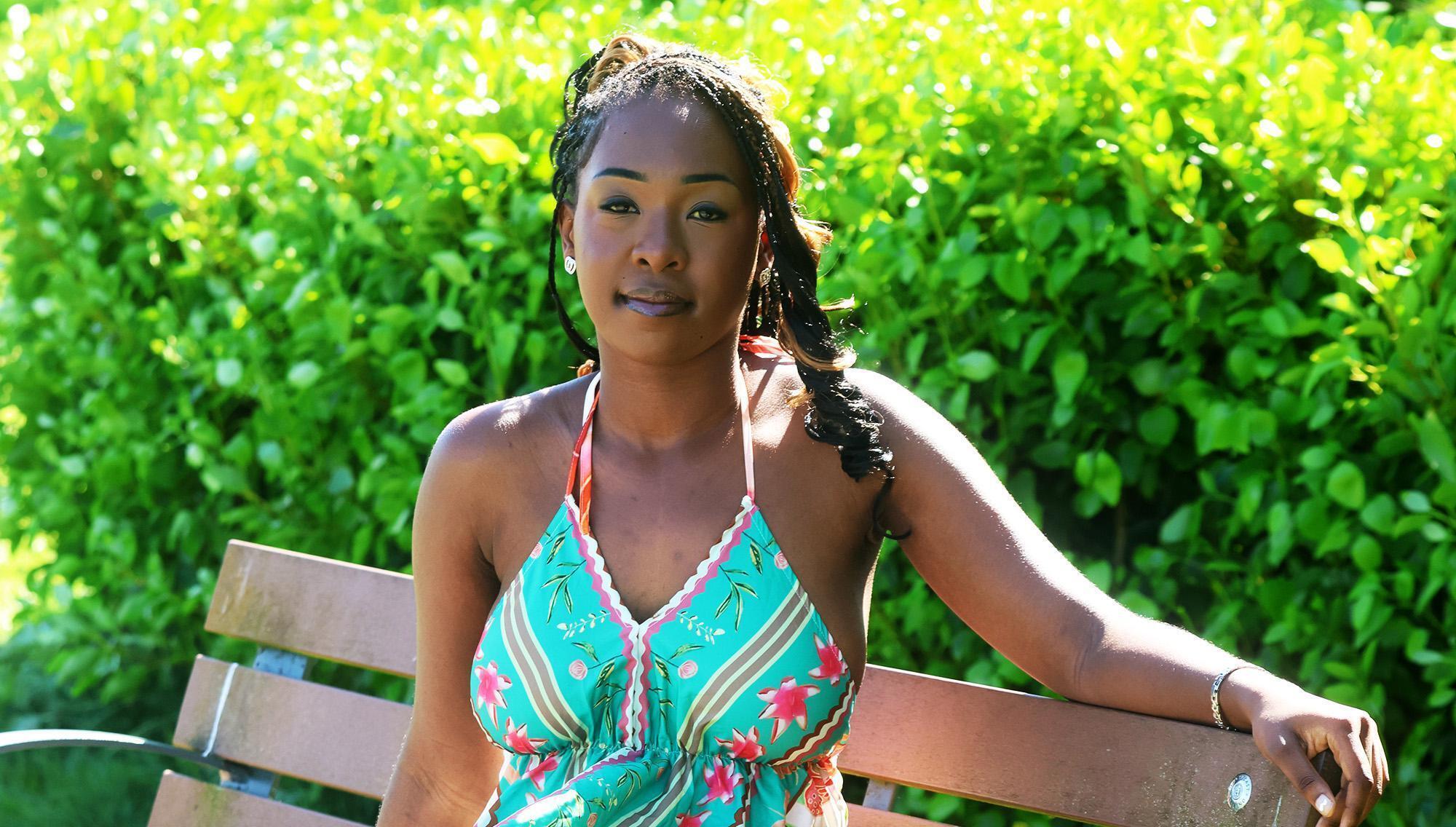
Chichi Okoli has spent her whole life in Ireland but says she’s still being asked to prove that she belongs here. Picture: Brendan Gleeson
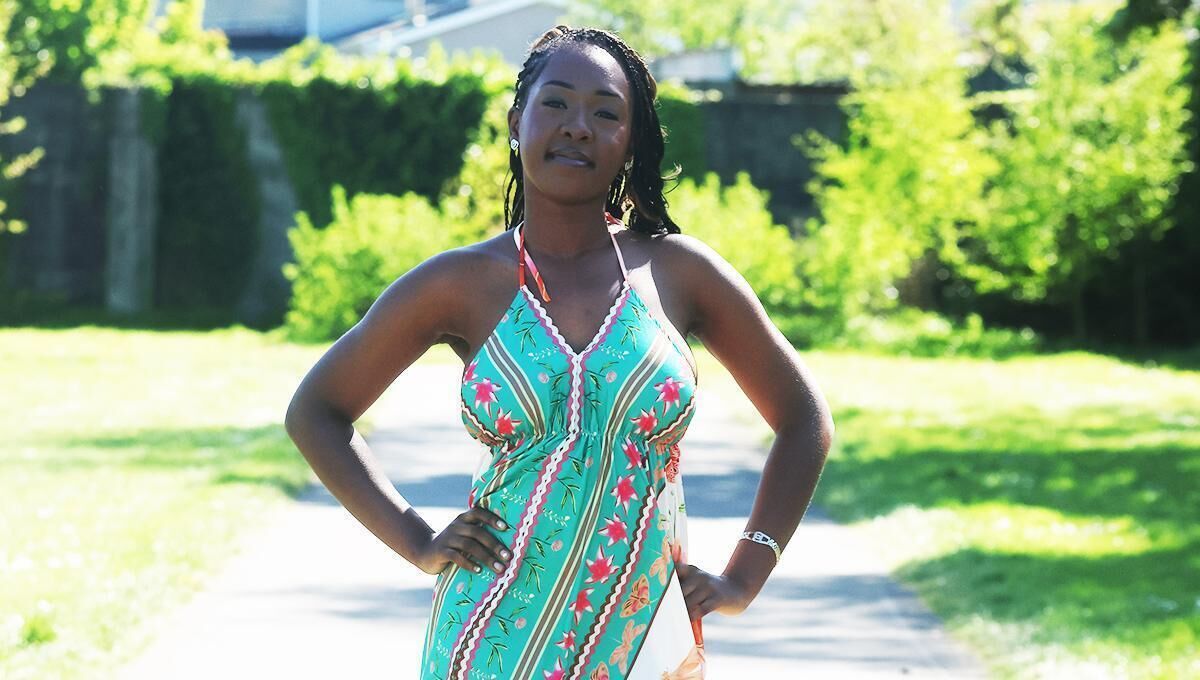
Oluchi Blessing Okoli, also known as Chichi, has spent her entire life in Ireland.

Born in Dublin, raised across Portlaoise, Sligo, and Limerick, she speaks like any other 21-year-old student at the University of Limerick, where she studies sociology and French.

Her life is here: her education, her friendships, her ambitions. But legally, she is still waiting to be recognised.

“I’m 21 years old,” she told the Irish Examiner, “and I still don’t have Irish citizenship.”

Her voice is calm, but the frustration sits just beneath the surface.

“They’re telling me: ‘You’re not an Irish citizen, and you won’t be until we approve it’.”

She has been waiting four years.

Chichi’s story begins, like many others, with a parent who came to Ireland looking for a better life.

Her mother moved from South
Africa and raised her three children alone here, leaving one sibling back home.

Chichi’s knows who her father is, but has never met him.

“We have spoken on the phone, but I’ve never met him,” she says.

When her mother became seriously ill, everything changed.

Chichi was just 16 when she died.

“That’s the age I lost her,” she said. “I was grieving, dealing with school, dealing with everything.”

Foster care

She and her siblings were taken into foster care. From that point on, the State became responsible not just for her welfare, but, she argues, for her future, including something as fundamental as citizenship.

“My mother was supposed to apply for citizenship for us when I was a child,” she says. “But she was sick, and then she passed away. And now I’m the one being punished for that.”

The roots of Chichi’s situation lies in the 27th Amendment of the Constitution, which in 2004 ended automatic birthright citizenship in Ireland. It targeted a perceived loophole in citizenship law to bring Ireland in line with other European nations that do not grant automatic birthright citizenship.

It amended Article 9 of the Constitution, which allowed the Oireachtas to pass the Irish Nationality and Citizenship Act 2005, governing citizenship.

 Chichi Okoli: 'I have a major issue with the care system.' Picture: Brendan Gleeson
Chichi Okoli: 'I have a major issue with the care system.' Picture: Brendan Gleeson

Under the current system, being born in Ireland is not enough. Citizenship depends on the legal status or residency history of a parent.

For Chichi, that technicality has become a defining barrier.

“They’re telling me to explain why my mother didn’t apply when I was three years told,” she says. “But she’s not here anymore. I don’t have that answer.”

What she does have is a system that, in her view, has failed to account for children like her, children who had no control over their circumstances.

How am I still trying to prove that I belong here? I’ve lived here my whole life.

After her mother’s death, Chichi entered a system she now hopes to change.

“It is broken, has huge holes in it, and it’s not right for kids. I have a major issue with the care system.”

She was in care during her teenage years, moving through placements before eventually transitioning into aftercare support with Tusla.

The system provides supports for young people leaving state care from 18 to 21 or up to 23 years old if in education, and will assist with independent living, and is serviced by Tusla.

“I think there are people in the system doing their best,” she said. “But structurally, there’s a lot wrong.”

One of her biggest concerns is what she describes as a lack of co-ordination between agencies.

“There’s a disconnect between Tusla, the Department of Justice, and the Government,” Chichi explains.

Tusla don’t have the information. They don’t know how to navigate citizenship issues. So they tell you to start from scratch, and that is how we all get lost and keep going around in circles

In her case, she believes Tusla should have taken a more active role while she was still a minor.

“They were the responsible body,” she said. “If a child doesn’t have parents who can apply for them, then who is supposed to do it? Everyone is blaming my mother for not applying for my citizenship.”

Young people are left to deal with complex legal processes on their own, often only after turning 18. “You’re expected to figure it out yourself, and then wait years for a decision.”

At one point, Chichi was asked to provide documentation from her father as part of her application for citizenship.

“They wanted his permission,” she says. “Even though he’s never been in my life, I have never met him. Seriously though, how does that make sense?”

She laughs at the idea, but adds that it is one of several moments where the system seems designed for a “normal” family structure, one that doesn’t reflect the realities of many children in care.

“If you don’t fit that, you fall through the cracks.”

Her experience in care has also shaped her understanding of inequality within the system, particularly for black children.

“There’s a lack of cultural understanding,” she said. “Simple things like hair care, or skin conditions. I had eczema. That was left up to me to deal with.”

These may seem small, she says, but they are part of a broader pattern.

You’re already dealing with trauma, grief, instability. And then you’re not even being fully supported in basic ways.

The system offers support, but only under certain conditions.

“The support is there if you go into education,” she explains. “If you don’t, you’re basically on your own.”

That binary choice, education or no support, creates pressure at a critical moment in young people’s lives.

“You’re 17 or 18, you’re finishing your Leaving Cert, you’re grieving, you’re dealing with everything — and then you’re told, these are your two options.”

She chose education, but she is clear that not everyone can.

“Not everybody is academic,” she explains. “That doesn’t mean they don’t deserve support. Some people don’t have a clue what they want to do in life until they are 40.”

Without education, many young people who are leaving care struggle to cope.

“You’re just dropped into the adult world,” she said, “No real safety net.”

Work goals

Despite everything, Chichi is focused on what comes next.

Her studies in sociology are driven by experience. Her goal is to work in policy, and eventually, she hopes, to establish a not-for-profit organisation supporting young people in care.

“I want to reform the system,” she said. “Even though I am not a fan of it, the only way to change it is to get in there, I want to research it, understand it, and change it.”

Her motivation is simple: “I’ve lived it. I know what needs to be different.”

That includes citizenship. She
believes the State needs to take responsibility for the unintended consequences of its own policies.

“When they brought in that law, did they think about people like me?” she asked. “Did they think about the children who would fall through the cracks?”

The word she returns to, again and again, is “limbo”. “I’ve been waiting four years,” she says.

During that time, she has gone to university, built a future, and continued to advocate for herself.

“I have a life to live,” she said. “I’m trying to move forward.”

But the uncertainty remains.

“They’re delaying applications. They’re blocking progress,” she said. “It affects everything. And it is in the hands of the Department of Justice, and for children under 18, Tusla, but they didn’t do it for me.”

Her frustration is not just personal.

“There are so many people in worse situations than me,” she said. “I can’t even imagine what they’re going through.”

For Chichi, this is about more than paperwork.

“I was born here. I was raised here. I’ve never left,” she said. “And still, I have to fight to prove that I belong, so tell me something, how is that fair?”.

The Department of Justice said it cannot comment on individual cases but outlined pathways towards citizenship.

A statement from Tusla said: “Up to October 2023, applications for naturalisation on behalf of a minor were required to be made by a parent or legal guardian.

“In October 2023, the Department of Justice issued updated guidance confirming that, in certain circumstances, applications made by Tusla on behalf of a child in its care may be considered and processed.

“This applies where the specific additional documentation set out in the department’s guidance is provided, including a court direction confirming, among other things, that ‘Tusla is in loco parentis to the child sufficient for the purpose of making an application for citizenship’.”

x

More in this section

Lunchtime News

Newsletter

Get a lunch briefing straight to your inbox at noon daily. Also be the first to know with our occasional Breaking News emails.

Cookie Policy Privacy Policy Brand Safety FAQ Help Contact Us Terms and Conditions

© Examiner Echo Group Limited