Joe McNamee: The so called Hungry Gap is worth its 'wait' in gold
Once upon a time, the Irish peasant had the widest-ranging, most nutritious diet in all of Europe.

We are currently struggling through the “Hungry Gap”. The Hungry Gap is that time of year when stores of last year’s harvest have run out, winter greens (eg kale, leeks, purple sprouting broccoli) are near expended, beginning to bolt, and summer produce has yet to come in. Well, maybe “struggling” is over-egging the pudding somewhat with global produce available year round in the supermarkets.
In fact, I’d imagine there are very few Irish citizens south of their 70s or even 80s who can recall a time when the Hungry Gap ever posed a genuine challenge to feeding themselves, mostly those living on poor, rural smallholdings unable to afford much beyond what they could grow for themselves.
In addition, range was limited, rarely straying beyond staples such as potatoes, carrots, cabbages, onions, and scallions, for the very first Irish food systems and culture were destroyed by colonialism and the consequent famines of the 19th century.
Once upon a time, the Irish peasant had the widest-ranging, most nutritious diet in all of Europe. We were not only taller and stronger, but also had a greater longevity than our counterparts in the rest of the continent. Protein was plentiful: Fish and seafood; wild boar and venison; and, occasionally, beef, as cattle were kept primarily for status and dairy produce.
Fresh produce was a mix of cultivated and foraged: Carrots, onions (it was before the arrival of the potato), barley, oats, and more were grown; cultivated fruit and nut orchards were supplemented by foraging for wild berries and nuts.
Hazelnut trees were so prized, their destruction was considered a crime against the community they fed — with severe punishments as a consequence.
But the Brits rather put paid to our Celtic take on a river cottage lifestyle. First, they chopped down all the forests to build ships — removing a primary source of wild food. Then they introduced mass tillage farming to feed their armies, forcing the native Irish to the fringes and onto smallholdings where the most productive crop in such tiny spaces turned out to be the comparative newcomer, the potato, which came to comprise the bulk of the diet, save the occasional cabbage and dairy by-products such as buttermilk.
Imagine, Ireland and no bit of butter at all for André to put on the spuds? Actually, there was plenty of butter but not for Irish peasants. Instead it was all sent to Shandon, then the centre of the world’s butter market, to be sold abroad.
It is also rather ironic that our greatest agricultural and horticultural advantage, one of the most temperate growing climates in the world and a growing season extending months longer than most other countries, meant we never quite evolved the same traditions of food preservation as found in many other parts of the world. While our more frigid Northern European cousins, faced with ground frozen solid for several months of the year, embraced fermentation and turned their summer cabbages into sauerkraut, we just needed to pop outside and pick one from the garden right through the winter. Mind you, while inviting someone to go out “foraging” might have got you arrested 50 or 60 years ago, the practice hadn’t died out entirely.
Nettles were and still are freely used for food — I’m especially partial to a nettle and potato soup, although the amount of cream and butter I add would have been unfathomable in more straitened times. The real reason that the Hungry Gap has returned to modern common parlance is that more and more people are realising that the most delicious and the most nutritious food is that which grows on our own doorstep and, accordingly, are re-learning the rhythms of seasonality.
Should you need a lesson in the value of local food and seasonality, wince your way through a callow Egyptian strawberry in January, store up that grim memory, and then tell me it is even remotely approaching the grand cru of an Irish-grown strawberry eaten in June. Now, that’s a hungry gap that’s worth its “wait” in gold.
The Glass Curtain, deservedly featured in the Top 20 of our 100 Best Places to Eat in Ireland, is adding further to its appeal with the announcement of a pre-theatre prie-fixé menu, on Tuesdays, Wednesdays and Thursdays, with three courses available for just €48 (also including optional add-ons) and reading the menu alone has me ravenous, including: Gort na Nain asparagus, horseradish and wild garlic butter; Glenbrook Farm pork, green olive jus gras, and whey; and cardomom parfait, rhubarb and olive oil.
Kilkenny Food Tours have added a new Castle Picnic to their offering, an al fresco dining experience by Kilkenny Castle, featuring some of the finest local produce. Goodies on the menu include items from The Little Green Grocer, Arán Bakery, Cakeface, Café La Coco and Sullivan Tap Room. Booking requires 24-hours minimum notice, €60pp.
I won’t hear a bad word said against a slice of hot-buttered toast but when I was a child, nothing elevated that humble workhorse like a spoonful of a rare visitor to our larder, lemon curd.
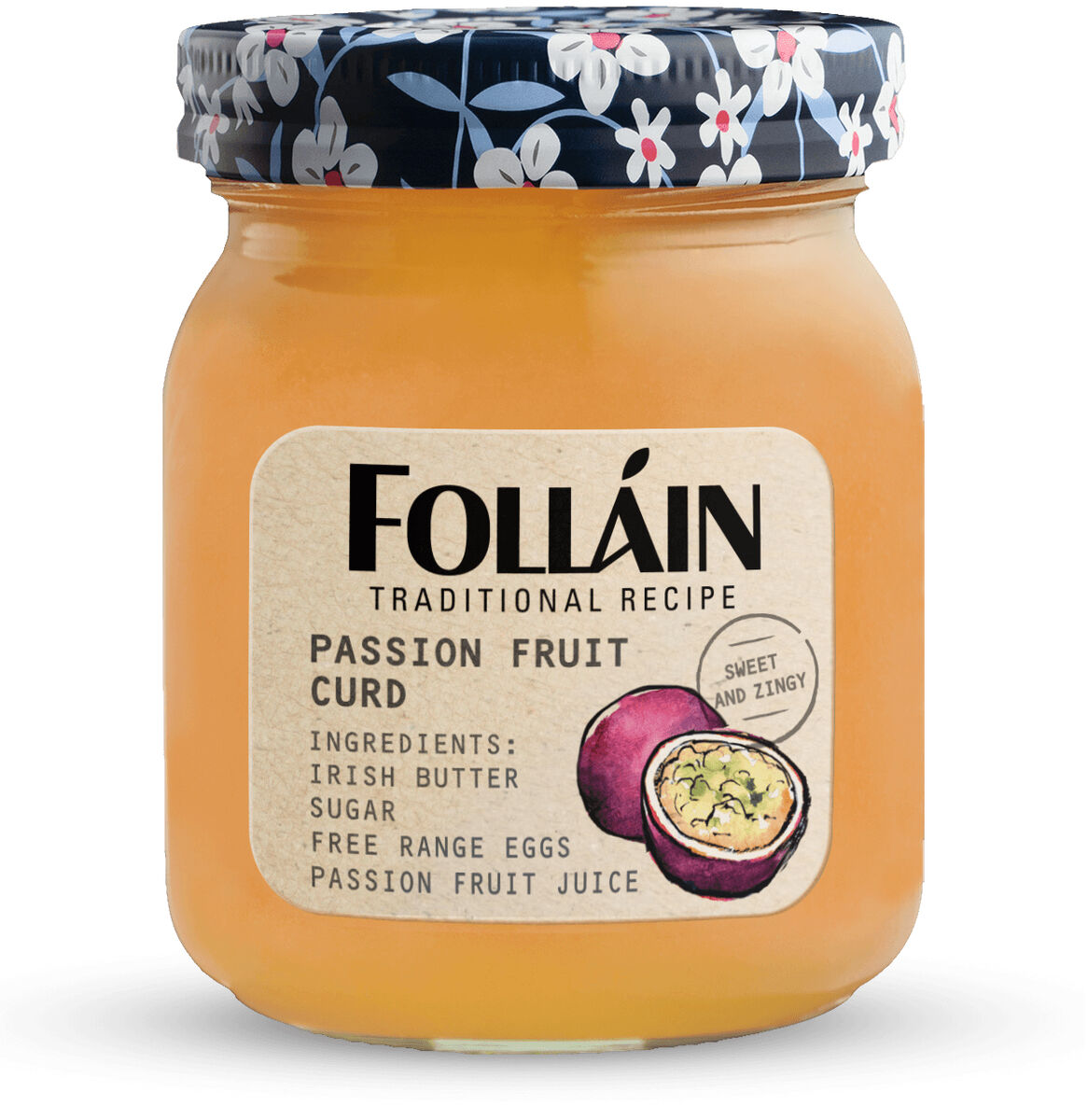
I have rediscovered an even more exotic variant: Folláin’s Passion Fruit Curd, a dense, almost fudge-y tangy sweet ‘cream’, made from Irish butter, free range eggs, sugar and passion fruit juice, that is not only on my toast but also my vanilla ice cream, natural yogurt and, in particular, on toasted brioche with a dollop of soured cream.