Malta is an island that has it all – from culture and history to food and fun
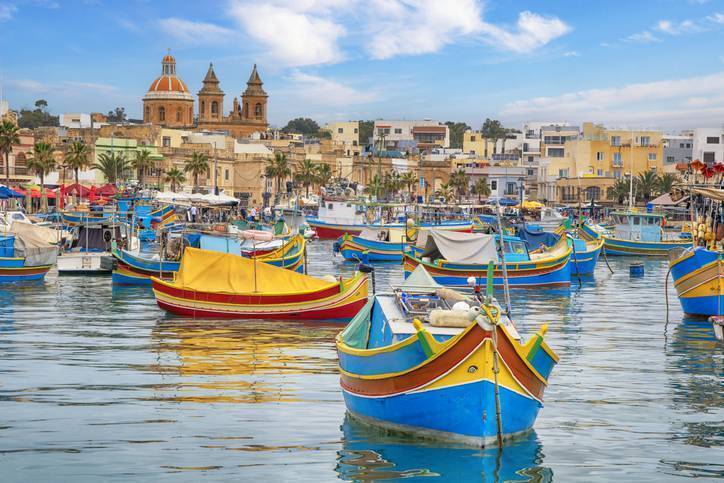
Traditional Maltese fishing boats fill the harbours around the island
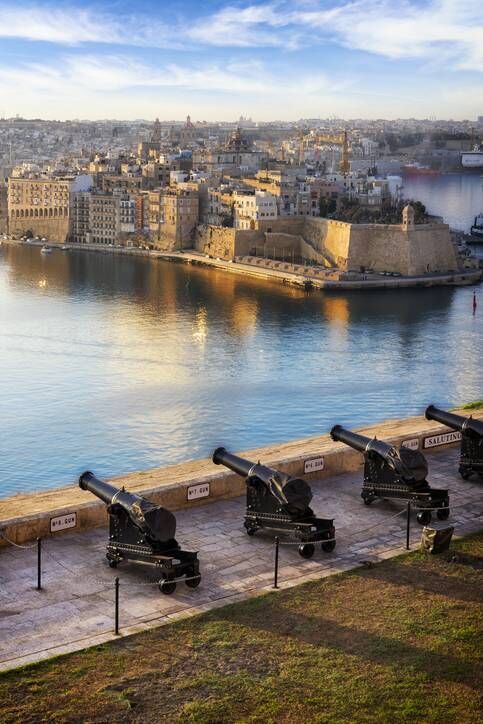
Lord Bryon once described Malta as "the island of yells, bells and smells", and as I meander through the Upper Barrakka Gardens near Castille Place to witness the Saluting Battery, I get my first inkling of what he meant.
Below, the Grand Harbour unfolds in every direction — limestone bastions, domed churches, the Three Cities shimmering across the water in the spring sunshine. Two vast cruise ships sit anchored in the bay, so enormous they seem like temporary islands, dwarfing the colourful luzzu fishing boats bobbing below.
It’s noon, and right on cue, the cannons fire. The boom rolls across the harbour and back again, swallowed eventually by the stone walls that have been absorbing it since the 16th century — when the Knights of St John first established this battery to salute arriving dignitaries and warn off everyone else. A few people give a little leap at the noise. The pigeons don’t — no Maltese falcons that I can see — and go nonchalantly about their business.
That’s one way of sorting the tourists from the locals.
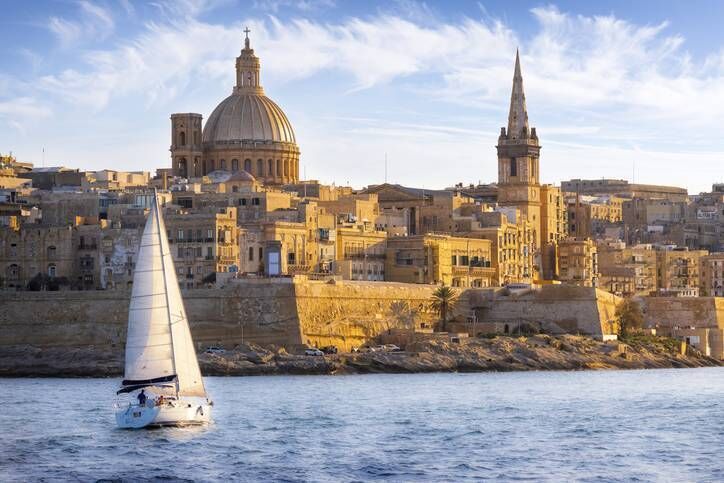
As we weave our way down past fountains held up by mermen and statues of the engineer and the architect, Francesco Laparelli and Girolamo Cassar, the bells ring out across Valletta’s stone skyline.
Malta isn’t a place that sits quietly in the Mediterranean. It has been colonised by kings, seen conquests and sieges, survived empire after empire, and has turned every invasion into part of its story.
Our guide is Stanley Cassar Darien, and he is smooth, I’ll give him that. Passionate about his homeland, he shares the deep cultural history of the island while regaling us with tales of his father, the actor and movie director, his mother, the septuagenarian marathon runner, and his accident-prone pedigree pooch. I ask him about the justice banner strung across a building nearby — a reference to John Paul Sofia, a 20-year-old who died in a construction collapse — and he fills us in with care before pivoting, as we arrive at Casa Rocca Piccola, to deliver, what I must admit, is as good a line as I’ve heard in a long time: “The only crime in Malta is that your blue eyes are hidden by your sunglasses.”
I’ll have to keep an eye on this fella.
The ‘living museum’ is 400 years old, built by Don Pietro La Rocca, an admiral and Knight of Malta. It’s a private home, and as we wander through the rooms out to the garden, the owner waves and smiles. A labyrinth of elegant rooms lined with portraits, tapestries, and antique curiosities, each telling fragments of the island’s story, but it’s the lush courtyard garden that stops me in my tracks. The splash of a fountain reveals two turtles, and there on a nearby branch, helping himself to a net of seeds, is Kiku the resident parrot: An unexpected burst of colour and commentary. He doesn’t have Stanley’s silver tongue, but he’s polite enough to say hello. Kiku guards the narrow staircases that lead to bomb shelters beneath the courtyard, scars of the Second World War preserved beneath the peaceful garden.
For something on a fancier scale, the Grandmaster’s Palace is unmissable. When architect Girolamo Cassar broke ground here in 1566, barely a year after the Great Siege, it wasn’t just a residence for the Knights of St John, it was a statement of survival carved in honey-coloured limestone.
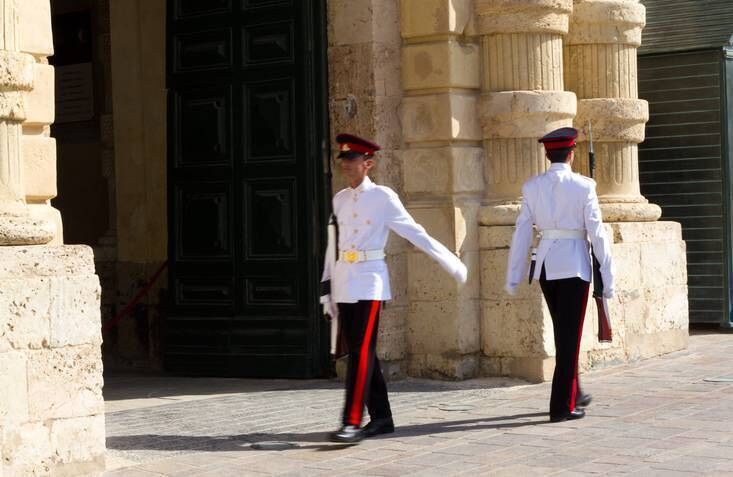
After independence, Malta’s first parliament met here, proof that the building never stopped working, only changed job titles. Today, it serves as the Office of the President, parts of it returned to the public after a meticulous restoration unveiled in 2024. Inside, Gobelin tapestries line the walls and the huge armoury bristles with weapons and suits of armour that once guarded a Christian frontier.
Then Stanley points up at a painted ceiling. I squint and do a double-take. High above, two cherubs gaze down from a ceiling mural, wearing covid face masks. Huh? The restorers, working through the pandemic, added a 21st-century Easter egg, and the powers that be decided they should stay. In Malta, even the angels know history never really stops, it just updates its uniform.
No visit to Valletta is complete without stepping into St John’s Co-Cathedral, where two of Caravaggio’s greatest works hang in unexpected near-darkness. The large scale The Beheading of St John the Baptist and St Jerome Writing. When we’re there, incredibly, there are no queues. I feel awed at the privilege of just strolling right up, seeing the masterpieces so close. I don’t take any photos, somehow it just doesn’t feel the right thing to do, and it’s more of the emotion I’ll keep with me from the experience.
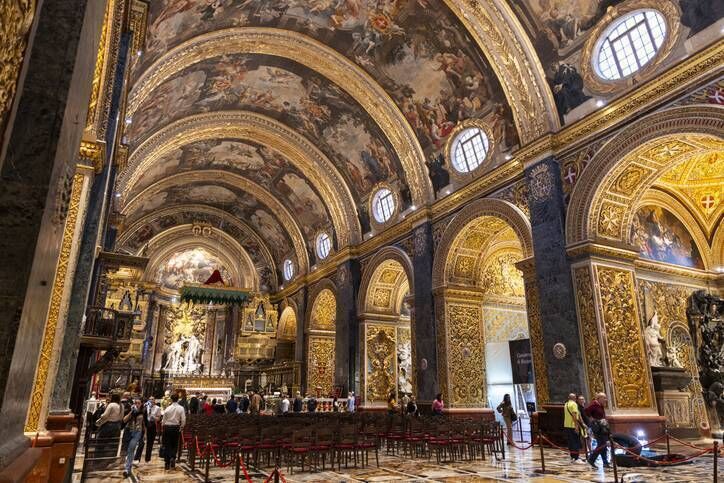
Painted during his dramatic stay on the island in 1607 and 1608, when he was briefly a knight of the order before fleeing after a violent incident, they carry all his characteristic tension: Fierce light, deep shadow, and a sense something momentous has just occurred.
If Malta’s stones hold centuries of history, its soil holds something equally compelling. At Ta’ Ċiċivetta — a farmhouse built in 1914 and lovingly restored by husband and wife Tony and Charlotte — the afternoon slows to the rhythm of rolling out dough, sipping local wine, and throwing a ball for their German Shepherd: The outlandishly handsome George.
The property sits on the outskirts of Rabat, surrounded by olive groves, a traditional water fountain, and a stunning reworked farm house. Under a wide cream canopy, a trio of musicians play traditional Maltese folk tunes while we’re presented with a table that’s almost unreasonably beautiful: A cheese board loaded with fresh ġbejniet from neighbouring Ta’ Zeppi Farm, homemade bread still warm, plump strawberries, homemade chutney, and a bottle of Ta’ Ċiċivetta’s own first cold extraction olive oil — the olives harvested by hand.
I buy a couple of bottles to bring home, hoping they survive the suitcase, a taste of sun to take back to Cork. Then Charlotte invites us over to the outdoor kitchen to make ravioli stuffed with that morning’s cheese — George supervising proceedings with great seriousness from her ankles. We wash it all down with Ċisk: The local beer whose name, legend has it, came about because Maltese drinkers couldn’t quite manage the pronunciation of “cheque”.
Flour dusts the air, glasses refill themselves, and outside, bees hum between the wild flowers and the olive trees. Lunch here is more than a meal; it’s communion with the landscape. We shout our farewells to the farm, alive with the sounds of goats and the occasional bray of a donkey, the waft of warm ravioli following us all the way to the bus. Smells, and yells? Check. And I could have sworn one of the goats had a bell around its neck.
More urban pursuits await across the water. Exploring the Three Cities — Vittoriosa, Senglea, and Cospicua — we climb into small electric buggies from Rolling Geeks: Slightly absurd little vehicles loaded with GPS and a recorded tour guide that, it turns out, are the perfect way to navigate the maze of alleyways, stone balconies draped with geraniums overhead, and washing flapping like flags.
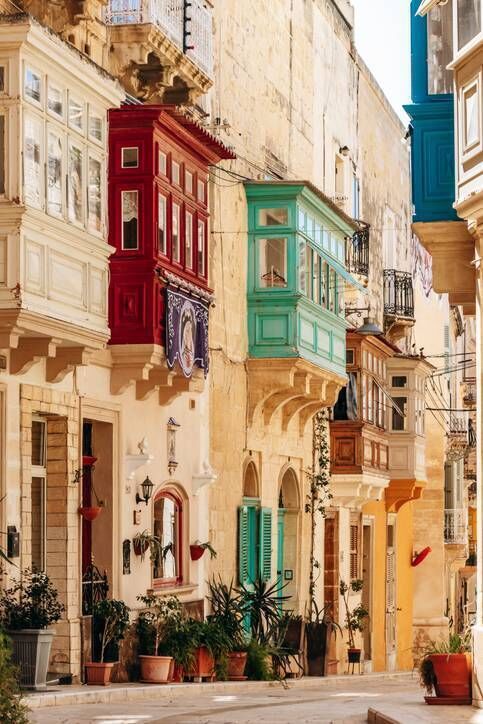
Even though I thought I’d eaten enough to last for days at the farm, my stomach tells me it’s time for refreshments. Malta’s food scene has quietly grown into something worth planning a trip around. The range is surprising, from a decent pint and a plate of comfort food at The Dubliner — where the name tells you exactly what you’re getting and delivers without apology — to The Chophouse’s serious steaks and daily grilled fish, the kind of place where the menu is short because everything on it is exactly right.
At 59 Republic, just steps from the Grandmaster’s Palace in Valletta, executive chef Maria Sammut changes her menu every 12 weeks, letting the seasons lead. The result is food that feels both rooted and inventive — local rabbit and citrus sitting alongside more unexpected flavours with easy confidence.
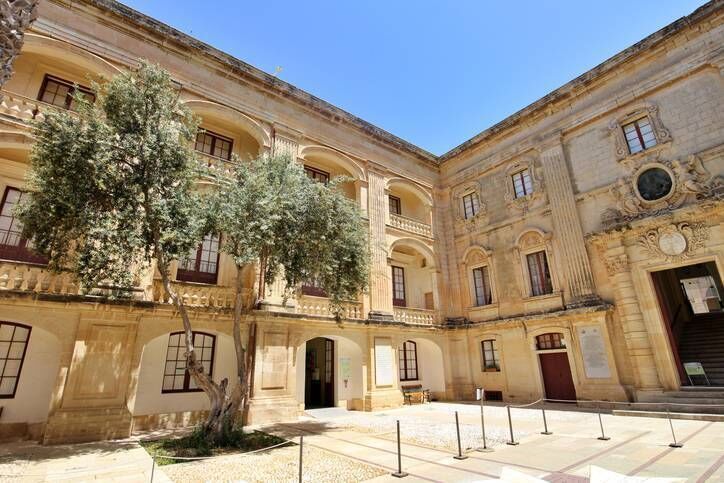
Out of the city entirely, Madliena Lodge perches high on a hill surrounded by greenery, the sea stretching out below, a setting so ridiculously lovely that the food almost has to work to compete, and to be fair, manages it with ease. Best of all is lunch at Trattoria AD 1530, tucked into an old square in Mdina with Vilhena Palace on one side and the 17th-century grandeur of The Xara Palace on the other.
My tip: Start with the arancini, crispy fried rice balls stuffed with Maltese sausage, sun-dried tomatoes and ġbejna, served with a delicate sun-dried tomato aioli I genuinely wanted to eat on its own with a spoon, and you’ll understand immediately what Maltese cooking does so well: Fresh, simple, and entirely its own.
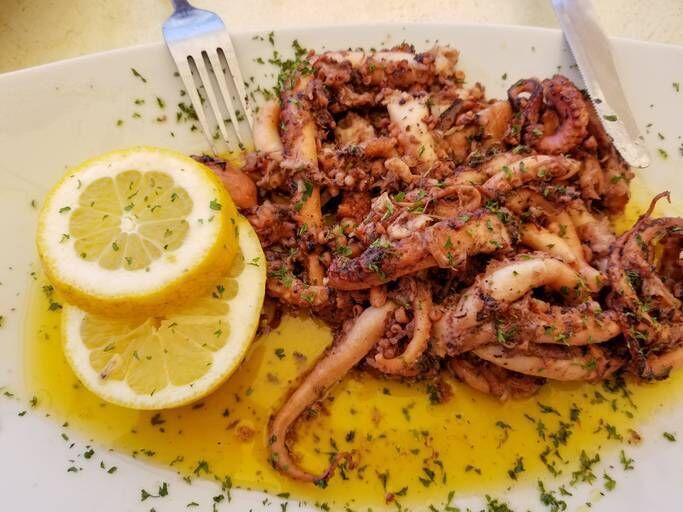
Plates of octopus and pasta arrive at a pace that encourages you to stay longer than planned. In Malta, that seems to happen a lot.
This is an island that announces itself in every register: The thunder of cannons across the harbour, the squawk of a preening parrot, the smell of roasted garlic oil on focaccia campania, the bells cascading from a dozen baroque towers at once. Smells, bells, and yells. Byron had it exactly right. Add a melodious Cork accent shouting ‘I’ll be back!’ and you’ve got it all.
Aer Lingus operates up to three flights per week from Dublin to Malta. Aer Lingus saver fares include a free 10kg checked bag. aerlingus.com
Malta Marriott Resort & Spa, marriotthotels.com
Tour operators from Ireland to Malta include:
Plan your trip at visitmalta.com
Esther was a guest of Aer Lingus and Visit Malta
CONNECT WITH US TODAY



Be the first to know the latest news and updates