Aishling Moore: Sunshine vibes with this fab fish stew
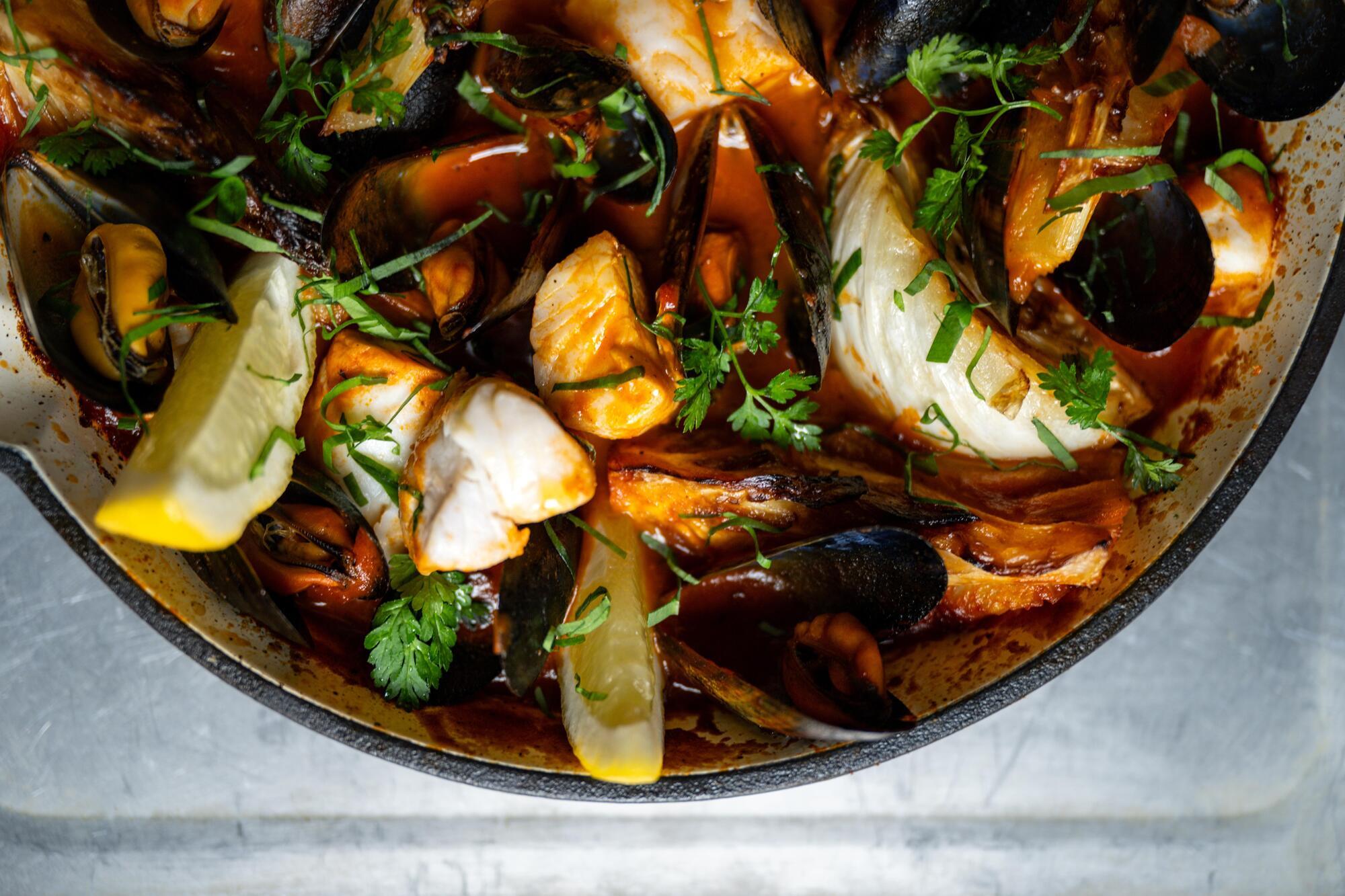
Mussels, fennel and hake stew: Pictures Chani Anderson

It is far from a seafood and caramelised fennel stew that I was raised.
It was ‘skirts and kidneys’ when stew was on the menu in our house. A large pot blipping away on the stove from late morning until early evening, and oftentimes I recall it being started the night before.
The ‘skirts’, thin strips of meat found of the inside of the ribs of a pig and the kidneys of same, were diced up, covered with water and cooked with sliced onion, carrot and a generous seasoning of white pepper. Served with some steamed spuds, it was delicious!
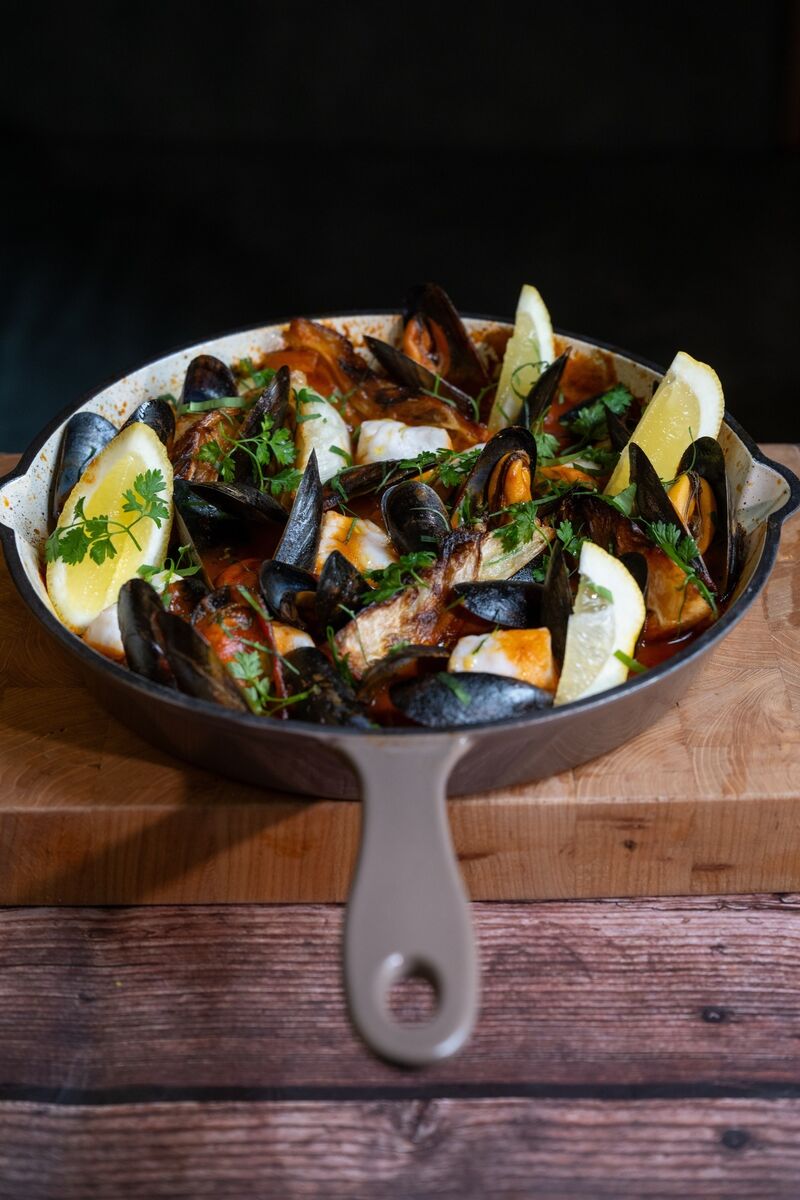
Nowadays, a stew in my house might be a pot of Beamish and shin beef or maybe a butterbean and cavolo nero braise or something like this weekend’s hake, mussel and caramelised fennel stew.
Fennel, whether it’s the vegetable, herb or seed, pairs so wonderfully with seafood. Caramelising the wedges like I have here, intensifies the beautiful anise flavour.
For an umami hit, I’ve used a bag of fresh mussels, but surf clams or cockles or a combination of all three would be fabulous too.
Do include some shellfish if at all possible; the liquor they release when cooking adds real gusto to this dish.
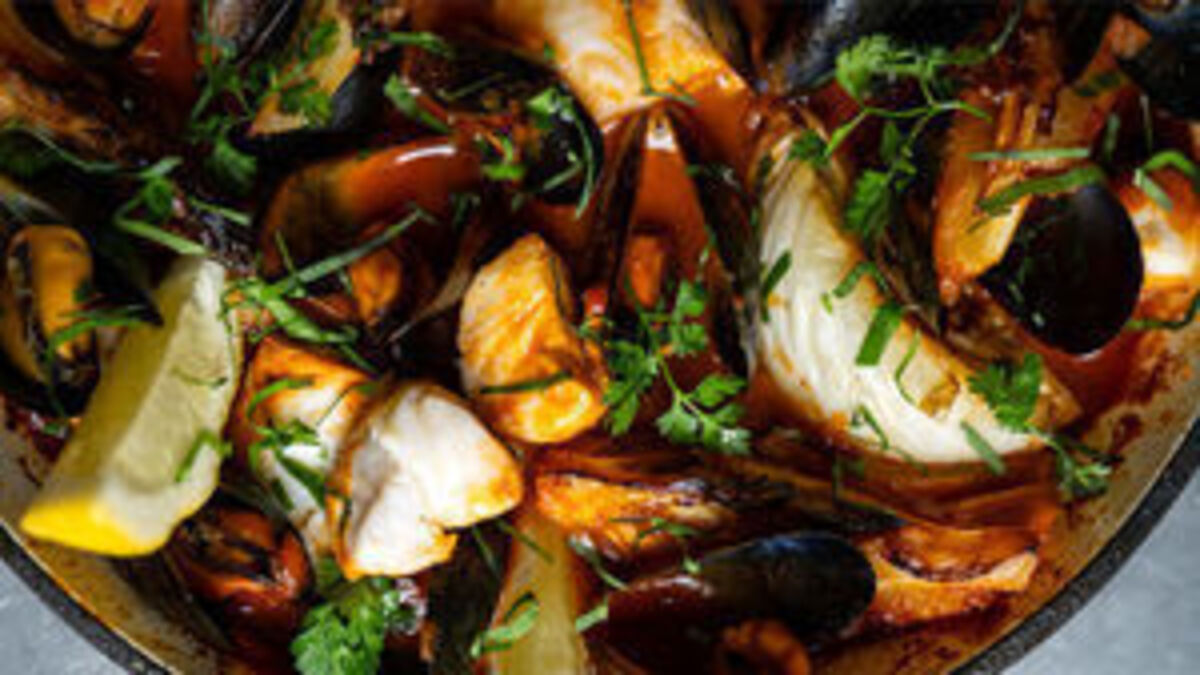
Some lovely chunks of skinned fresh hake are added at the final moments. Steamed in the beautiful aromas of the shellfish, reduced tomato sauce and fennel, it’s a fantastic way of cooking fish gently.
As always, use whatever’s fresh and available to you – monkfish, ling or pollock would be excellent in this recipe but so too would some sliced squid or red mullet.
I’ll serve this stew in the centre of the table with a simple green salad, warm crusty bread and a dollop of uber-garlicky aioli.
Mussels, fennel, and hake stew
I’ll serve this stew in the centre of the table with a simple green salad, warm crusty bread and a dollop of uber-garlicky aioli.
Servings
4Preparation Time
30 minsCooking Time
30 minsTotal Time
60 minsCourse
MainIngredients
1 kilo mussels
1 bulb fennel
4 tbsp golden rapeseed oil
2 sprigs of thyme
1 onion, finely diced
4 cloves of garlic, finely sliced
150ml white wine
500g passata
300g hake, skinned and cut into chunks
1 tbsp parsley, finely chopped
1 lemon
Sea salt
Freshly cracked black pepper
Method
To clean the mussels, fill a large bowl with water and add themussels.
Using a small paring kniferemove any barnacles from the shells and the beard of themussel.
The beard is what the mussel uses to attach itself to the surface of which it grows; you’ll find it halfway up the mussel.
Rinse the cleaned mussels in a colander and refrigerate until just before cooking.
To make the stew, cut the bulb of fennel in half, leaving the core attached and slice each at angle into wedges.
Place a large wide-based pot on a moderate heat.
Warm two tablespoons of the rapeseed oil and add the wedges of fennel and sprigs of thyme. Season with sea salt and freshly cracked black pepper and cook to caramelise on both sides. This will take 8-10 minutes.
Remove the fennel and set aside, discard the thyme sprigs.
Add the diced onion and sliced garlic to the pot and cook until golden brown. This will take 10 minutes approximately.
Add the white wine and reduce until syrupy.
Add the passata, season with sea salt and cracked black pepper and cook to reduce on a medium low heat, stirring regularly for 12- 15 minutess until reduced by half.
Taste to adjust seasoning at this stage.
Add the mussels and place a tight fitting lid to cover.
Cook covered for 3-4 minutes until the mussels have opened. Discard any that haven’t opened.
Reintroduce the fennel to the pot and top with the chunks of hake, making sure to spread them out so they cook evenly.
Cover again with a lid and cook for 2-3 minutes until the hake is cooked through and flakes when pressed.
Remove from the heat, scatter with chopped parsley, drizzle with the remaining rapeseed oil and serve with wedges of lemon.
Mussels should only be cooked when alive, so discard any that have cracked shells or do not close when tapped. They should smell fresh and of the seaside.
Store cleaned mussels in the refrigerator with a damp tea towel on top.
Choose a wide-based pot or crock pot with a tight-fitting lid for this dish. This will make such a difference to the end result, allowing for the hake to steam gently sitting atop and around the mussels.
You can swap the passata for tinned chopped or plum tomatoes.
Mussels are naturally high in salt and expel a wonderfully flavourful liquor once cooked so anticipate this when seasoning the stew’s base.