Joe McNamee: Learning how to eat the Wicklow way
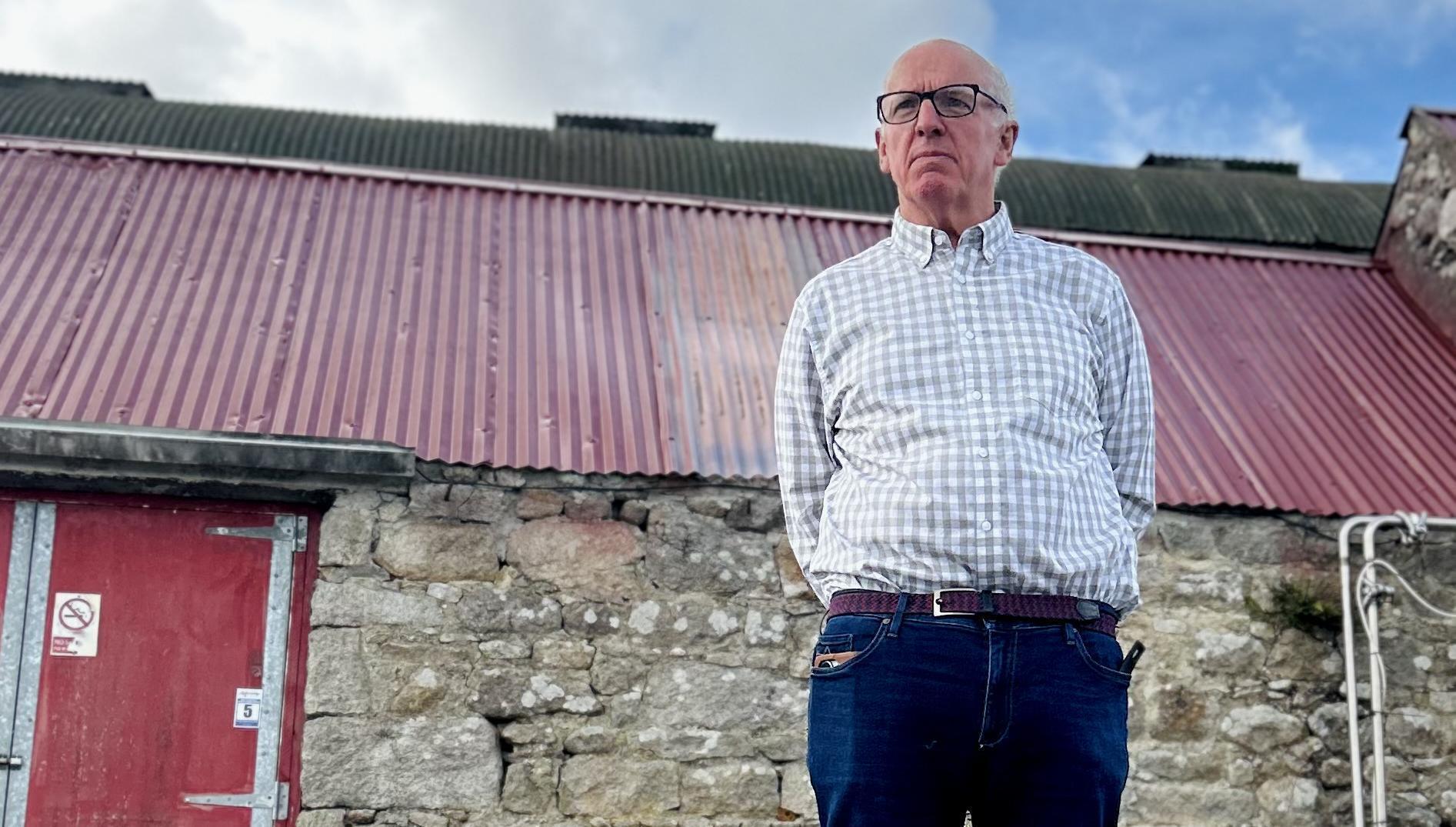
Tom Burgess is a farmer-turned-cheesemaker in west Wicklow, who makes Coolattin Cheddar.
I had always thought if Rural Ireland were to be given a stand in Brown Thomas, Wicklow would be the county awarded the concession.
Visually, it is markedly different to the rest of the country, almost manicured in comparison to the claggy bogland of the midlands or the blasted wild uplands of the Western seaboard — not for nothing is it known as the ‘Garden of Ireland’.
It does have a strong conventional farming tradition, predominantly sheep, followed by dairy, but even those farms visible from a passing car are tidy and well-groomed, nature’s inclination to stray kept well in hand.
Driving through the forested hills and glens or taking the scenic Dublin-Rosslare train, especially where it veers inland after Wicklow town heading for Rathdrum, I would repeatedly have to remind myself I was not in Central Europe.
Postcard-pretty villages and towns could as easily slot into the English country landscape, especially those still bearing archaeological hallmarks of our colonial past in a county that once bordered the Pale.
And I never really associated Wicklow with food, as I would when thinking of, say, Cork or Clare, or Waterford.
But those impressions were formed on the basis of brief and sporadic trips southwards while visiting Dublin, barely scraping the surface.
That has changed forever after several days travelling with fellow food writers from the Irish Food Writers Guild led by Santina Kennedy of Wicklow Naturally, the county’s food producer network, a slow and gradual reveal of a vibrant food culture only now learning to flaunt its charms to the rest of Ireland.
Killruddery House and Gardens is one of those aforementioned Anglo-Irish colonial legacies but owners Fionnuala and Anthony Brabazon are reinventing it for the 21st century, with food as a primary focus.
Employing sustainable food systems, including completely phasing out industrial agri-chemicals, they grow fruit and veg and raise beef, lamb, and pork on the biodiverse estate.
Crucially, the Brabazons recognise that they are part of a wider food community.
A cracking little farm shop is a treasure trove of fresh local produce, and the extent of their achievement and ambition is best realised at their Grain Store restaurant, where head chef Niall O’Sullivan superbly showcases Killruddery’s produce on the plate.
As a farming country with some of the best agricultural land and growing climates in the world, we still lag woefully behind the rest of Europe when it comes to organic farming, although that is beginning to very slowly change, with more conventional farmers making the leap to the bright side.
But Dominic Quinn and Hilda Crampton are no Johnny-come-latelys, having established Castleruddery Organic Farm in Donard in 1989, where Dominic’s family farmed for four generations.
Their range of produce is remarkable: Familiar root veg, tomatoes, and salad crops to the more exotic, such as tomatillos, chillies and snake-like violin courgettes.
They have worked with many famous chefs — Niall Davidson is a weekly visitor, ‘shopping’ for his Dublin-based Allta restaurant.
A farm the size of the comparatively small Castleruddery will only ever feed a finite amount of people but what impresses me most about Dominic and Hilda’s decades-long achievement is its potential to inspire and educate, because a thriving network of such farms around the entire country is essential to restoring our native horticulture sector and achieving true food resilience and sovereignty as a nation.
We encountered many other fine producers and hospitality practitioners on our trip, too numerous to mention but sufficient to persuade me that Wicklow really is a ‘food county’.
I will mention one, however, well known to me for quite some time, at least on the plate. Tom Burgess is a farmer-turned-cheesemaker in west Wicklow, who makes Coolattin Cheddar.
One of the world’s best cheddars, it has won top prize two years in a row at the World Cheese Awards. Our visit was my equivalent of a sacred pilgrimage, eating skelps of Mount Leinster and Coolattin Mature in the farmyard on a blustery yet sunny morn, my idea of true healing.
Up Wickla, indeed!
Galway-based social enterprise Hinterland will deliver The Living Table, a series of seasonal on-farm workshops at Leaf & Root Farm in Loughrea, Co Galway (Sept 21/Oct 5).
Founded by former Michelin-starred chef, Enda McEvoy (Loam, Galway), farmer Fergal Anderson (Leaf and Root Farm), and producer Claire Davey (formerly, America Village Apothecary), Hinterland aims to connect food, people and place and to create and scale a sustainable food supply model that enables farmers, producers, and communities to thrive.
The workshops, combining the practical with the intellectual, include a guided walk of the horticulture and woodland farm, a hands-on fermentation workshop with McEvoy, and lunch, after which participants can choose to participate in one of three workshops: Seed Saving, with Fergal Anderson; Herbal Tincture Making, with Claire Davey; or Advanced Flavour Fermentation, with Enda McEvoy.
The day finishes with a Collaborative Mapping Session, to guide groups in creating a collective food vision map, to create just and resilient local food systems.
You may have gathered over the years that I am part man, part cheese, and for such a soul, there is only one place to be this September and that is Bra, in Piemonte, in Italy, for Slow Food’s Cheese (Sept 19-22) where the Irish raw milk presidia has long flown the flag for Irish cheeses.
If you find yourself at a loose end and with the wherewithal to head there for a few days, this is a truly mind-blowing assemblage of some of the world’s finest traditional cheeses and the people who make them, all hosted in a most beautiful part of the world.
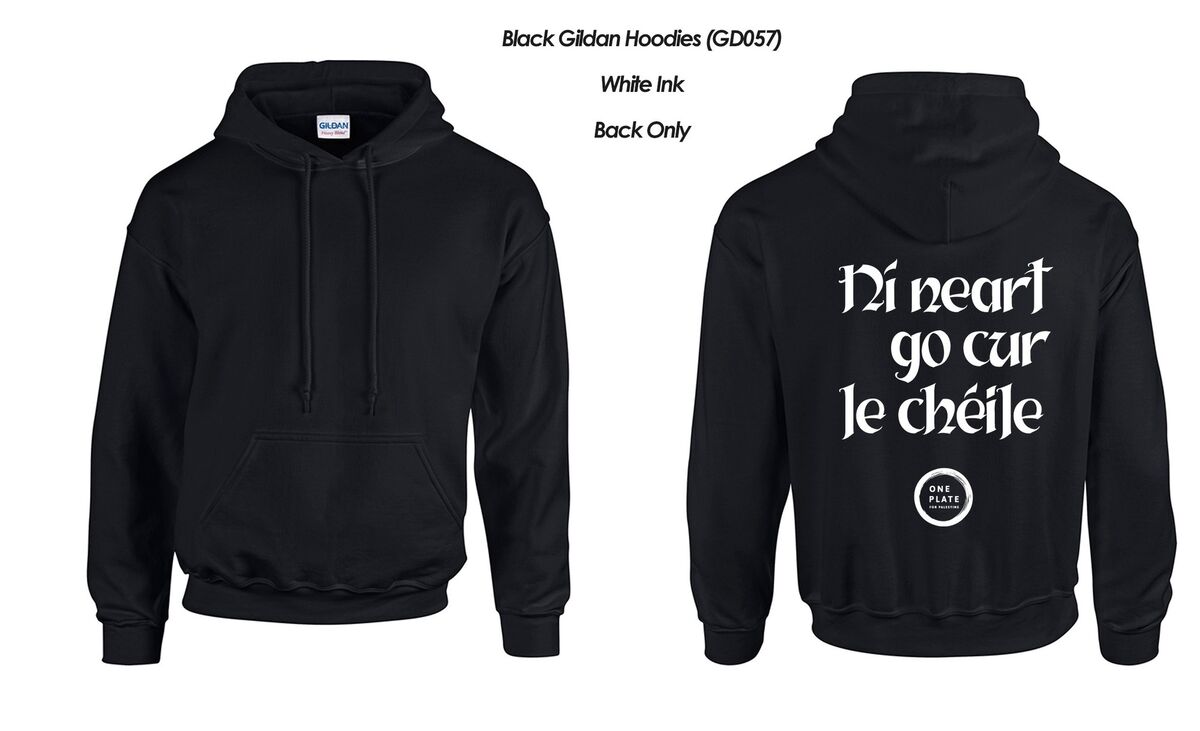
The One Plate for Palestine initiative, recently featured in this column, and encouraging Irish restaurants to create a special dish to raise funds for the starving people of Gaza has come to an end.
Conceived by Beverley Mathews (L’Atitude 51) and Barbara Nealon (Saint Francis Provisions), it has raised a staggering €111,650, way above the initial €25k target, and funds raised will go to Gaza Go Bragh and Tea Collective, wonderful grassroots organisations providing urgent support on the ground in Gaza. But while the edible element of the campaign is over, there is still a chance to donate by purchasing from their range of One Plate for Palestine hoodies, hats and aprons.