How to grow a kitchen garden and a recipe for the salad leaves you harvest
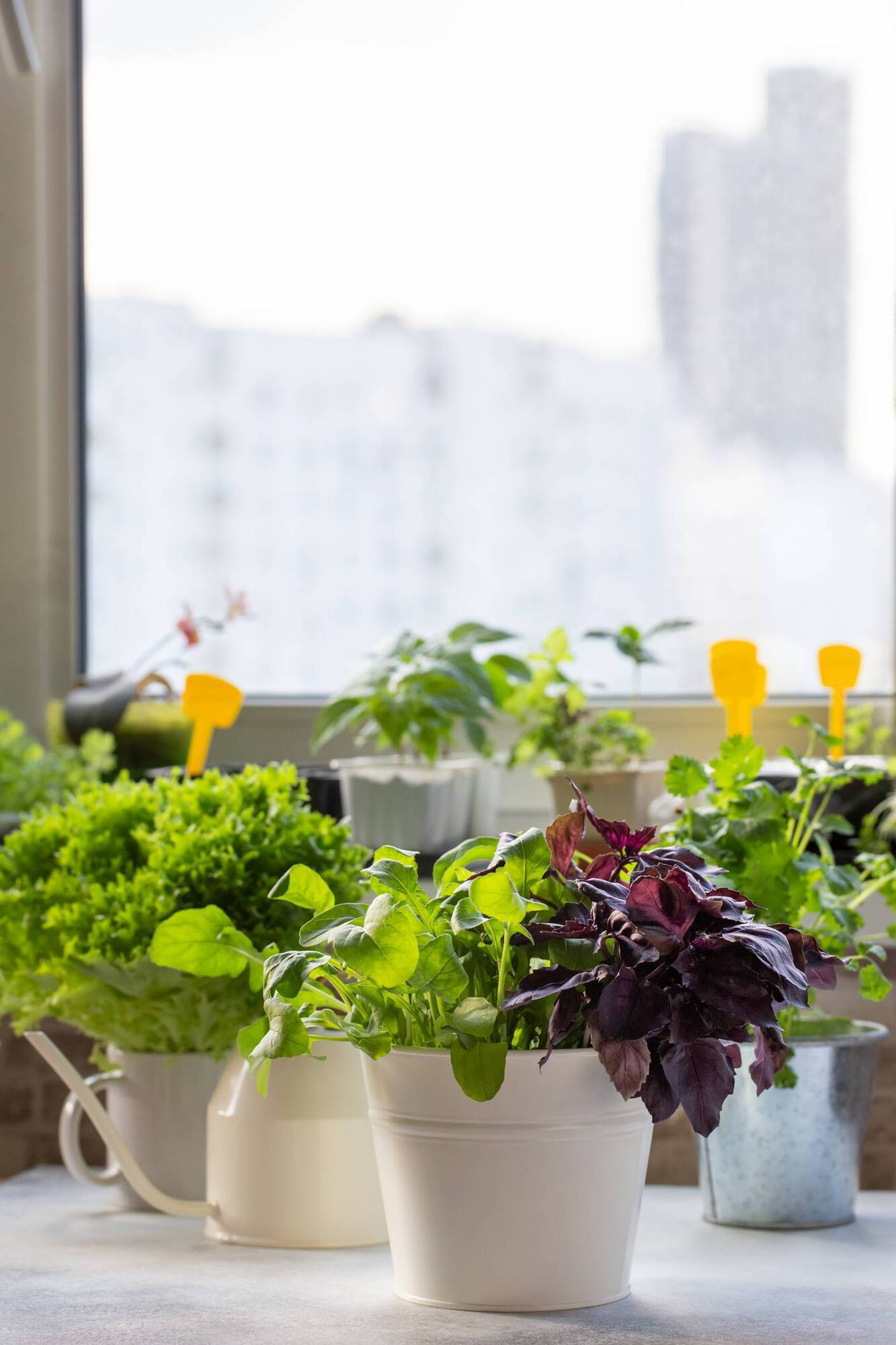
You can grow a kitchen garden on your window sill very easily.
My passion for encouraging virtually everyone I meet to grow some of their own food may seem baffling. Why bother? There’s never been a time in history when such a wide variety of foods is available.
Every shop and supermarket in the country is stacked to the ceiling with tantalising products, enticingly labelled with a delicious promise of flavour and health benefits – a seemingly endless supply of super processed foods to make our lives easier. But, we now know that this kind of food is, quite simply, killing us.
This may sound like a rather extreme reaction but a growing body of research leads us to the undeniable conclusion that a diet high in ultra-processed foods is, at the very least, detrimental to our health in a variety of ways. This type of food is being linked to many auto-immune diseases, type-2 diabetes, diverticulitis, cancer, heart disease and obesity.
But what to do? For many people, it’s simply not possible in the midst of our busy daily lives, to find the sort of wholesome, nourishing food we would like to feed ourselves and our families.
Growing your own food adds another dimension to the word - local - after all, what could be more local than food that comes from your balcony or garden - the ultimate traceability and a supply of fresh organic food ready to harvest at a moment’s notice.
For me, the security of knowing how our food is produced is reason enough to grow your own.
If you are tight on space, then consider growing in containers.
Many herbs, vegetables and fruits can be successfully grown in a variety of pots. However, growing in small containers is definitely more challenging and you need to understand a few fundamentals.
1. A source of rich, fertile soil is essential.
2. The container needs to be large and deep enough to allow plenty of room for the roots of the chosen plant or plants to spread. It must have drainage holes so the plant doesn’t get water-logged.
3. The greater the soil depth the more choice one has – 15cm is quite enough for salads but at least 30cm will be needed for carrots, for example.
4. You may need to feed the plants occasionally.
5. There is more danger of the plants drying out on a sunny day.
6. All manner of boxes, crates, old drawers, baths, troughs, zinc buckets or tanks, clean oil drums, old or not so old log baskets, hanging baskets, tin cans or chipped bowls can be used as containers.
A variety of shapes and sizes add interest but standard terracotta or black plastic pots are also fine and practical. Hanging baskets can also be slung over the railings of a balcony to increase growing space but make sure they don’t drip down on neighbours!
It’s important that the container is large enough to hold enough soil or compost to provide the plant with nourishment and moisture and allow ample space for roots to spread. Grow bags are convenient for both tomatoes and cucumbers.
Some containers can hold several plants; nasturtiums, marigolds and borage grow easily, add colour, attract beneficial insects and can be used to embellish your dishes.

Grow what you like to eat, certainly a selection of fresh herbs and here are some vegetable suggestions also. Some containers can have several plants, nasturtiums and marigolds and borage grow easily, add colour and attract beneficial insects and can be used to garnish to embellish your dishes.
- Radishes, salad leaves, Asian leaves and mustard greens all grow easily in tubs.
- Spinach, rocket, chillies, and spring onions are fun to grow on window sills.
- Peas, snow peas and sugar snaps - the more you pick the more they’ll produce.
- Grow three runner bean plants on a wigwam in a 38L (10 gallon) container.
- For tomatoes look into some of the tumbler varieties. Hundreds and Thousands, Tumbler, Tumbling Tom Red and Yellow, Garden Pearl, Sungold are all great in hanging baskets.
- Beets, both roots, stalks and leaves are edible. Kale, again if you harvest just a few leaves off each plant, more leaves will grow.
- Rhubarb will grow voraciously. Grow one plant in a 38L (10 gallon) container or a half barrel.
Nectarine, prosciutto, Mozzarella and spearmint salad
Home-grown peaches and nectarines are deliciously juicy and pair beautifully with prosciutto to make this summer salad more substantial
Servings
8Preparation Time
10 minsTotal Time
10 minsCourse
StarterIngredients
4 ripe nectarines or peaches
rocket leaves
12 slices of prosciutto or Serrano ham (optional)
3 fresh buffalo Mozzarella
about 30 spearmint leaves
extra virgin olive oil
mixed flower honey
sea salt
freshly ground black pepper
Method
Halve the ripe nectarines or peaches and remove the stones. Slice each piece into half again.
Scatter a few rocket leaves on each plate. Put 3 pieces of fruit on each serving.
Add some prosciutto or serrano ham (if using). Tear the mozzarella and tuck a few pieces here and there. Season with flakes of sea salt and freshly ground pepper.
Scatter with torn spearmint leaves. Drizzle with extra virgin olive oil, add a little honey and serve.
This recipe is from Grow, Cook, Nourish by Darina Allen, published by Kyle Books.