They might be giants: Sean Henry on his exhibition at Galway Arts Festival
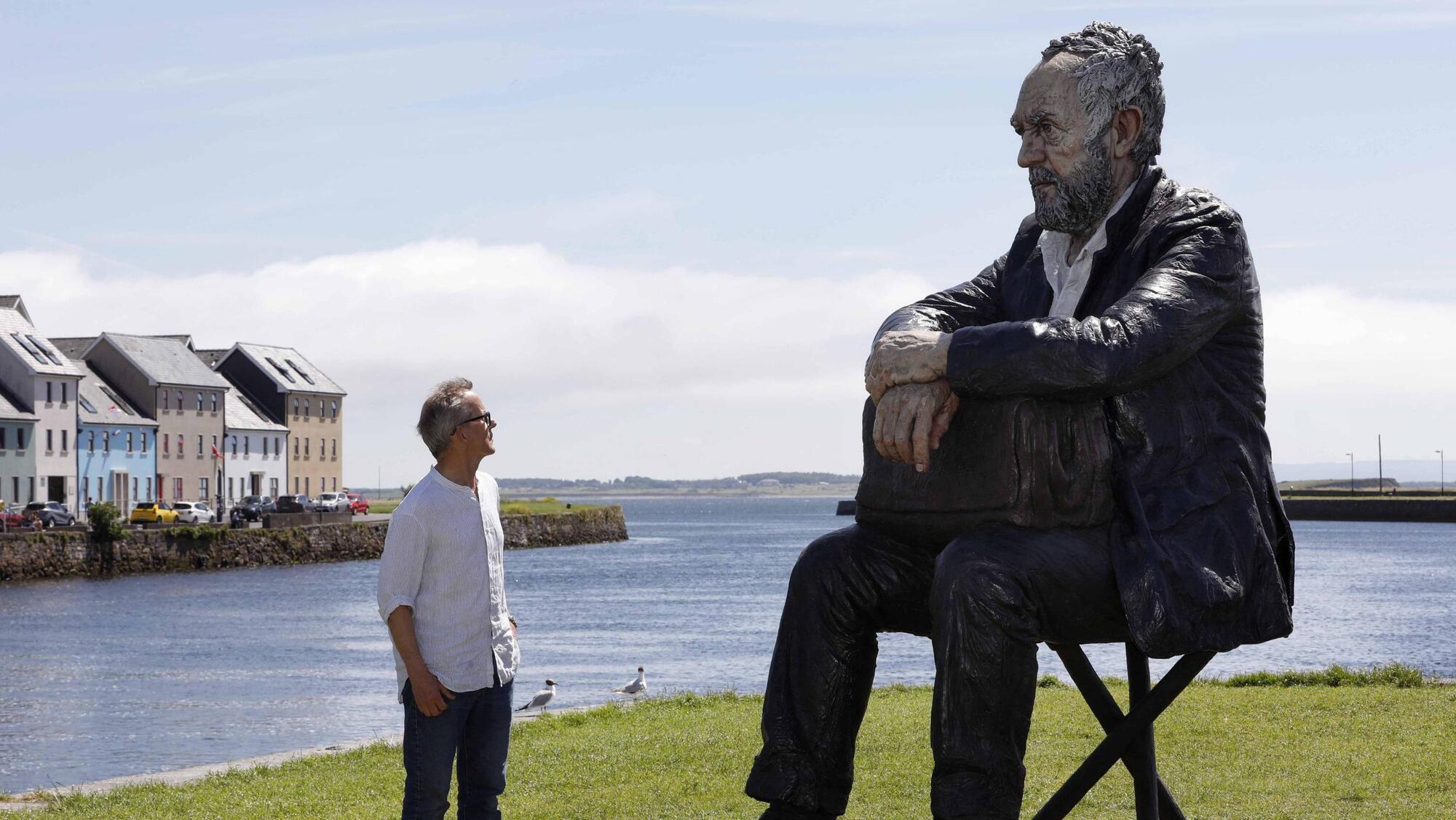
Sean Henry with his Seated Figure sculpture at Galway International Arts Festival. Picture: Mark Stedman
It’s just a few weeks since the British artist Sean Henry’s three-metre tall bronze sculpture first appeared at the Middle Arch by the Corrib Basin in Galway city.
Regrettably, it is not a permanent fixture, but it will remain in place for the duration of Galway International Arts Festival, along with another of Henry’s outdoor pieces, , in Eyre Square, and , an exhibition of 22 of his pieces at the Festival Gallery at William St.
Henry’s sculptural figures tend to be taller or shorter than life-size, an approach he believes is more likely to engage the viewer.
“I think if you see a sculpture or a thing that's exactly like you, you instinctively reject it,” he says. “You think, this isn't real, you know. Whereas if it’s smaller or larger, it leaves room for your imagination. It's quite impactful.”
His figures also tend to be anonymous. “Sometimes they’re based on a combination of people. , for instance, was partly inspired by an Edvard Munch portrait of a writer called Hans Jaeger, which is a painting I particularly like. But then, there’s a bit of me in it as well. People might wonder who these figures are, but I’d rather they ask, how are they doing? And how are they dealing with their life issues?”
Henry grew up in Surrey and is now based near Winchester in Hampshire, but as his name suggests, he has Irish heritage. “My father was born in Clones, Co Monaghan,” he says. “But the family moved to Britain when he was still a baby. And that’s where I was born, in Woking.”
His exhibition in Galway came about after Henry took his family to see a Billy Eilish concert in Dublin last year. “I realised that Galway Arts Festival was on at the same time, so I went to see it.”
One of the attractions was the Scottish artist David Mach's , a massive sculpture of an exploding cottage. “I know David, I've done a couple of shows with him over the years.
"Afterwards, I wrote to the festival director, Paul Fahy. He was excited about the chance of us working together, and he came over to see a show I had up in Oxford. Then he came to the studio, and we've been working on the Presence exhibition ever since.”
Henry’s sculpture was originally commissioned around 10 years ago by a local landowner for a site on the North York Moors. “We had to get permission from the North York Moor Park Authority, which was no easy thing,” he says.
“It's a 40-mile wide moor, but they'd never put any art there before. It was a pretty fantastic location, I've got to be honest, because I was allowed, after some negotiation, to put him on the top of Castleton Rigg, near Westerdale.
"It was about half a mile from the road, and in the rain, you just think there's someone sitting there. You might even be slightly worried about him, you’d think he hadn’t moved for ages, so you'd better go and see how he’s doing.
"So you drag yourself across the moor and up the hill, and it's only in the last 20 or 30 metres that you realise he's quite big. And then, when you get alongside him, you feel slightly childlike."
Henry has shown the same piece previously at two locations in England, Ely Cathedral, and outside a business school in Oxford.
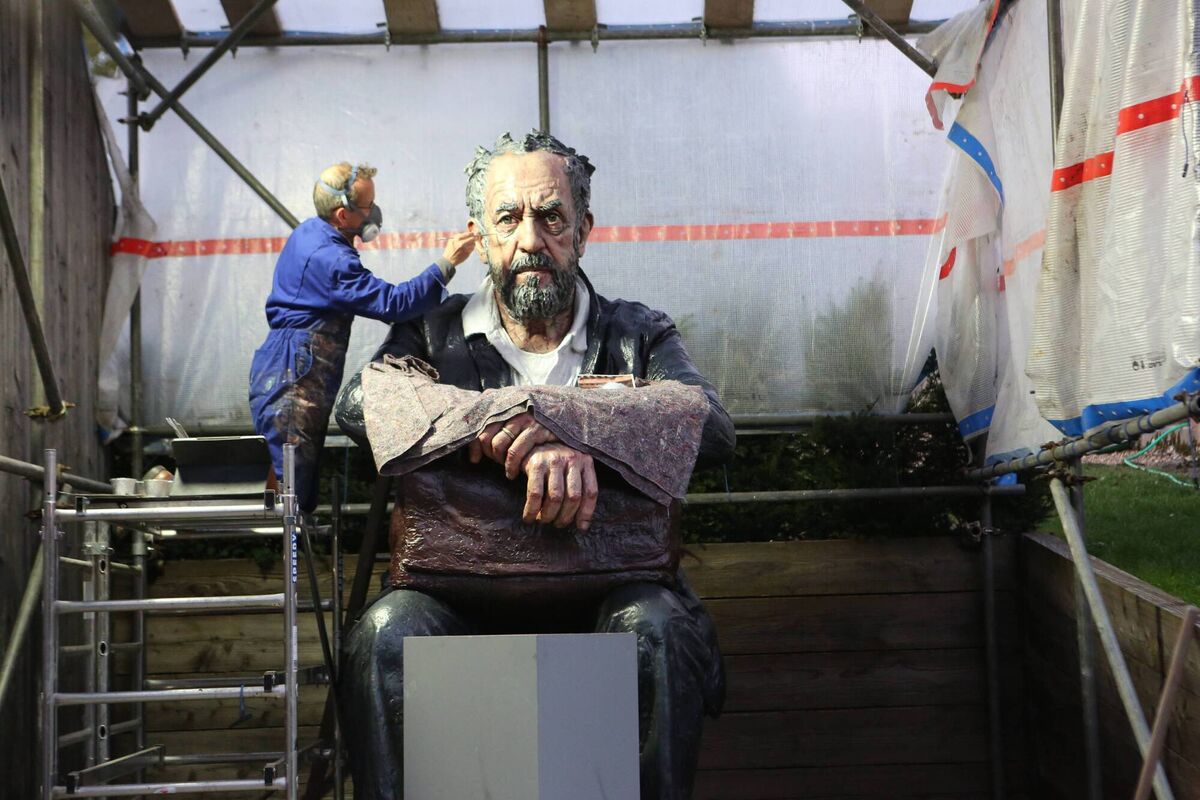
"Each time, people bring different things to the encounter, of who the figure might be. He's got this bag on his knees. If you're in a good frame of mind, he could be on a picnic, but other people say, no, he's a refugee. That narrative potential is key for me.”
Henry’s sculpture, in Eyre Square, is “a seven-foot figure of a man with a long coat, and long grey hair, looking downhill from the top of the square. He might disappear a bit in the crowds, but his head's a bit taller than everybody else, so I think he's spottable. He’s quite a heroic figure, I think.”
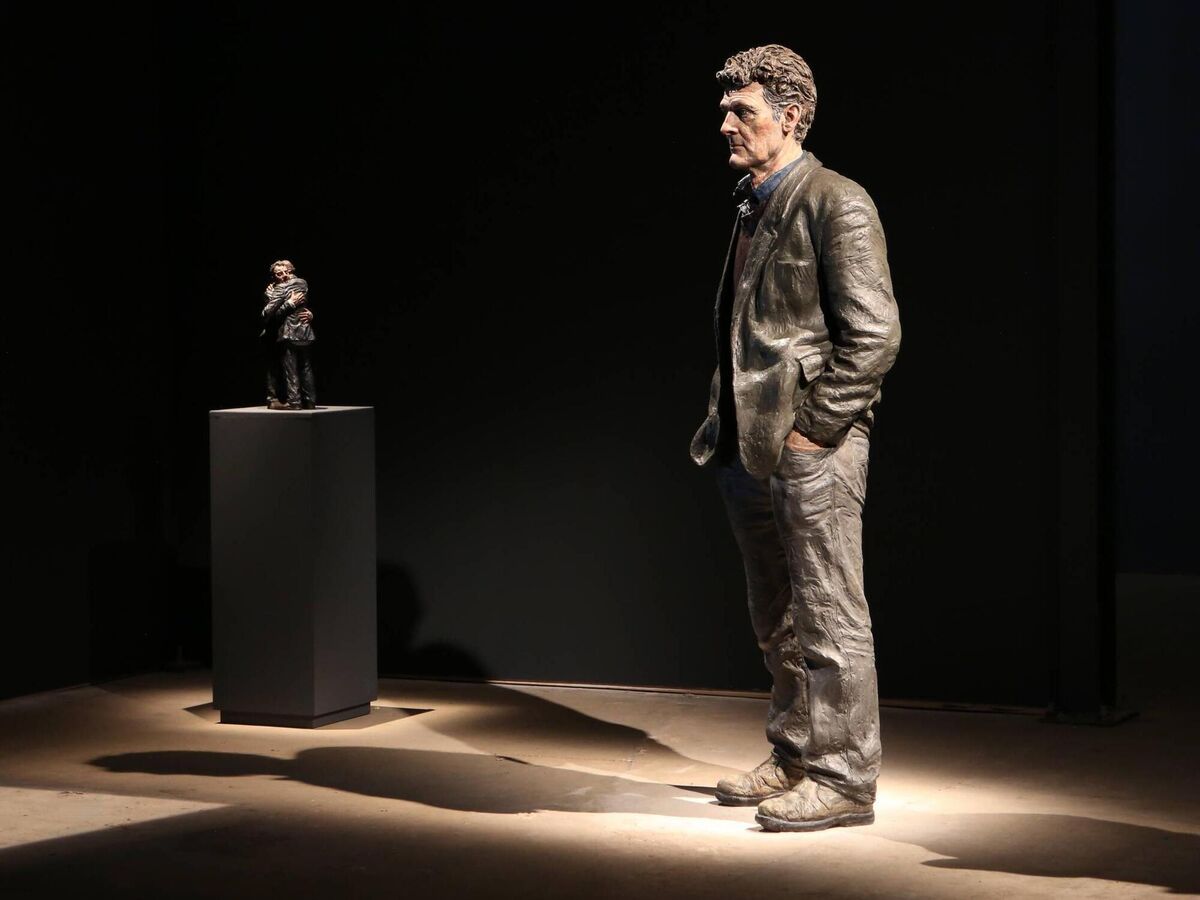
Henry's exhibition will feature a number of new pieces, along with a selection of work from throughout his career. “We've installed the show with theatre lighting, which I've never done before,” he says.
“I was quite anxious about it, but it's been really intriguing. The gallery has a big skylight, and normally, with sculpture, daylight is what I want, because then the light level around the object changes, and so the shape and the shadows change around it.
"But Paul Kelly, who worked on the lighting, was endlessly patient. Over three days, he would shutter the lights, change the lumens, think about the angles and the pools of light on the floor. It feels like walking on stage when you go in there."
Henry began his career by studying ceramics at Bristol Polytechnic. After graduating in 1987, he spent a few years as a visiting artist at the University of California, where he developed his skills as a sculptor.
These days, he starts off by modelling each of his pieces in clay. He then gets a technician in to make a mould out of silicone rubber and fibreglass, which is used to produce a bronze cast in a foundry.
“There's one place I've used in Italy, which is where the big came from, but I’ve used others in London and Basingstoke, which is near where I live, half an hour inland from Southampton. The foundry is where art meets industry. The people working there are very, very skilled.”
This summer is the busiest Henry has ever been, he says. “I’ve got 16 pieces in an exhibition at Uppsala Cathedral in Sweden until the end of August, and I’m showing a couple of larger pieces in Munster, Germany.
"What’s interesting about the exhibition in Galway is how the old and new pieces relate to each other. I think as I get older, it’s not so important when something was made, it’s whether it still connects to people, you know?”
- Sean Henry, Presence is at the Festival Gallery, William St, along with Seated Figure at the Middle Arch and The Wanderer in Eyre Square, Galway until July 26.
- Further information: giaf.ie, seanhenry.com