Aishling Moore: How to make curried coconut poached hake
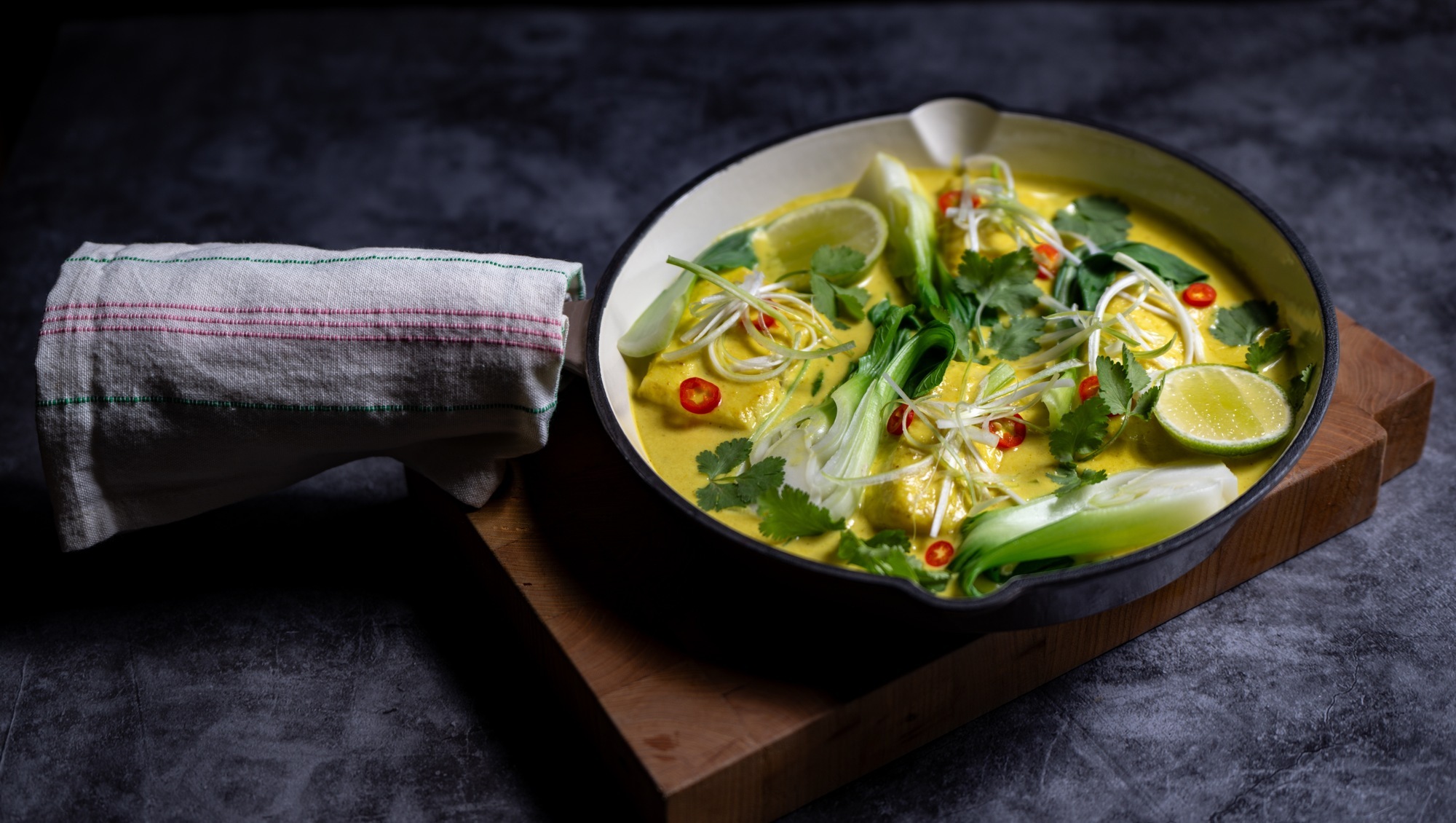
Curried coconut poached hake, recipe by Aishling Moore: Picture Chani Anderson

The delicate nature and composition of fish yield fantastic results when poached so gently.
Controlling the temperature is key when poaching anything. The lowest temperature is desired; the liquor should not be boiling or bubbling. The most subtle heat is all that’s required.
Choose a wide-based pot or pan for poaching, which allows for even cooking and easier temperature regulation. If things suddenly begin to get too hot, just remove the pan from the heat.
Poaching is a brilliant way to season any protein as it’s cooking.
A classic court-bouillon is most commonly used for poaching fish. A simple solution of water, white wine, lemon, onion, peppercorns and soft herbs subtly flavours the fish as it cooks.
This weekend I’ve poached a couple of fillets of hake in a curried coconut milk broth. The whole thing comes together rather quickly.
Garlic, ginger, lemongrass, and ground spices all cooked first, until fragrant before adding the creamy coconut milk. It’s then seasoned with fish sauce and finished with lime juice.
A teaspoon of shrimp paste added when sweating the onion, garlic and ginger would make a fine addition. So too, would a tablespoon of peanut butter, added just before the fish.
I’ve used some beautiful hake here but monkfish tails, fillets of pollock, ling, and cod would all work with this application.
Shellfish too, would be great cooked in this scented broth, the likes of mussels, clams and prawns.
I have removed the skin of the hake on this occasion but the fish can be cooked with the skin on which would make it easier to work with when lifting the cooked fish from the broth.
The skin can be very easily peeled off once cooked. Serve it with steamed rice and your favourite chilli oil.
Coconut poached hake
Poaching is an excellent method of cooking for seafood. The delicate nature and composition of fish yield fantastic results when cooked so gently.
Servings
4Preparation Time
45 minsCooking Time
15 minsTotal Time
60 minsCourse
MainIngredients
For the coconut milk broth
2 tbsp golden rapeseed oil
1 onion finely diced
4 cloves of garlic finely sliced
1 thumb of ginger minced
2 stalks of lemongrass
1 tsp curry powder
1/2 tsp ground coriander
1x 400ml can of coconut milk
300ml fish stock
2tb fish sauce
For the hake
4x100g fillets of hake
2 heads of pak choi sliced
1 red chilli finely sliced
1 carrot finely sliced
4 scallions finely sliced
1 bunch of coriander
1 lime juiced
Fine sea salt
Method
To make the coconut milk broth
Place a heavy and wide based pot on medium high heat.
Warm the golden rapeseed oil before adding the onion, garlic and ginger. Season with a pinch of fine salt and cook to soften, stirring regularly not allowing to colour for 3 minutes.
Smash the lemongrass stalks with the back of a large chef’s knife and add to the pot.
Add the curry powder and ground turmeric and cook for 1 minute to bloom the spices.
Add the coconut milk and fish stock and scrape the base of the pan to release any spices, garlic or ginger attached.
Bring to the boil, season with fish sauce and reduce the heat until the broth is at a temperature just below a simmer. Remove the lemongrass and discard.
To poach the hake
Place the fillets of hake in the pot and spoon the broth over each fillet and poach for 6 -8 minutes depending on the thickness of the fillets. The fish is cooked when its flakes when gently pressed.
Using a slotted spoon remove the fillets of hake from the broth, working as gently as possible.
Place in warm bowls.
Bring the coconut milk broth back to the boil and add the finely sliced pak choi, carrot, red chilli and scallion, cook for 2-3 minutes until the vegetables are just cooked.
Finish with the juice of a lime and taste to adjust seasoning.
Add the cooked vegetables to each bowl and pour over the remaining broth.
Garnish each dish with coriander.
The flavoured coconut broth can be prepared a day ahead of serving.
This broth freezes well so this is a good recipe to double and batch freeze.
Omit the chilli if you’re sensitive to heat.
Swap the pak choi for green beans, Tenderstem broccoli or mangetout, the carrot for bean sprouts or sliced bell peppers.
Make sure to use the widest based pot or saucepan you have, to allow for enough space between each fillet of fish as they poach.
Swap the fish stock for a light chicken stock; you can also use water.
This broth is also excellent used to steam mussels, clams or cockles. Omit the fish stock if doing so.