Darina Allen: Afternoon Tea Week is an opportunity to catch up with friends — and try new recipes
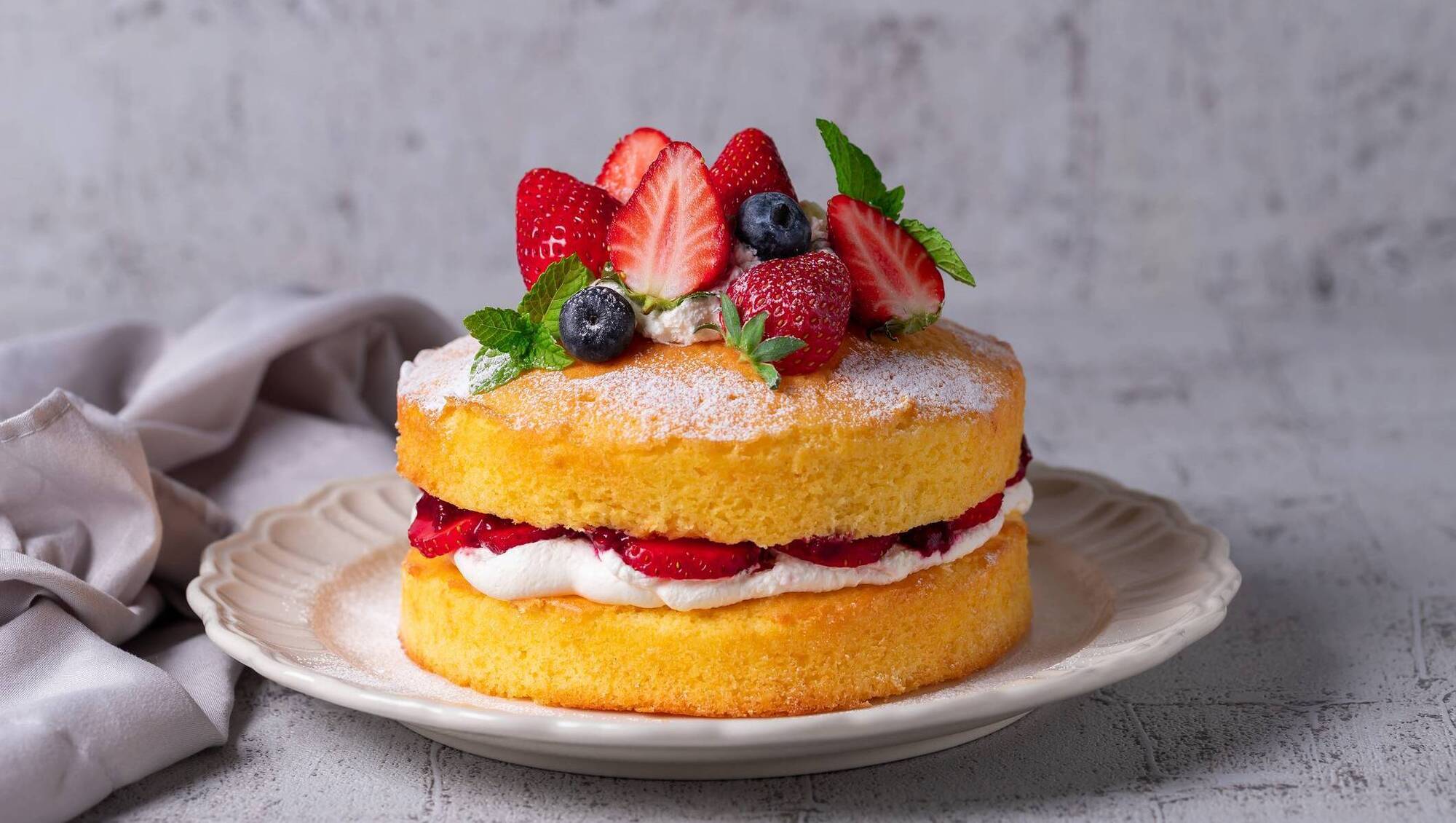
Of course, one must have some tiny cucumber sandwiches and a gorgeous sponge oozing ripe summer berries and crème chantilly.
Guess what? We’re coming up to Afternoon Tea Week (August 10-16), a brilliant opportunity and super easy way to have a catch up with friends. August 12 is also prosecco day, so let’s offer a glass of fizz as well to add an extra bit of fun and sparkle to our ‘get-together’ afternoon tea. Not sure who dreams up all these official ‘weeks’ and ‘days’ but apparently it’s Lemon Meringue Pie Day on August 14, so I’ll include some gorgeous little lemon meringue tartlets.
Root out your best china; tea seems to taste much more delicious out of a delicate china cup. I love embroidered white linen tablecloths and napkins.
I also love doilies; Rory calls me the Doily Queen and it’s not exactly a compliment as far as he’s concerned, Never mind – we all have our own style!
Of course, one must have some tiny cucumber sandwiches and a gorgeous sponge oozing ripe summer berries and crème chantilly.
Tiny scones too, of course they can be topped with homemade raspberry jam and cream, but how about grating a little orange zest into the dry ingredients and topping them with orange butter cream? So good!
At a recent Groundswell event in the UK, I was invited to a Flavour and Nutrient Density lunch hosted by Natoora and RHEA, Regenerative Healthcare European Association, a non-profit organisation run by four dynamic women who, like me, are passionate about nutrient-dense food as medicine. Natoora, founded by Franco Fubini, is based in London, and exists to fix the food system. That’s nutritionally-dense, flavour-first groceries that bring back the joy of food for chefs retailers and home customers.
Franco and his team travel all over Europe seeking out the best growers who produce the most delicious, flavourful, nutrient-dense food. What a joy to be able to access food like this.
We are trying to lure them to Ireland also.
Meanwhile, back to afternoon tea (there is a link!) One of the many delicious dishes on the long table groaning with beautiful food made from fully ripe seasonal produce was a little peach choux bite that wouldn’t win any prizes for elegance.
A choux bun base, filled with cream, sweetened with Lannock honey from the beehives on the farm, on top a slice of perfectly ripe juicy white peach, you can’t imagine how delicious it was. This seemingly simple combination was one of the best things I’ve eaten in years.
When was the last time you managed to find a fully ripe peach or nectarine?
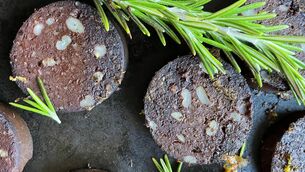
Here’s another taste of summer to adorn your afternoon tea table, almond tartlets with raspberries and mint. A Ballymaloe favourite that Myrtle taught me how to make when I first arrived at Ballymaloe, it’s a little gem that can be topped with many things, but I love it best with ripe summer raspberries, a tiny rosette of whipped cream and a fresh mint leaf. See my Irish Examiner column April 2025 for the recipe.
Lemon Meringue Tartlets
You’ll need super fresh organic eggs for this recipe and good lemons – a brilliant version of a timeless favourite.
Servings
4Preparation Time
20 minsCooking Time
25 minsTotal Time
45 minsCourse
DessertIngredients
For the pastry
175g plain white flour
75g butter
pinch of salt
1 egg yolk (keep white aside for meringue)
2 tbsp cold water approx.
For the lemon curd
50g butter
100g caster sugar
finely grated rind and juice of 2 good lemons
2 eggs and 1 egg yolk (keep white aside for meringue)
For the meringue
4 egg whites, preferably free range
225g caster sugar
4 x deep tartlet tins, approximately 2cm deep x 8cm wide
Method
First make the pastry
Sieve the flour with the salt, cut the butter into cubes and rub into the flour with the fingertips. Keep everything as cool as possible; if the fat is allowed to melt the finished pastry may be tough. When the mixture looks like coarse breadcrumbs, stop.
Whisk the egg yolk and add the water. Take a fork or knife, (whichever you feel most comfortable with) and add just enough liquid to bring the pastry together, then discard the fork and collect it into a ball with your hands, this way you can judge more accurately if you need a few more drops of liquid. Although rather damp pastry is easier to handle and roll out, the resulting crust can be tough and may well shrink out of shape as the water evaporates in the oven. The drier and more difficult-to-handle pastry will give a crisper shorter crust.
Wrap in parchment paper and chill for half an hour, if possible, this will make it less elastic and easier to roll out. Preheat the oven to oven to 180°C/Gas mark 4. Line the tartlets and chill again for 15-20 minutes, line with parchment paper and fill with dried beans.
Bake blind in the preheated oven for 20 minutes. The pastry case must be almost fully cooked. Remove paper and beans, paint with a little lightly beaten egg white and put back into the oven for 5 minutes approx.
Meanwhile make the lemon curd
On a very low heat melt the butter, add caster sugar, lemon juice and rind and then stir in well beaten eggs and yolk. Stir carefully over a gentle heat until the mixture coats the back of a spoon.
Draw off the heat and pour into a bowl (it will thicken as it cools.) Fill the pastry case with the lemon curd mixture.
Increase the oven temperature to 210°C/Gas Mark 6 ½.
To make the meringue
Whisk the egg whites in a perfectly clean dry bowl, until they begin to get fluffy, then add the caster sugar and continue to whisk until they form stiff peaks. Immediately either pipe or spread over the cold lemon curd with a spoon.
Bake in the preheated oven for 6-7 minutes.
Serve warm or cold.
Note: Do not whip the egg whites and make the meringue until you are ready to use otherwise if it sits around, it will lose volume. If the meringue is not piped immediately it will split.
Crunchy Orange Butter Scones
The trick to these sweet white scones is to make sure that the butter is really chilled so that it breaks and crumbles into the flour to give the scones their extra-special light texture.
Servings
10Preparation Time
10 minsCooking Time
10 minsTotal Time
20 minsCourse
DessertIngredients
450g plain white flour
25g caster sugar
1 ½ heaped teaspoons (30g) baking powde
pinch of salt
75g butter, cut into small cubes and chilled
2 small eggs
225ml full-fat milk (approx.)
*egg wash
40g crunchy demerara sugar (preferred) or coarse granulated sugar (approx.) for the tops of the scones
To serve
orange butter (see recipe)
sprigs of fresh mint to garnish
Orange Butter recipe
75g butter, softened, plus extra for greasing
1½ tsp finely grated orange rind (I like to use organic oranges when available)
100g icing sugar, sieved
Cream the butter with the finely grated orange rind. Add the sieved icing sugar and beat until fluffy.
Method
Preheat the oven to 250°C/Gas Mark 9.
Sieve all the dry ingredients together into a large, wide bowl. Toss the chilled butter cubes in the flour and rub them in by hand until the mixture resembles coarse breadcrumbs.
Make a well in the centre. Whisk the eggs with the milk, then add to the dry ingredients in one go and mix to a soft dough.
Turn the dough out onto a floured worktop. Don’t knead, but shape just enough to make a round. Roll out to about 2½ cm thick and cut or stamp into scones
Try to stamp them out with as little waste as possible, as the first scones will be lighter than the second rolling.
Brush the tops of the scones with egg wash then dip each one in crunchy Demerara sugar.
Put the scones on two baking trays – no need to grease. Bake on the middle shelf of the preheated oven for 10 minutes, until golden brown on top. Cool on a wire rack.
Serve split in half with orange butter or pipe a rosette of orange butter on top. Garnish with sprigs of fresh mint.
Egg Wash: Whisk one egg thoroughly with about a dessertspoon of milk. This is brushed over the scones to help them brown in the oven
Practical Tip: Scone mixture may be weighed up ahead – even the day before. Butter may be rubbed in but do not add the raising agent and liquid until just before serving.
Summer Berry Sponge
Light as a feather oozing of summer!
Servings
8Preparation Time
15 minsCooking Time
25 minsTotal Time
40 minsCourse
DessertIngredients
4 medium eggs, preferably free range
110g caster sugar
1 tsp of pure vanilla extract
110g plain white flour
For the filling
2 rounded tbsp of homemade raspberry jam
450g mixture of raspberries, sliced strawberries and blueberries or whatever you have
For the crème chantilly
300ml cream, icing sugar and a tiny drop of vanilla extract to taste
mint, lemon balm or sweet cicely to decorate
icing sugar for dusting on top
2 x 20.5cm round cake tins
Method
Preheat the oven to 180°C/Gas Mark 4.
Brush the sides and base of the tins carefully with melted butter. Cut out a circle of parchment paper and fit it neatly into the base of each tin.
Put the eggs, sugar and vanilla extract into a bowl of an electric mixer and whisk until it is a pale and fluffy mousse - 15 minutes approx. When you lift the whisk, make a figure of 8 on top: it should hold its shape for several seconds.
Put the flour into a sieve and sift gently over the mousse; fold in the flour with a spatula or a long-handled metal spoon (not a wooden spoon). Turn gently in the prepared tins and bake in the preheated oven, for 20-25 minutes approx., until cooked. It should shrink away from the sides of the tin when done.
Turn out on a wire tray, peel off the parchment paper and allow to cool.
Once cool, whip the cream until it forms soft peaks – add icing sugar and a drop of vanilla extra to taste.
Spread a little raspberry jam onto the base of each sponge cake. Spread the cream over the jam. Fill with fresh fruit. Place the remaining sponge onto the cream and press gently.
Dust icing sugar over the top of the cake. Decorate with more fresh fruit, some mint leaves and serve immediately.
August 11
Don’t miss this event celebrating the 5,000-year-old heritage of Irish mead and the vital role of bees in the Irish environment. The event (7-9pm) will include a hands-on mead-making class at sustainability-focused café Poppies.
All ingredients, equipment and expert guidance are provided and every participant leaves with their own honey wine, a glass demijohn and airlock to complete fermentation at home, a souvenir apron and a jar of premium Irish honey. Light refreshments will be served. eventbrite.ie
Don’t miss Camilla Cooks at Kitchen Stories on Staball Hill in Ballydehob – the next series takes place from August 12-15 (5-9pm).
Book through @kitchenstorieswestcork on Instagram or text Camilla on 083 1443263
also in Ballydehob not to be missed - @nativecabins on Instagram.
Plus keep an eye on Inishbeg in Baltimore for events - @inishbeg on Instagram.