Joe McNamee: Sustainable farming at the inaugural Farming for Nature Festival
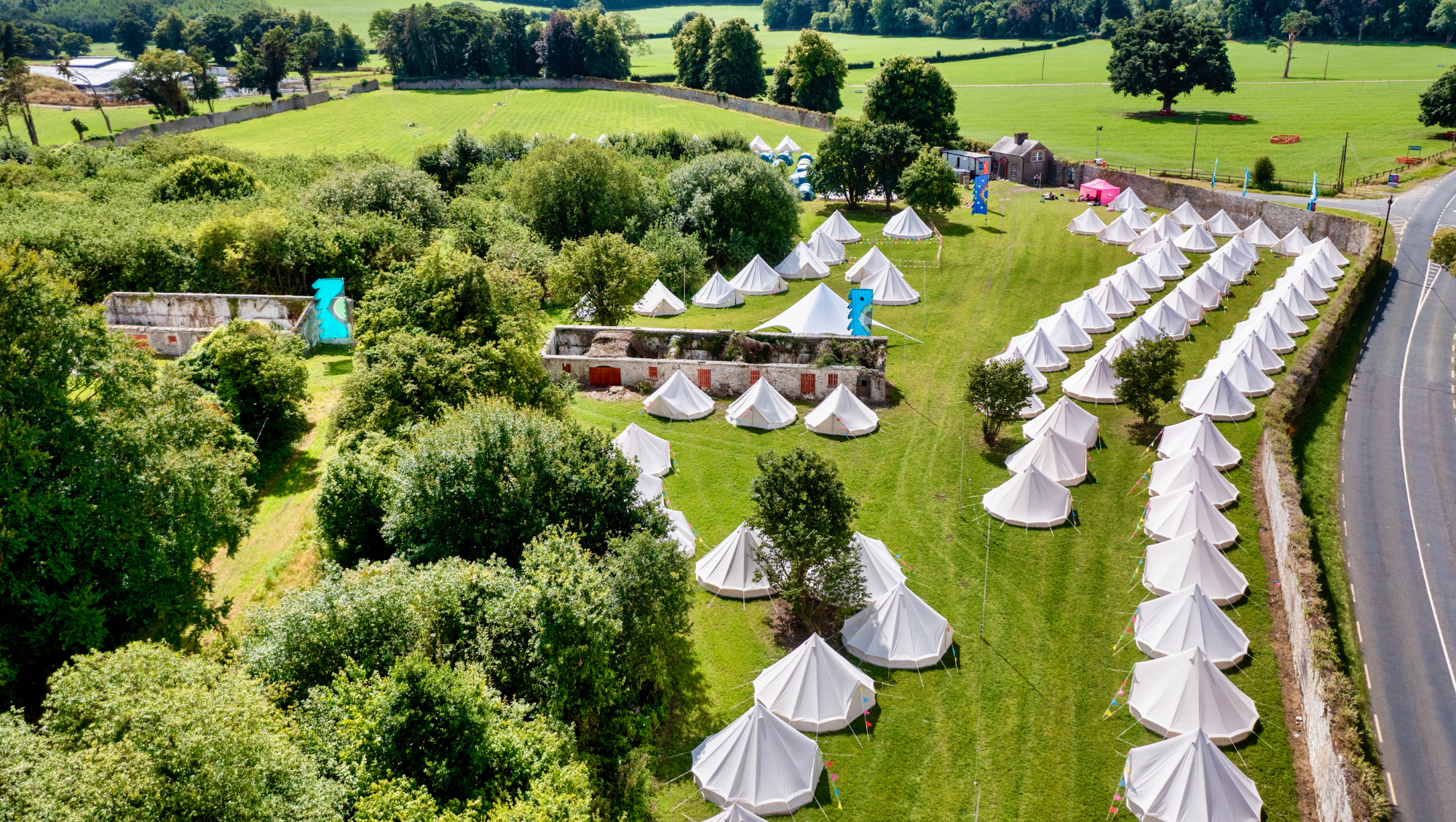
The Farming for Nature festival site at Ballykilcavan Farm, where David Walsh-Kemmis and his family have been farming for 13 generations

I spend almost as much time thinking about food as I do eating the stuff. That includes thinking about agriculture, especially agriculture in Ireland — or at least what now passes for agriculture in Ireland. Irish agriculture appears to have kicked off during the neolithic age (4,000BC-2,500BC), and the main crops were barley and wheat while the introduction of domesticated cattle and sheep, kicked off a dairy sector that has never since let up.
Once agriculture became properly established, its impact was profound, engineering the creation of what we now recognise as modern society, with the introduction of specialist trades and crafts, population growth, construction of permanent buildings and structures, and technological innovation (pottery, weaving, tools etc).
It also introduced social inequality and stratification. The hunter-gatherers may have been feisty types, perhaps lacking in the social graces but they were largely egalitarian. Agriculture led to land ownership, wealth accumulation and its inheritance, in turn creating the beginnings of social hierarchy. Nonetheless, agriculture was all about harnessing the power of nature to cultivate the land to grow crops and raise livestock. In other words, to feed people.
Flash forward to 21st century Ireland and that aim of growing to feed seems secondary to the concerted state drive to exploit our natural resources beyond their limits to fuel profits for Irish agri-biz, even as it wreaks havoc on our waters, land and bio-diverse eco-systems. It is the equivalent of using a thoroughbred stallion as a baggage animal, flogging it until it drops.
Teagasc, supposedly Irish agriculture’s brains trust, is responsible for research, development, training, and advisory services and states that it has a responsibility “to deliver the innovation support necessary to add value to Ireland’s agri-food sector”. I couldn’t really find any equivalent self-declared responsibility on their website to ensuring Irish consumers have access to the very best of Irish produce, produced in a manner that ensures the optimal health of the environment on loan from Mother Nature.
The inaugural Farming for Nature Festival (FFN June 22/23) takes place at Ballykilcavan Farm & Brewery, in Stradbally, Co Laois. Farming for Nature (developed by BurrenBeo Trust) is an Irish organisation working with farmers on an approach to agriculture that marries food production with ecological conservation, recognising that, in the long run, it will be the only way to farm. Continue on the path advocated by Teagasc and the agri-biz sector, and we will not only rack up the EU fines for what is the worst level of environmental management in Europe, but we will eventually destroy completely the principle resources of agriculture, land, water and ecosystems, killing the goose that lays the golden egg.
FFN is about improving biodiversity on farms, through improved soil health, natural pest control, pollination, climate/weather resilience and improved water quality.
Many ‘conventional’ mainstream farmers who have engaged with FFN acknowledge that not only do such practices regenerate the environment but also put money in their pockets, now and in the future, by ensuring the long term viability of the land, in a way no nitrate derogation will ever do, as Teagasc and the Irish agri-biz sector continue to operate as if they can ‘out-science’ mother nature.
FFN Festival is not just for farmers but for anyone producing food on the land or with an interest in same and that includes consumers. The ‘festival’ angle is well covered: After all, Ballykilcalvan Farm also has a craft beer brewery, making fine beers with their own crops. There will also be food trucks offering local food, music, entertainment, camping and social spaces for downtime, including solstice evening event.
The second day offers hands-on learning for farmers of all stripes and ages, structured to ensure ease of access for all, from those first exploring nature-friendly farming to those already well advanced in regenerative systems, and a highly impressive panel of speakers includes Darina Allen, Ella McSweeney, Mick Kelly (GIY) and Patrick Holden (Sustainable Trust) along with several working farmers. Maybe someone from Teagasc might pop along to pick up a few tips?
Taste The Golden Vale (June 25-28) at Kildorerry Hillfest will celebrate the producers of North Cork, The Golden Vale and Ballyhoura Country, with a special meet-the-maker showcase long table dinner. A four-course banquet will feature the best of local fare (including Donnybrook Farm, Doneraile, Open Hearth Farm, Glanworth, and Galtee Honey), with a starter from O’Callaghan’s, Mitchelstown, main course from Thatch & Thyme, Kildorrery, and desserts and petits fours from Praline, also in Mitchelstown
Terre Executive Chef Lewis Barker is on a roll right now, not only overseeing his Michelin two-starred restaurant but darting around the country for various pop-ups. And even when he’s at ‘home’, he doesn’t seem to have a moment to put up his feet with the launching of a new guest chef collaboration series, ‘Friends of Terre’.
First in the series sees chef Michael Wilson (of Michelin-starred Marguerite, Singapore) joining Barker at Terre to cook two nine-course dinners (June 17/18) in what promises to be a spectacular feast.
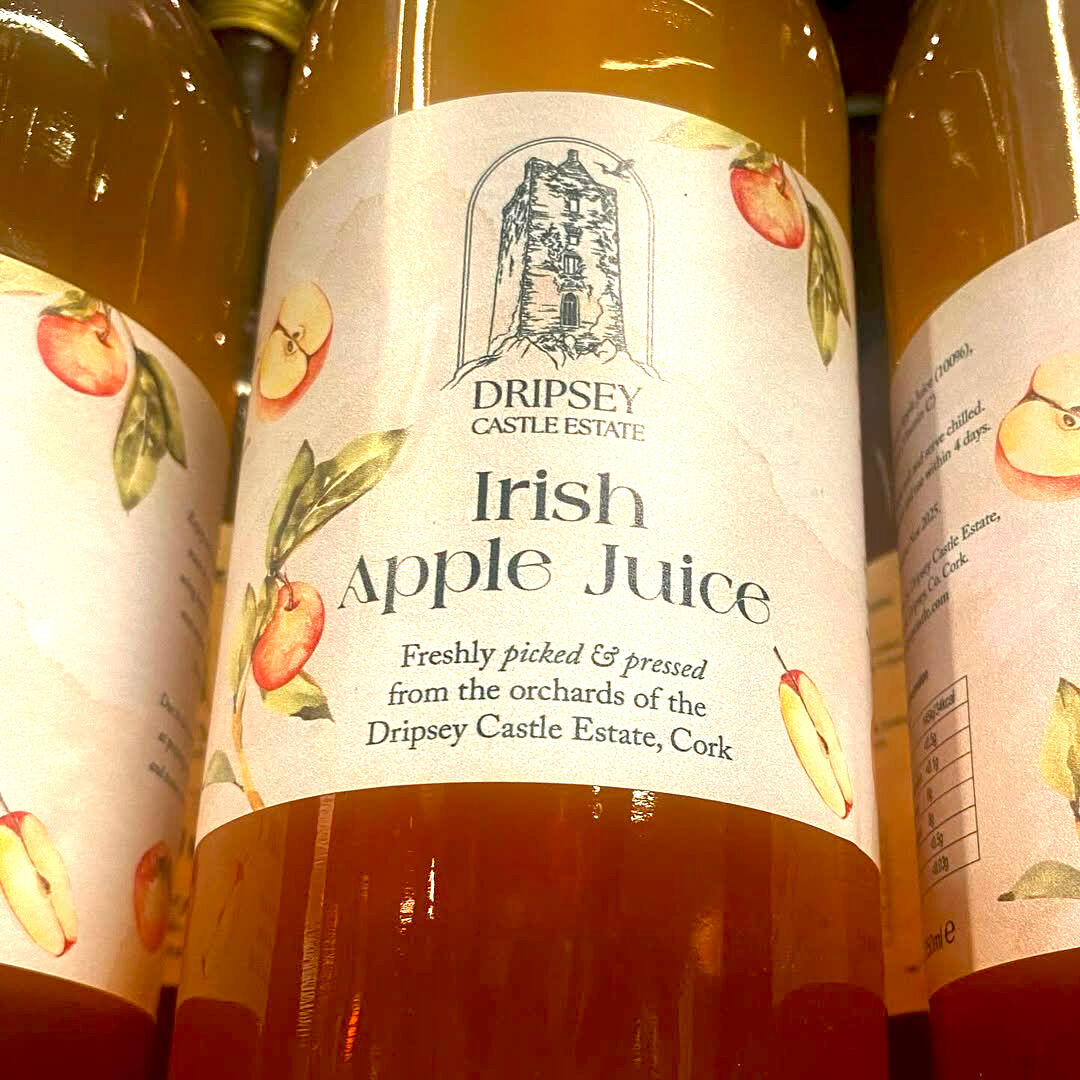
Crisp and mildly tart with a hint of tannic must suggesting heritage apple varieties, it resolves into a sweet, lively and long slow dance on the palate.
Gorgeous served chilled and solo, it is also a cocktail cracker, very good with certain gins and the base for many a fine non- alcoholic cocktail as well.