No farm, no ag science, no problem: Balbriggan duo reach Irish Angus final

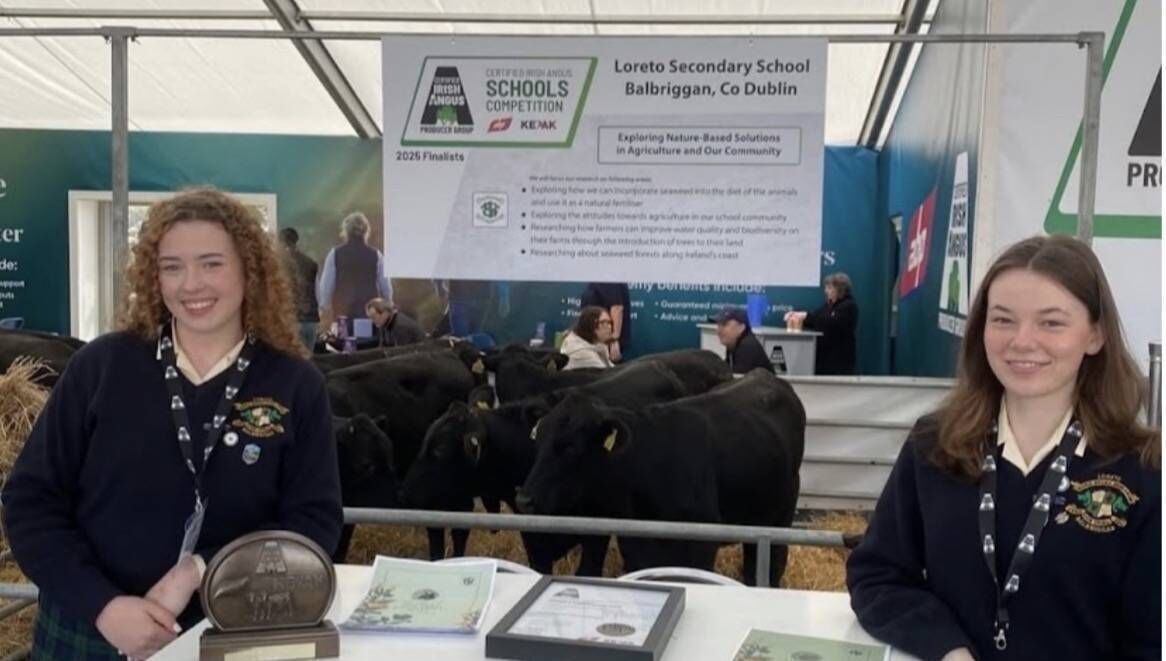
(Left to right) Grace Allen and Emer Dawson at Brussels as part of the Certified Irish Angus Schools Competition.
A pair of students from Balbriggan, Dublin, with minimal traditional agricultural knowledge compete head-to-head in the finals of the Certified Irish Angus Schools competition.
Emer Dawson and Grace Allen from Dublin have shaken up their school, Loreto Secondary School, Balbriggan, by reaching the finals of the Certified Irish Angus Schools competition.
Ms Allen doesn’t come from a farming background, and Ms Dawson’s agricultural experience wasn’t entirely conventional, with experience helping her grandfather on his farm in Leitrim, where he kept alpacas.
Although neither has traditional experience, the pair aim to champion smaller farmers and farm holdings through nature-based solutions in agriculture.
"Our project really focuses on the fact that we're here for the small farmers... Not everyone can have big machinery that costs 100 grand a year.
"You don't need big machinery. You don't need big high-tech green feeders. You just need localised available information, and you need government grant support," Ms Dawson told the .
Read More
The duo’s theme for their project is titled ‘Exploring nature-based solutions in agriculture and our community,’ and it initially began by investigating waterlogged soils and natural-derived fertiliser such as seaweed.
Now closing in on the final, the project has expanded into agroforestry, alder tree drainage systems, seaweed fertilisers and seaweed methane-reducing supplements for cattle.
An initial focus was the implementation of alder trees as a nature-based drainage solution as well as supporting biodiversity. The native tree is typically found alongside riverbanks, lakes, marshes, and damp, boggy areas and could benefit water-logged soils.
The team's research found alder trees help fix nitrogen naturally, reduce runoff, improve water quality, promote biodiversity and are appropriate species to allow for silvopastoral systems where livestock graze between trees within an area.
"They kind of act like a sponge when you put them in the water." Ms Allen explained.
“It benefits the soil, it benefits your animal welfare, it promotes soil fertility and health, water quality and nutrient capture," Ms Dawson added.
Through their research, the team found alder trees offer strong biodiversity support, providing ideal habitats for birds, bats and insects.
"The alder trees attract a lot of life because they provide a habitat for a lot of bats and bugs. It all works in a cycle… They're not just good for drainage; they're good for biodiversity and helping an endangered species,” Ms Allen said.
Coming from a coastal area, the team also investigated benefits of seaweed. Despite seaweed's abundance in Ireland, the team discovered it to be a severely underused resource which could help farmers replace some chemical fertilisers, improve acidic soils and lower methane emissions through feed supplements.
Used in the past, seaweed was widely used but fell out of favour with advancements within the agricultural sector.
Ms Allen explained:
"If it worked in the past, if it's not broke, don't fix it.
With their research into seaweed, Ms Dawson looked into the use of seaweed supplements to reduce methane emissions.
Ms Dawson trawled through data points from the UK as Irish-based methane data points are publicly available, and was able to pinpoint through her work that peak methane production occurs from May to August for animals on grazing systems.
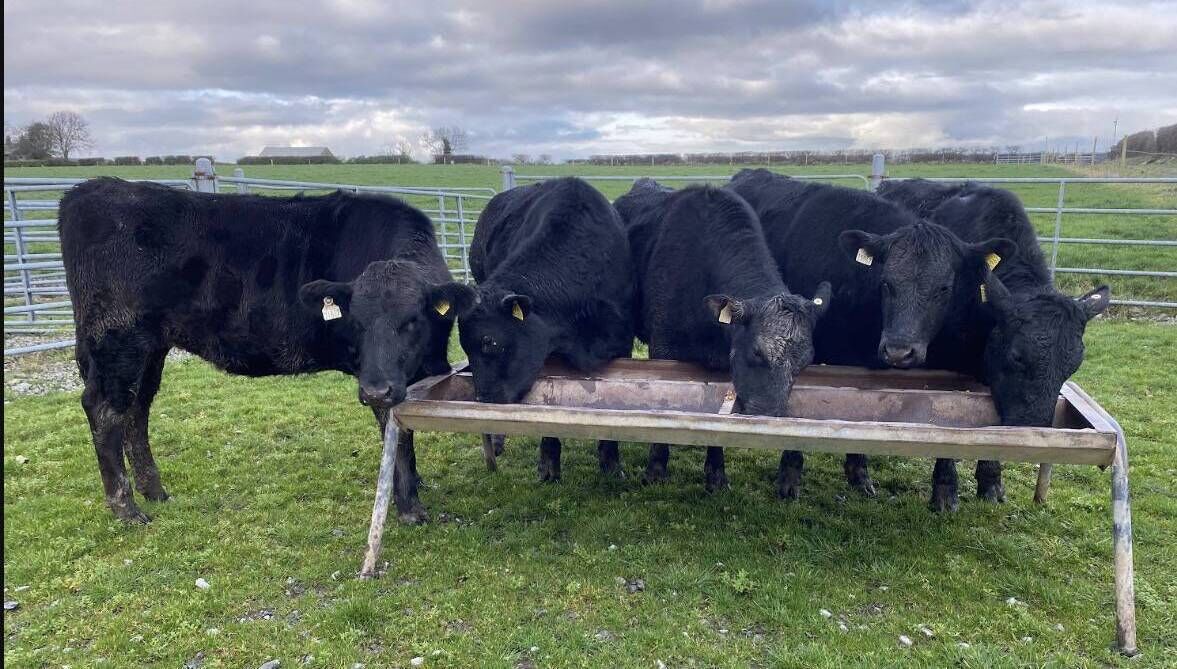
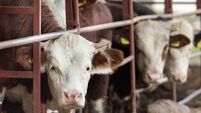
With that information in mind, the team added seaweed supplements to their five cattle's diets during this time, targeting high methane production periods in an effort to lower the carbon footprint of their cattle.
"We found a peak from May to August… We were thinking of efficiently supplementing the cattle during those few months so we can bring down the average methane produced over the year," Ms Dawson told the .
Through this discovery, Ms Dawson highlighted in particular her struggle to obtain public Irish data, resorting to UK research as her “next best” option.
From this hurdle, the team are also advocating for more publicly available data on research that could benefit interested farmers, with Ms Dawson explaining: "The Irish sites don't allow the public to view that data for some reason. Information needs to be made more available and more communal."
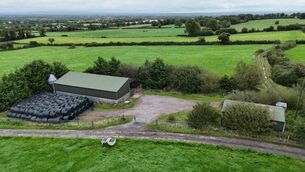
Due to the fact that neither team member had a farm to house their cattle, it was organised that they were kept at Country Crest farm located in Lusk, near to the team’s school.
The duo were actively involved in the upkeep of their cattle, paying visits after school or during the weekends, helping with feeding, vaccinations and pour-on treatments.
The pair were also able to organise trips for classmates to visit the farm and learn more about the project as well as meet the cattle.
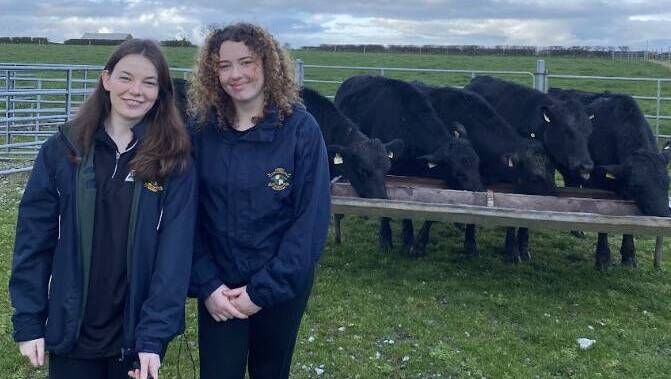
"The farm is only about 10 minutes from our school, so we were able to pop up after school a lot." Ms Allan said, with Ms Dawson adding: "We've been given more hands-on experiences than most students who take ag science in their class would get."
Due to the buzz the competition has created in the school, particularly with students reaching the final year, Loreto Balbriggan now offer Agricultural Science as a transition year module, with Ms Dawson and Ms Allen both hoping that the interest may lead to the module being established for senior cycle students in the future.
"Because of the interest in ag science that we've generated through doing this competition, we have ag science as just a TY module for now, but there are hopes it'll be a full subject in a few years," Ms Allen said.
Ms Dawson explained that there is a real interest in students living in urban areas wanting to connect with rural Ireland and learn about food production.
Ms Dawson said:
"We just need to be given the opportunities to be able to discover more, to learn more and to actually develop that interest into something that could become a career."
Following their visit to Belgium and touring farms there the team came back with a larger appreciation for the grazing systems in Ireland.
"It definitely gave me a better appreciation for Irish beef, Irish agriculture, Irish standards of animal welfare." Ms Allen said.
"In Belgium, they're kept inside all year round,” Ms Dawson chimed in.
Aside from researching and presenting low-cost farming solutions through agro-forestry and seaweed to help farmers meet environmental challenges without the use of expensive technology, the Loreto team, alongside their other finalists from urban areas, have demonstrated a proof of interest in agriculture and its future beyond traditional farming communities.