'You don't need massive changes': Ros Cré students' sustainable beef message
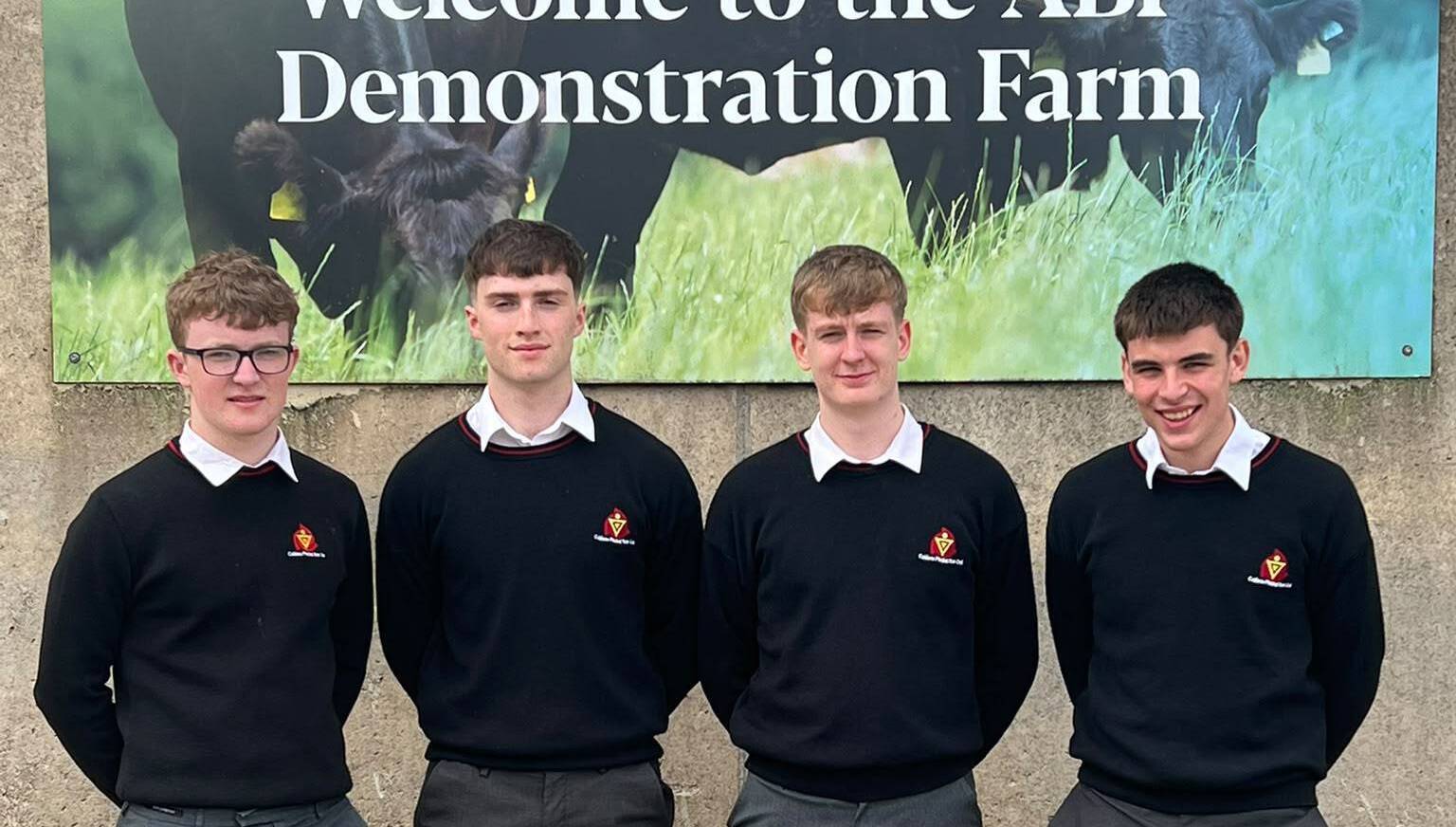
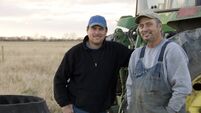
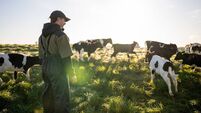
L-R: Eoghan Sheedy, Tim Cleary, Killian Meagher and Brian Oakley visiting the ABP demonstration farm.
Through red clover utilisation and better farm planning, a team of Tipperary students are hoping to demonstrate how small changes can make Irish beef production more sustainable while improving farm profitability.
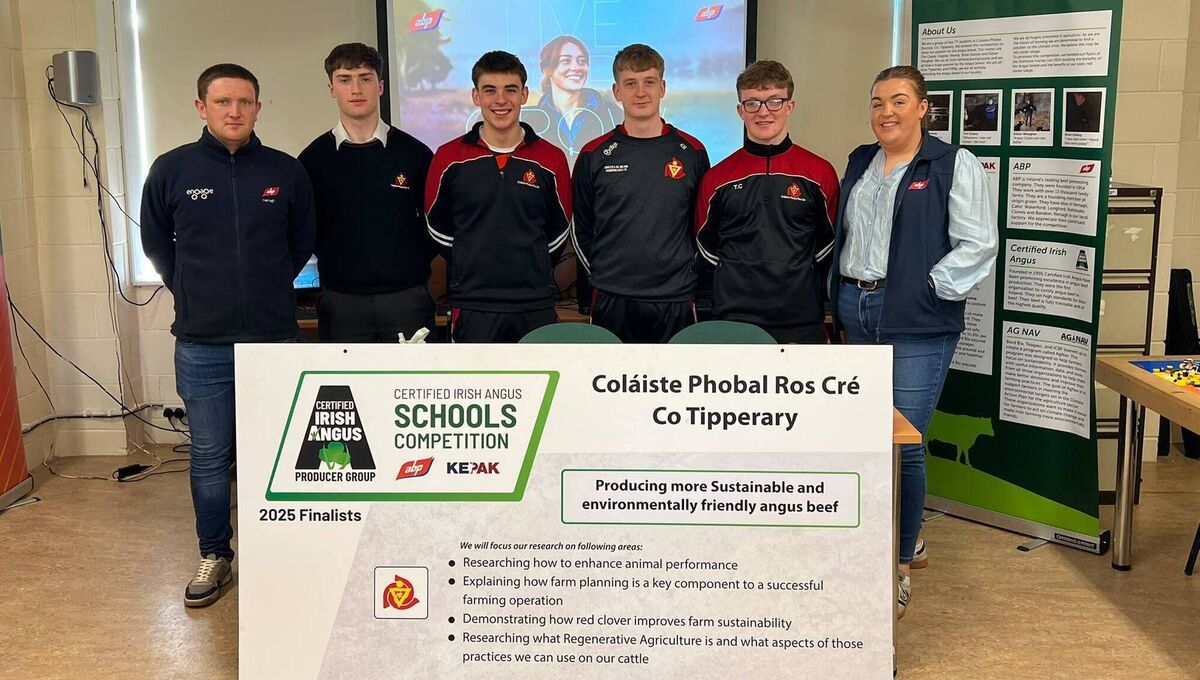
The Coláiste Phobal Ros Cré team secured a place in the final of the Certified Irish Angus competition with its project, ‘Producing More Sustainable and Environmentally Friendly Angus Beef.’ The four students, Killian Meagher, Tim Cleary, Eoghan Sheedy, and Brian Oakley, all come from farming backgrounds with a mixture of beef, suckler and dairy enterprises.
The team were aware of the competition in their third year and were ready to go by the time they got into Transition Year, and were eager to combine their farming experience alongside practical sustainability measures with their project.
“We were eager to get going in TY, and because we're all farmers, we all have cattle at home, we were all interested in the idea,” Mr Meagher told the .
The team’s project, focused heavily on red clover and farm planning, secured their place in the final with the help of their teacher, Mr Thomas Pollard.
The students used red clover grown on Mr Meagher's farm as a real-world case study for their project. While the Meagher family had previously experimented with the forage crop, the Certified Irish Angus Schools Competition provided an opportunity to measure its benefits more formally.
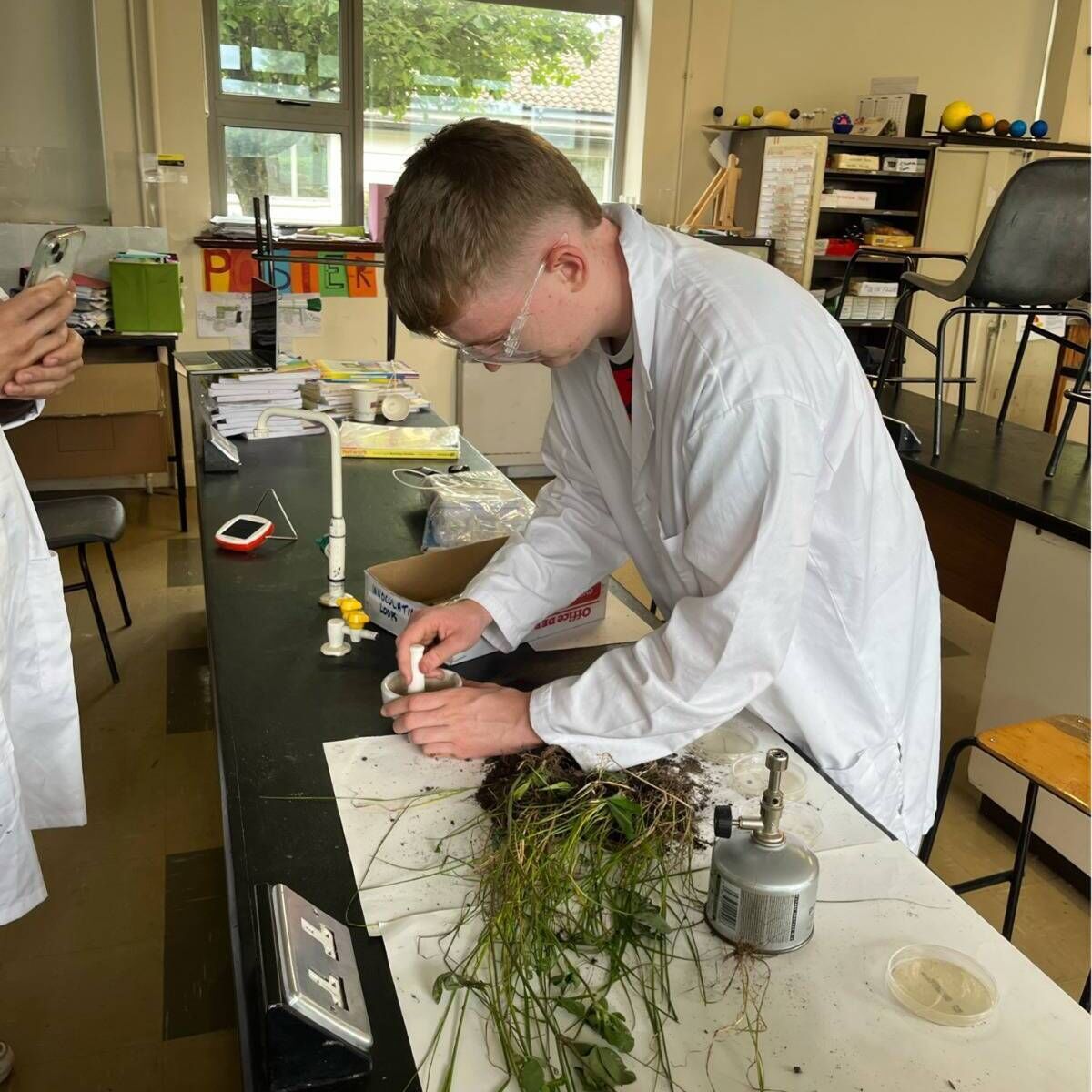
Through their research, the team found that red clover's greatest advantage is its ability to fix atmospheric nitrogen through bacteria contained within nodules on its roots, just like the white clover, the more common forage crop found in grass seed mixes.
This ability to fix nitrogen in the soil reduces the need for artificial nitrogen fertiliser, lowering both costs and greenhouse gas emissions.
The group also highlighted the crop's high protein content, which can reduce reliance on purchased concentrates during the winter housing period. Their research suggested cattle finished on red clover silage required less supplementary feed while maintaining performance.
“It [red clover] fixes nitrogen out of the atmosphere, so you reduce the need to spread chemical fertiliser on your land, reducing the emissions you're putting out…
And it's full of protein as well, the plant. So you're going to, cattle are going to be getting finished quicker, and they're producing methane for less time,” Mr Oakley explained.
To support their findings, the team carried out several scientific experiments, including dry matter analysis, soil testing, investigating earthworm activity and looking into red clover root nodules. They confirmed the presence of nitrogen-fixing bacteria and recorded higher soil nitrogen levels in red clover swards compared to conventional grassland.
The students estimated that a farm carrying approximately 80 animals could save between €5,000 and €6,000 over a winter feeding period through reduced fertiliser and concentrate use.
Beyond the economic savings, they argued the crop could help lower emissions by reducing the quantity of imported feed and shortening fattening times, reducing animals' time spent producing methane before slaughter.
The project also explored the wider environmental benefits of red clover, including improved water quality through reduced fertiliser application and its role in restoring nutrients to soil.
While red clover formed a central pillar of the project, the students repeatedly identified farm planning as one of the most valuable lessons for farmers to take away from their research.
As their research progressed, they became increasingly focused on how better planning could improve both profitability and sustainability on Irish livestock farms.
The group examined key areas including budgeting, soil testing, silage analysis, feed requirements and production costs. They argued that many farmers can make significant gains simply by understanding their inputs, outputs and forage requirements before the winter feeding season begins.
The students argued that instead of reacting to challenges as they arise, farmers can use planning tools to forecast costs, identify feed deficits and make management decisions that improve efficiency and profitability.
The team used social media videos, presentations, local radio interviews and spoke directly to farmers at events throughout the competition to demonstrate how planning could influence everything from fertiliser use and feed purchases to environmental performance.
Their work also highlighted the close relationship between planning and sustainability. Tools such as soil testing, forage budgeting and emissions-monitoring platforms like AgNav could help farmers identify small changes that can add up to have a significant impact going forward.
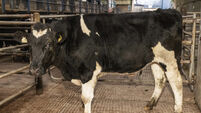
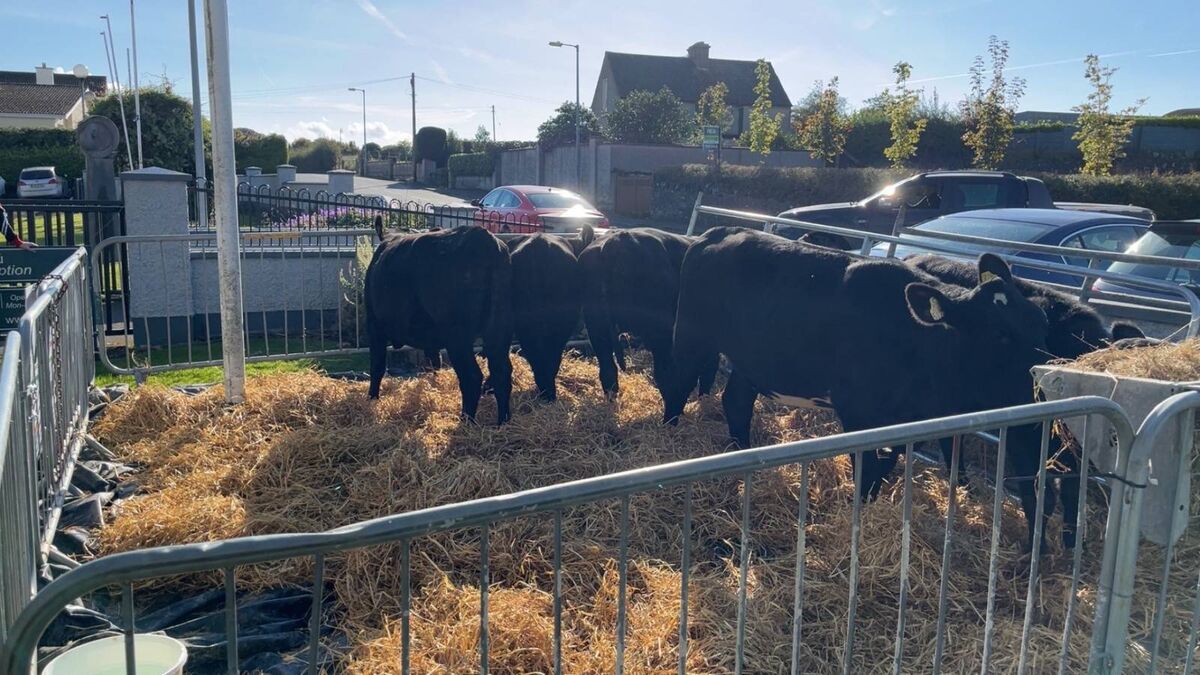
Upon reaching the finals, the team were presented with their five Angus cattle last year at the Ploughing. The cattle were kept on Mr Meagher's farm, with the group sharing responsibility for major jobs while Mr Meagher handled daily management.
The five cattle were named via a naming competition held at the school and were affectionately named Moo-donna, Moo-fasa, Moo-hammad, John McGrath and Seven.
With a mixture of town-dwelling and rural students at Ros Cré, the five cattle were a source of pride and a novelty for the student body.
The cattle were even a talking point at the school’s most recent Open Day, with prospective students allowed to meet and get up close to the cattle, with Mr Pollard saying even the staff got great enjoyment meeting the cattle.
According to the team, many younger pupils had never been so close to cattle before and were fascinated by the experience.
“They were all very interested, especially younger kids anyway, in first and second year; some of them said they’d never even been up that close to cattle before. They were amazed by it, so they loved them,” Mr Meagher explained.
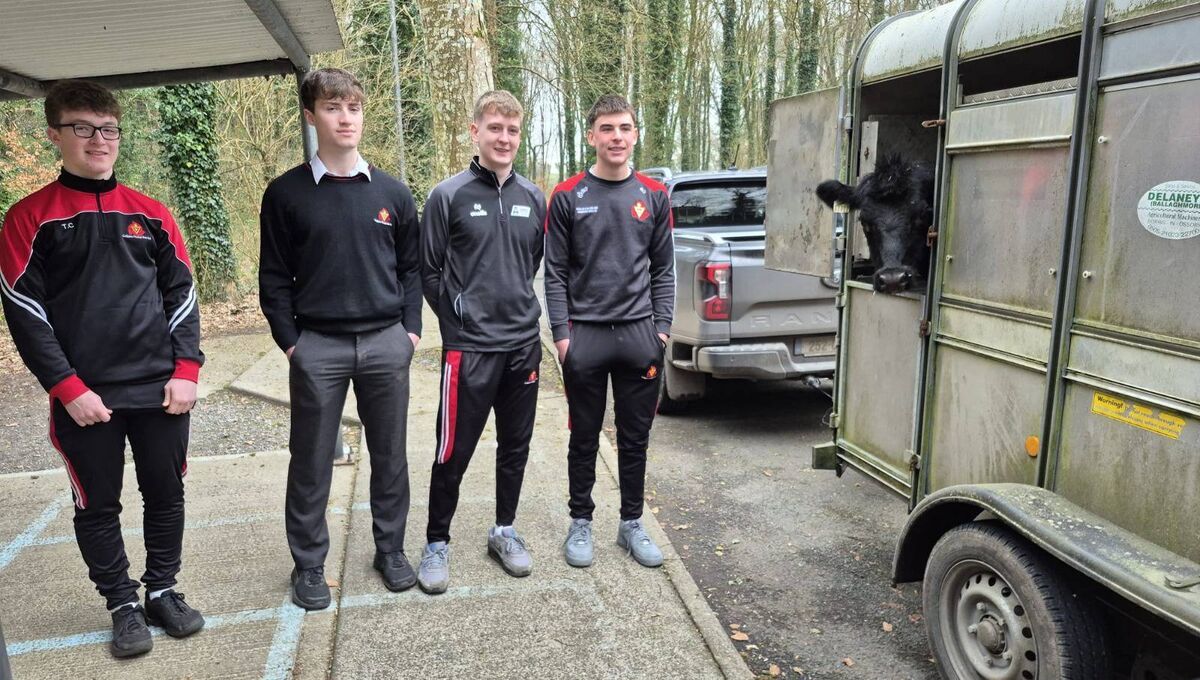
Thankfully, despite all the stardom and atypical social calendar for most cattle, the five were quiet and easy to handle, helping to engage peers and children from the local primary schools in learning about the team’s project and different elements of farming and food production.
The cattle were reared under a conventional system on the Meagher’s family farm with the whole team pitching in for their care. The cattle were dosed for liver fluke, received a fly drench and a copper mineral drench, which was sponsored by National Stock Care.
The cattle were weighed regularly to monitor weight gain up until slaughter and also underwent faecal testing to check whether further treatments were needed. Initially, they received 1kg of concentrates and finished on 5 kg of concentrates by the time they left the Meagher's farm. The team also secured a sponsorship from Liffey Mills, which provided 10 bags of concentrates.
Despite all coming from farming stock, the team admitted they were sad to see the cattle go to slaughter back in August after spending so much time and care looking after them.
“I found it kind of hard because any other group that leaves the farm wouldn’t have bothered me, but say, the journey behind this group and spending time with them every day and since getting them. It was just, they're almost like celebrities in a way. So it was just, it was different. I find it slightly emotional. I would never ever find it hard seeing cattle go before or anything like that,” Mr Sheedy explained.
The team found it hard to pinpoint a specific highlight from the competition so far, from presenting in Croke Park to travelling up to Brussels, visiting farms in Belgium and seeing the difference in farming out there, to meeting and engaging with farmers at events the team has enjoyed every minute.

Discussing the finals, which will have the winners of their cycle announced in March next year, Mr Meagher said:
With only their final submission standing between them and the final, the Ros Cré team remain convinced that sustainability does not require wholesale change.
Instead, their research found that small, consistent improvements through measures such as red clover and better farm planning can have a meaningful impact on both profitability and environmental performance. After nearly two years in the competition, however, the lessons learned have extended far beyond the farm gate.