Nine in ten farmers could reach retirement age in the next 25 years
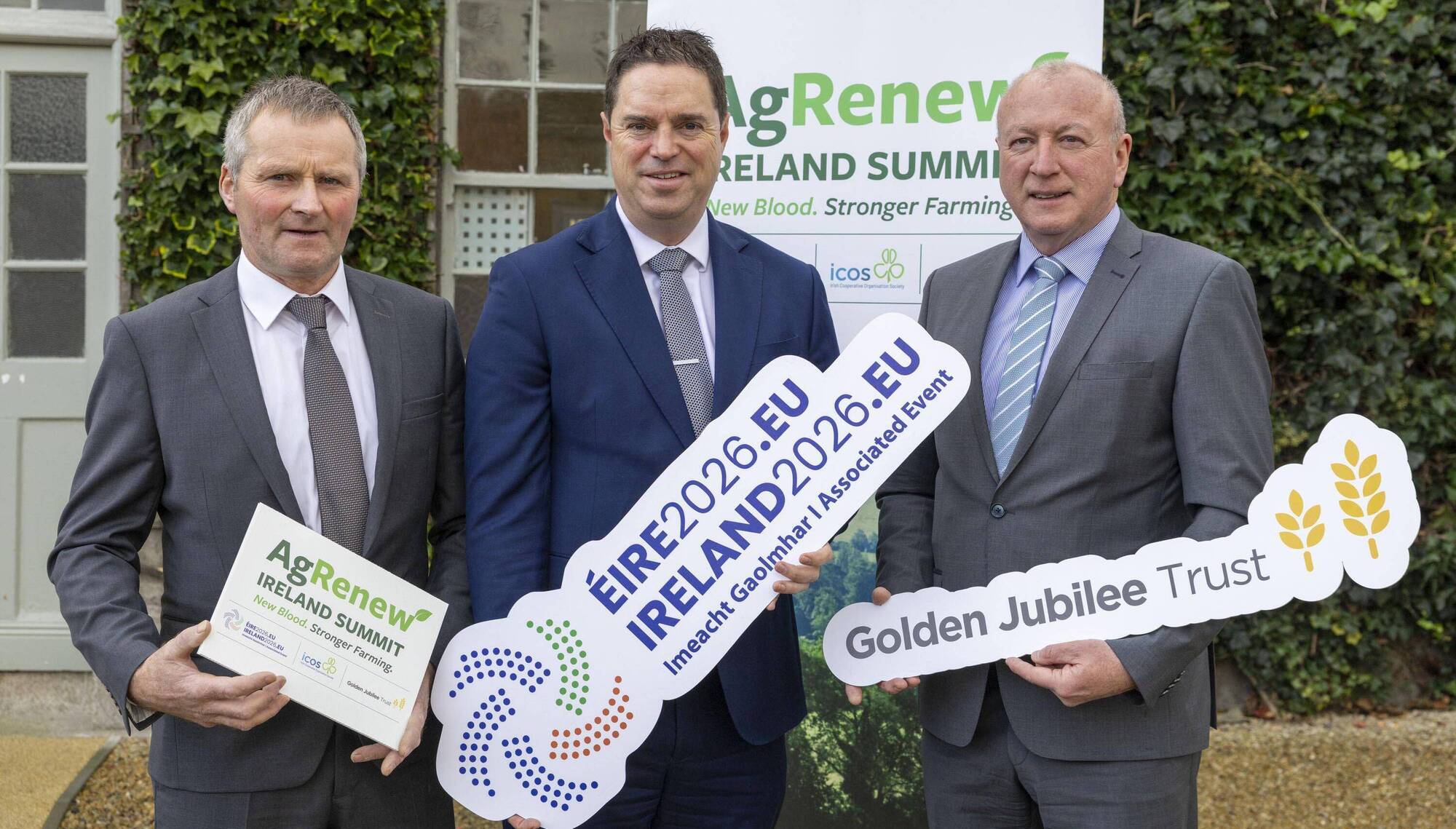
L-R: ICOS President Edward Carr, Minister for Agriculture, Martin Heydon and Golden Jubilee Trust, Sean O'Sullivan, at the ICOS AgRenew Ireland Summit held in Killashee Hotel, Co Kildare. Photo: Alf Harvey
Nine in ten European farmers could reach retirement age within the next 25 years, posing a fundamental challenge to the future of European food production and security.
Addressing more than 200 delegates via video at the AgRenew Ireland Summit in Naas, Co Kildare, on November 5, EU Commissioner for Agriculture and Food Christophe Hansen acknowledged that the scale of the challenge demands urgent action to bring younger people into farming and ensure that viable farms can successfully pass from one generation to the next.
The summit, themed “New Blood, Stronger Farming,” was organised by the Irish Co-operative Organisation Society (ICOS), in association with the Golden Jubilee Trust and the Irish Presidency of the Council of the European Union.
Read More
We have over 130,000 farms in Ireland, but only around 4% of farmers are under 35, while more than a third are over 65. These figures tell their own story.”
The event brought together young farmers, co-operative leaders, policymakers, agricultural organisations and researchers to identify practical solutions to generational renewal in agriculture.
Commissioner Hansen told attendees that the EU’s first strategy for generational renewal in agriculture is already being formulated into action, including measures to improve access to finance through the European Investment Bank, a new Women in Farming platform and a pilot EU land observatory.
He highlighted the importance of co-operatives in supporting young farmers through access to finance, land, advice, mentorship and international markets.
“The future Common Agricultural Policy (CAP) must support the entire process of generational renewal, combining financial assistance and access to land with advisory services, training, knowledge exchange and farm relief services to help young farmers establish and sustain successful farming businesses,” Commissioner Hansen said.
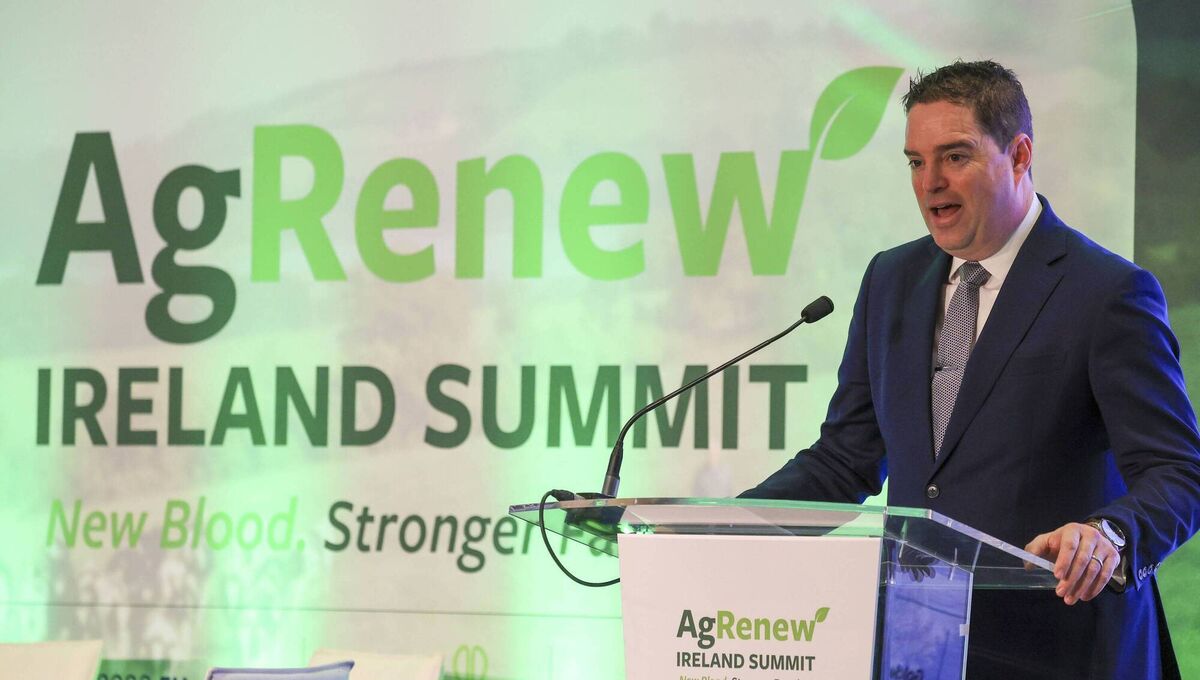
Addressing attendees of the summit, Minister for Agriculture, Martin Heydon, explained that efforts to improve the age profile of Irish farmers, despite current generational renewal supports estimated at over €420m, are in need of new approaches.
He confirmed at the summit that the three-year waiting period before farm assets can be transferred under Succession Farm Partnerships will be removed.
For partnerships registered from January 1, 2027, the annual tax credit will double from €5,000 to €10,000, increasing the potential five-year benefit from €25,000 to €50,000.
The Minister also highlighted the €500m expansion of the Growth and Sustainability Loan Scheme, extended to 2029, which provides access to unsecured loans of up to €500,000.
Mr Carr said: “Last year, Irish food, drink and horticulture exports reached a record €19 billion, including €7.3 billion in dairy exports and more than €3.4 billion in beef. We must protect that success and the enormous investment made by farmers and co-operatives over generations.”
The ICOS President called for greater support for farm partnerships, long-term leasing, shared farming and early succession planning, alongside measures to improve access to finance, rural housing and retirement security for older farmers.
He also stressed the importance of protecting a dedicated and properly funded CAP budget, warning against proposals that could undermine the future of European farming and food security.
The summit also highlighted the RAISE European Innovation Partnership project, supported by the Department of Agriculture and led by ICOS Skillnet over three years within the co-operative sector.
The initiative promotes intergenerational farm partnerships, succession planning, business management and leadership development, with the first graduates of its RAISE Cultivate programme recognised at the event.