Paula Hynes: School meals are vital but the waste is indefensible
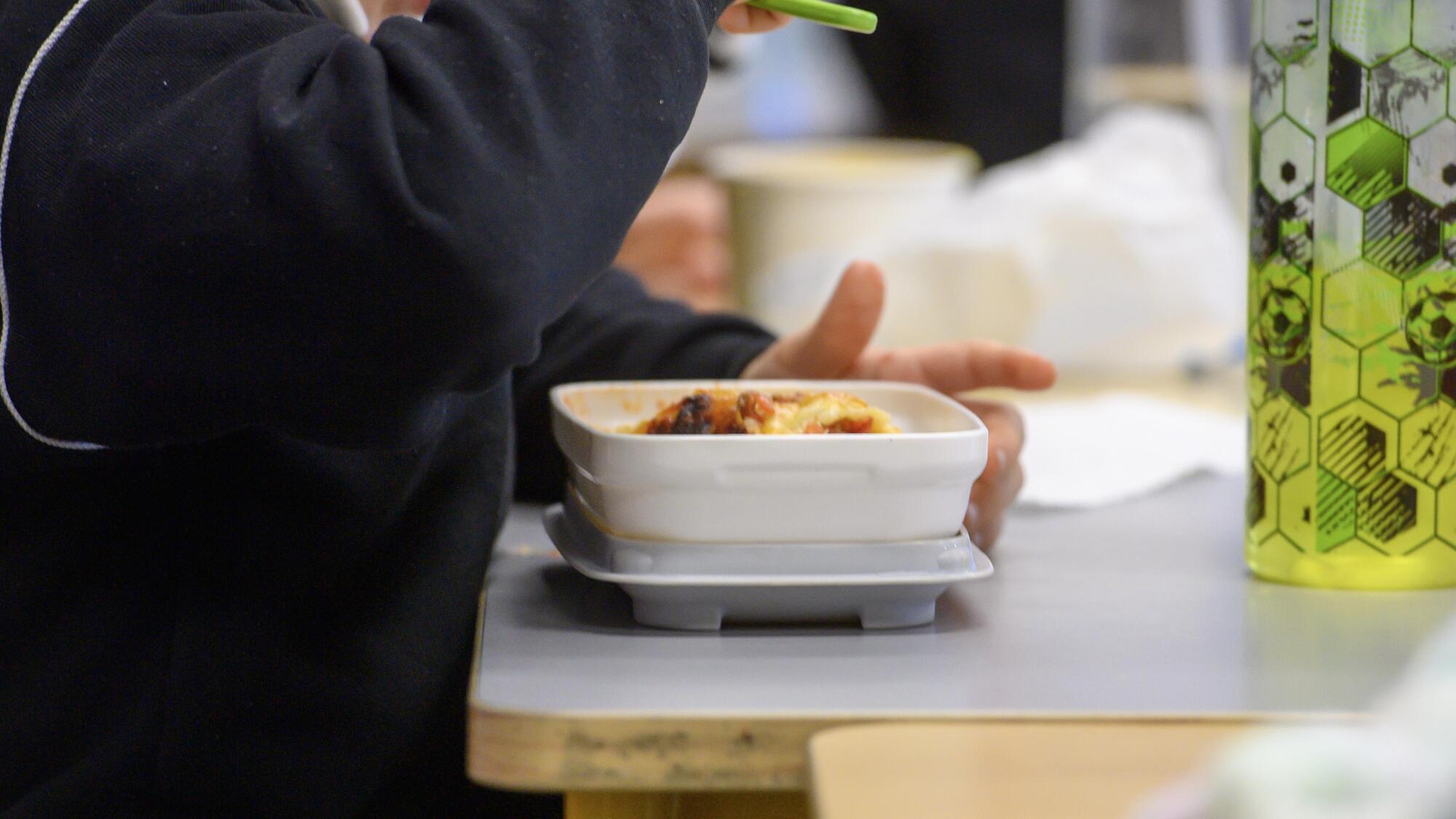
Food waste also emits methane into the atmosphere, contributing to climate change. File picture

I always felt the school meals programme was a great initiative and also crucial for many children, ensuring they get a nutritious meal at least once a day.
It is imperative the scheme continues and reaches as many children as possible — over 550,000 primary school children will receive school meals this year, with the scheme having a budget of €286m for 2026. The initiative began as a pilot programme in 2019.
I was absolutely dumbfounded this week to read some of the finer details surrounding the school meals initiative and also learn it took two reviews to realise the initiative really has been an absolute failure in so many ways.
Twenty per cent of meals going to waste every day — does that not shock people, and even more so, shock social protection minister Dara Calleary?
I have seen first-hand some of the hot meals provided, and I certainly wouldn’t have eaten them, never mind expecting my own child to eat them. What I found totally laughable was the fact no one involved in implementing the scheme ever realised a 12-year-old eats a bigger portion than a five-year-old; this is just mind-boggling to hear.
We constantly hear how the Government cannot provide funding or tax breaks, so it really is no wonder duty on fuels has to be so high in Ireland when money is simply being wasted on a daily basis like this.
Read More
If I was to give Mr Calleary a bit of free advice, it would be that rather than leaving the door open for the school meals programme to require further expensive independent reviews in the future, why not create a full-time position now for a nutritionist to randomly visits schools on a daily basis to view these meals first hand, audit the initiative on a daily, weekly and monthly basis.
This nutritionist could also take notes on food waste and send samples for nutritional analysis, while also chatting directly with children to see what they do or do not like about the meals, because at the moment it seems to me farms are regulated and audited far more than the food being given to our kids in school.
Money waste is one thing, but food waste is an even bigger problem. The Environmental Protection Agency has a target of reducing food waste by 50% by 2030, yet the education system is contributing to increased food waste.
The poor old dairy cow is always getting a bashing publicly for burping and emitting methane, but guess what: food waste also emits methane into the atmosphere, contributing to climate change.
Ireland produces about 750,000 tonnes of food waste every year, an estimated 3.6 million tonnes of carbon dioxide and is equivalent to the emissions from the energy used by 650,000 homes.
Thirty one per cent of food waste in Ireland comes from households, 26% from restaurants and food services, 29% from processing and manufacturing, with the remainder from primary production and retail.
As it stands at the moment, it seems children are learning to waste food and if it is being wasted in school, then they will continue to waste food at home.
While some food waste does go for anaerobic digestion, surely at this stage all food waste in Ireland should be going for that process to help reduce emissions, because currently it seems we are lagging behind in using the technology in Ireland.
A few years ago, Pete met a dairy farmer in New York who had been running a bio digester on farm for over 15 years, capturing gas from slurry and manure, the biggest issue they struggled with at the beginning was ensuring the digester was running efficiently; they simply didn’t have enough manure on farm with 1,900 dairy cows.
In order to increase efficiency, they formed a company collecting food waste in New York state, collecting from food processing sites and grocery stores, the food retail and processing industry gained by lowering their carbon footprint, the farm gained by having an extra source of revenue and a more efficient biodigester and the climate gained.
The business now operates across 20 states in the US, collecting food waste — however, the business does not truck all food waste to New York state and instead uses the most local bio digesters so as not to increase food waste miles from haulage.
Without doubt, the school meals programme in Ireland is a huge necessity and the major overhaul is welcome and can only improve the system, but can we please ensure it runs efficiently this time and does not waste any more money.