Hallgrimsson's Ireland have shed delusions of grandeur but self-sabotage remains
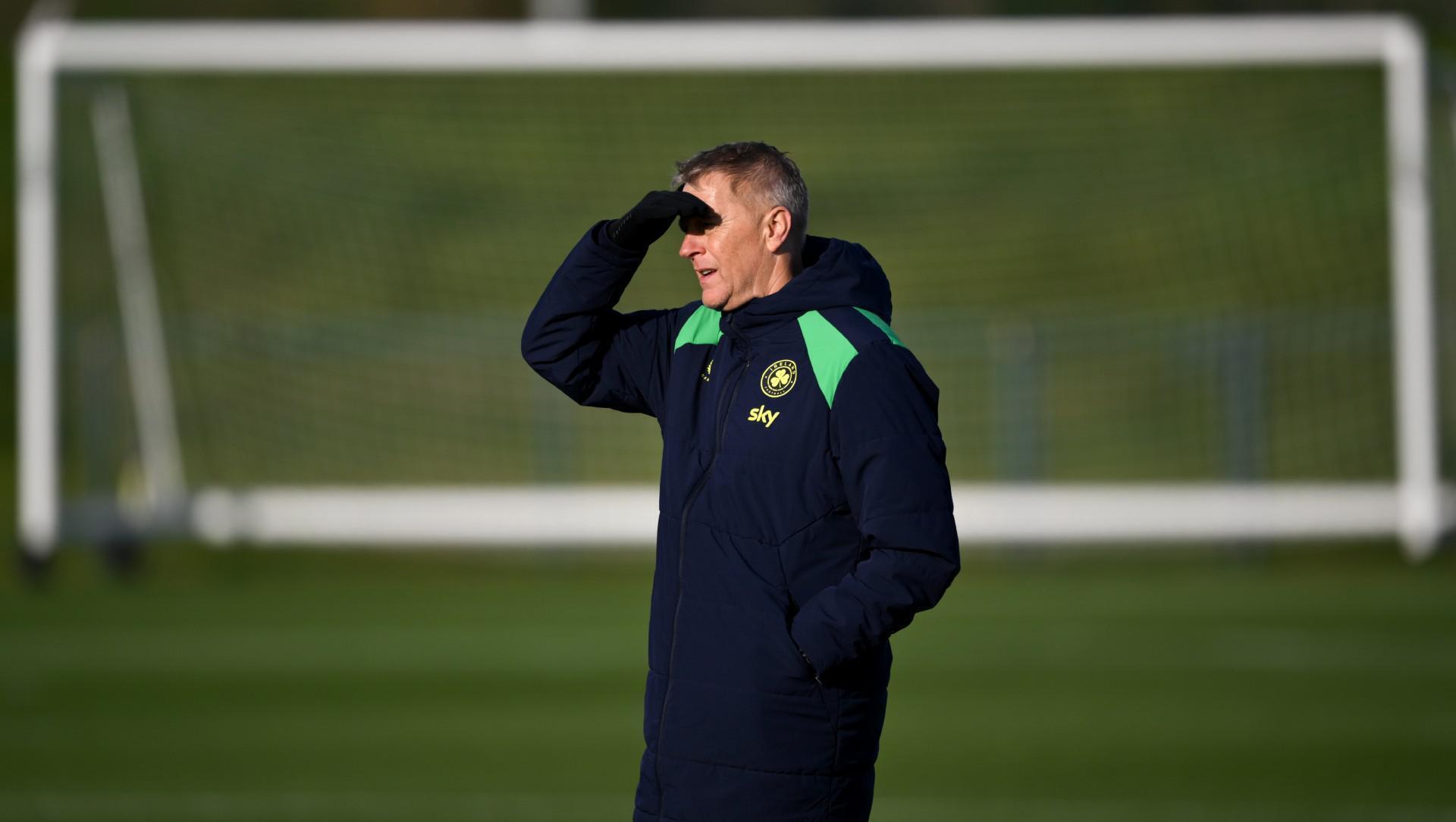
Head coach Heimir Hallgrímsson during a Republic of Ireland men training session at the FAI National Training Centre in Abbotstown, Dublin. Photo by Stephen McCarthy/Sportsfile
The Republic of Ireland stand on the verge, although of what, nobody seems quite sure. Tuesday’s final Nations League group match, at home to Kosovo, presents a chance for progress or yet another opportunity to showcase a frustrating habit of messing things up.
For 78 minutes in Linz on Saturday, Heimir Hallgrímsson’s side gave as good as they got against an Austria side who had not lost at home for a little more than three years. Set up in a compact, attack-minded formation they carried credible threat against hosts managed by Ralf Rangnick, but to nobody’s great surprise Sasa Kalajdzic broke the deadlock, scrambling home the winner from a needlessly conceded and poorly defended corner.
This late lapse neatly captures the contradiction bedevilling this Ireland team under Hallgrímsson. Over the past 12 months, Ireland have been unmistakably better than they were during the dark days of the post-pandemic slump under Stephen Kenny. They have established a clear identity and pulled off a couple of phenomenal wins with a spine of players performing at an elite level, supplemented by emerging talent from the leagues below and beyond. Yet for all that, an acceptable level of success remains elusive for a team who have not managed to shake a maddening habit of self-sabotage.
They have a high ceiling, as they demonstrated a year ago. Last November they dismantled Portugal at the Aviva Stadium in a World Cup qualifier before booking their place in the playoffs with an unforgettable come-from-behind win against Hungary at the Puskas Arena.
In Budapest, the celebrations of a dramatic Troy Parrott hat-trick completed in the sixth minute of added time went viral and elevated the then AZ striker from being surplus to the requirements of a dreadful Tottenham to sought-after European household name. For the first time in almost a decade, Ireland were playing with something resembling swagger, spearheaded by a poster-boy striker apparently entering his prime.
Riding that wave, Ireland travelled to Prague last March for the playoff semi-final against Czechia, with Parrott striking again, from the penalty spot, as they set about taking an early 2-0 lead. What followed would become the lowest point of Hallgrímsson’s reign as Ireland sat back and invited pressure before conceding a needless penalty and subsequent late equaliser that preceded a crushing shootout defeat. Despite last summer’s expanded 48-team format in North America, poor game management had stymied Ireland’s chances of making the cut.
An uninspiring, but unbeaten, summer friendly window featured fairly routine low-profile wins over Grenada and Qatar and a 1-1 draw against the World Cup co-hosts Canada in Montreal. Having steadied the ship before this Nations League campaign, Ireland produced a performance in their opener against Kosovo little short of diabolical and went down to another late goal.
In the subsequent four fixtures, two overshadowed by loud protests over Ireland’s decision to honour matches against Israel, that same cycle of promise and frustration has played out on a loop.
The disappointment of defeat in Pristina was immediately cancelled out by a clinical dispatch of Israel in Debrecen. In Dublin, against Austria, Parrott struck twice to give Ireland a commanding first-half lead, but in a collapse that rather mirrored their nightmarish Prague experience, Ireland went on to relinquish control and were forced to settle for a disappointing draw.
Three days later they coughed up another lead in a bad-tempered 1-1 draw with Israel, their compulsion for throwing away cheap points from winning positions coming back to bite them. Although they never led against Austria on Saturday, when Caoimhín Kelleher made a series of excellent saves, the winner they conceded was ridiculously soft.
Hallgrímsson’s appointment in July 2024 after a drawn-out process lasting eight months came as a surprise. He has built a side with a strong, if occasionally gaffe-prone, backbone including Kelleher, the goalkeeper’s Brentford teammate Nathan Collins and the Ipswich defender Dara O’Shea. Jack Moylan, having the season of his life at Cardiff, has impressed in midfield, and Southampton’s Finn Azaz is an occasional, but unreliable, source of creative guile. Parrott, enjoying life in La Liga with Real Betis, has evolved from promising talent to undisputed focal point of the attack.
Read More
To his credit, Hallgrímsson has forged a clear, pragmatic identity that maximises his team’s strengths without any delusions of fancy-dan footballing grandeur against elite opposition. Under his watch, Ireland are rarely outclassed and carry a cutting edge sorely absent in the dying days of his predecessor’s tenure.
Unfortunately, an inability to concentrate for 90 minutes continues to be their undoing and the must-win Nations League group finale at the Aviva Stadium will provide the ultimate judgment on the past 12 months. With Austria guaranteed promotion to League A, Ireland still have second place and its promotion playoff spot within reach.
Victory over Kosovo would also secure a place in pot two for next month’s Euro qualifying draw in Belfast, whereas defeat could leave them flirting with a relegation playoff to the tournament’s third tier. As the only ever-present residents of the Nations League’s second tier, now may be the time for something finally to give.
Guardian

BLACK FRIDAY
Already a subscriber? Sign in

CONNECT WITH US TODAY



Be the first to know the latest news and updates