Shinagh Dairy Farm: €1M profit from Teagasc beef conversion model
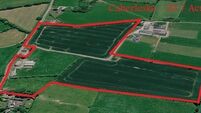
Shinagh Dairy Farm had been set up to lease the 78 hectares with buildings from Shinagh Estates, on a 15-year lease at €450 per hectare, excluding single farm payment.
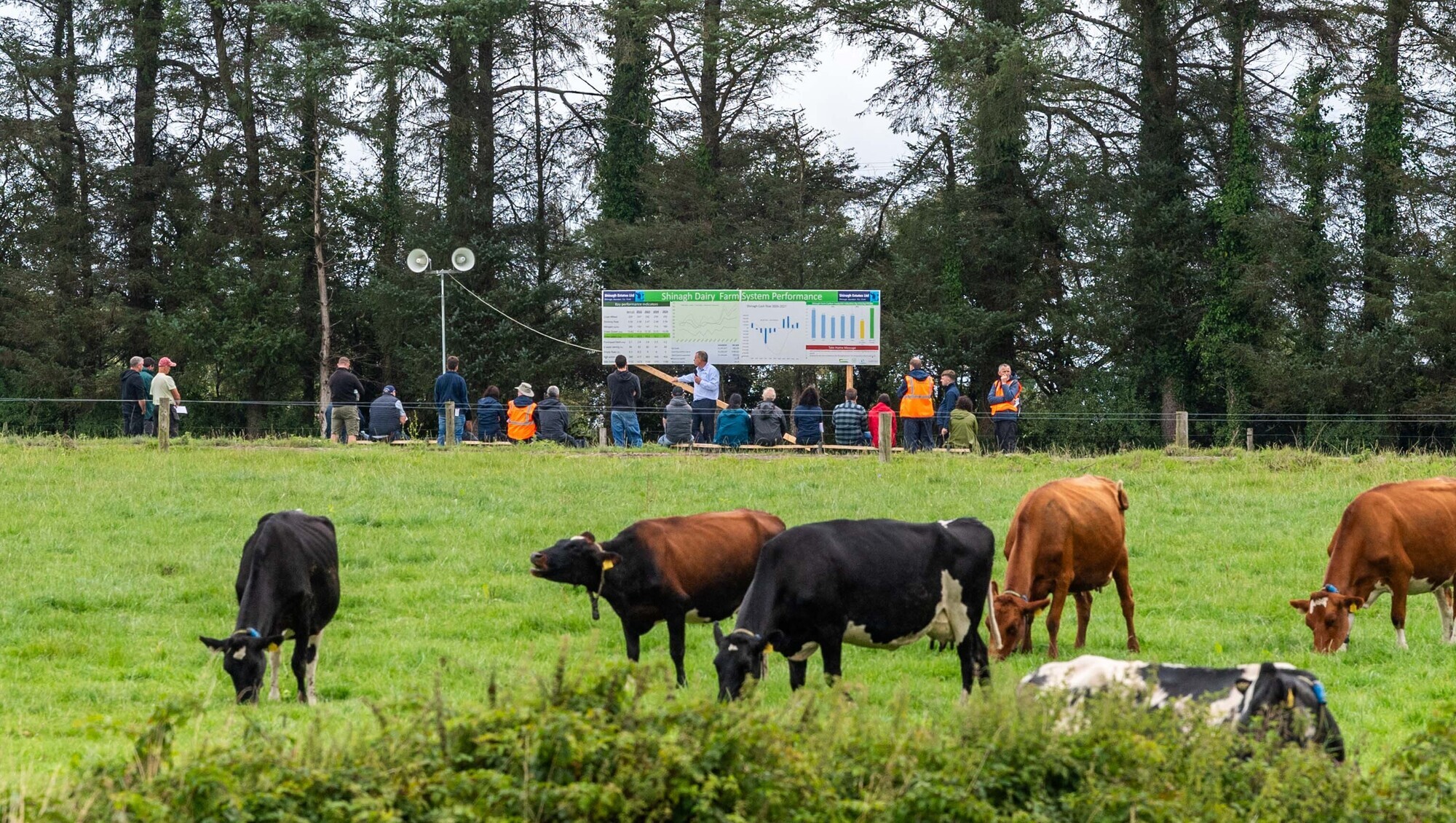
Shinagh Dairy Farm held an open day today on its premises in bandon. Hundreds of people joinded Minister of Agriculture, Martin Heydon (FG) to walk through the different info. boards about breeding, grass production, succession and more. Farm walk attendees listen intently at one of the info. boards. Picture: Andy Gibson.

Shinagh Dairy Farm held an open day today on its premises in bandon. Hundreds of people joinded Minister of Agriculture, Martin Heydon (FG) to walk through the different info. boards about breeding, grass production, succession and more. Farm walk attendees listen intently at one of the info. boards. Picture: Andy Gibson.

The Shinagh Dairy Farm, converted from beef production in 2011, has accumulated profits of more than €1 million up to 2026, while paying the land owners €532,500 in rent.

The financial success of the 250-cow farm was explained to visitors at the recent Open Day by John McNamara, now retired from Teagasc, who was the farm advisor to the start-up, from the start.

He said, “The EU CAP reform in 2008 signalled the removal of milk quotas from 2015 on. To prepare for this, Ireland was allocated an extra 1% a year from 2009 to 2014, along with an ease of the butterfat quota.

“The Department of Agriculture allocated some of this national quota to Teagasc for them to set up new dairy operations, to show how this could be done post-quota, and highlight the lessons to be learned in a start-up dairy operation.

“Teagasc, in the person of Padraig French, approached Shinagh Estates, who owned a farm in Bandon, to see would they be interested in converting the farm to dairy”.

Previously, the farm was used for fattening the progeny of the South West Cattle Breeding Society’s AI bulls at Shinagh. Subsequent to that, the farm was rented to local farmers for silage and grazing. There was calf and beef housing on the farm.

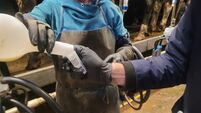
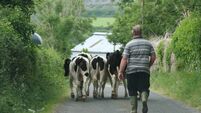
Kevin Ahern was recruited as farm manager, and conversion to dairy began in 2010, with a new milking parlour built in the centre of the farm (to minimise cow walking in the grazing season).

The beef slatted house was converted into a cubicle house for 180 cows. There were sufficient silage pits, calf housing, and calving boxes on the farm. A paddock system, farm roadways and water system had to be installed, and 50% of the farm was reseeded.

The first stock were bought as bulling heifers in 2010 and ran with an Angus stock bull on the farm.

High EBI animals with equal weighting for production and fertility were sought.

The initial 200 heifers that calved down in 2011 (57% calving in six weeks) were 50% Holstein or Friesian, 25% Jersey cross with Holstein/Friesian, and 25% Norwegian red cross with Holstein/Friesian. Kevin Ahern improved the six-week calving pattern to a consistent 85% over the following years.

Shinagh Dairy Farm had been set up to lease the 78 hectares with buildings from Shinagh Estates, on a 15-year lease at €450 per hectare, excluding single farm payment.

Ulster Bank was chosen as the main lender, of €560,000 towards a total capital budget of €820,000. The Bandon, Barryroe, Drinagh and Lisavaird Co-ops, owners of Shinagh Estates, put €260,000 in as equity. The farm objective was to make a return on all the land, labour and capital.

All the labour was employed. The substantial annual repayments amounted to a high level of fixed costs.

John McNamara said the farm had low initial milk production, but the herd had high fertility from the start, which helped to keep the costs down. The emphasis was on growing a lot of grass and getting the herd to graze as much of this as possible. Little to no pasture topping was done, thanks to excellent graze-outs. Strong paddocks were taken as surplus bales.

The calving pattern improved, and cows went to grass soon after calving. Cows went off meal when there was sufficient grass in early summer. Magnesium for grass tetany was applied in the water.

Soil fertility was improved by recycling slurry to silage areas and low index paddocks, along with purchased P and K fertiliser. Lime was applied in line with soil test results, and 10% was reseeded annually. Artificial nitrogen was applied to the maximum allowed under the regulations.

High yields of up to 15 tonnes of grass dry matter per hectare were achieved, allowing 2.9 cows per hectare with 500kg of ration and 200kg of silage dry matter fed per cow per year.

More in this section

Farming

Newsletter

Stay ahead of the season. Sign up for insights, expert advice and stories shaping Irish agriculture.

Cookie Policy Privacy Policy Brand Safety FAQ Help Contact Us Terms and Conditions

© Examiner Echo Group Limited