Farmers highlight greenway concerns: 'The rights of farm families must be fully protected' - IFA
The farming lobby strongly opposes the use of Compulsory Purchase Orders to acquire private land when the owners do not agree to sell voluntary.
Farmers who went to the ploughing championships in Screggan, Co. Offaly, last week, had a lot on their minds.
Generational renewal, the future funding of the Common Agricultural Policy, the impact of climate change on agriculture, surging energy costs and weather events were just some of their worries.
But those with land along proposed routes for a growing number of greenways were especially focused on the effect these projects might have on their holdings.
Adding to their fears is the option for public bodies to seek as a last resort compulsory purchase orders for land to develop these dedicated traffic free off-road routes.
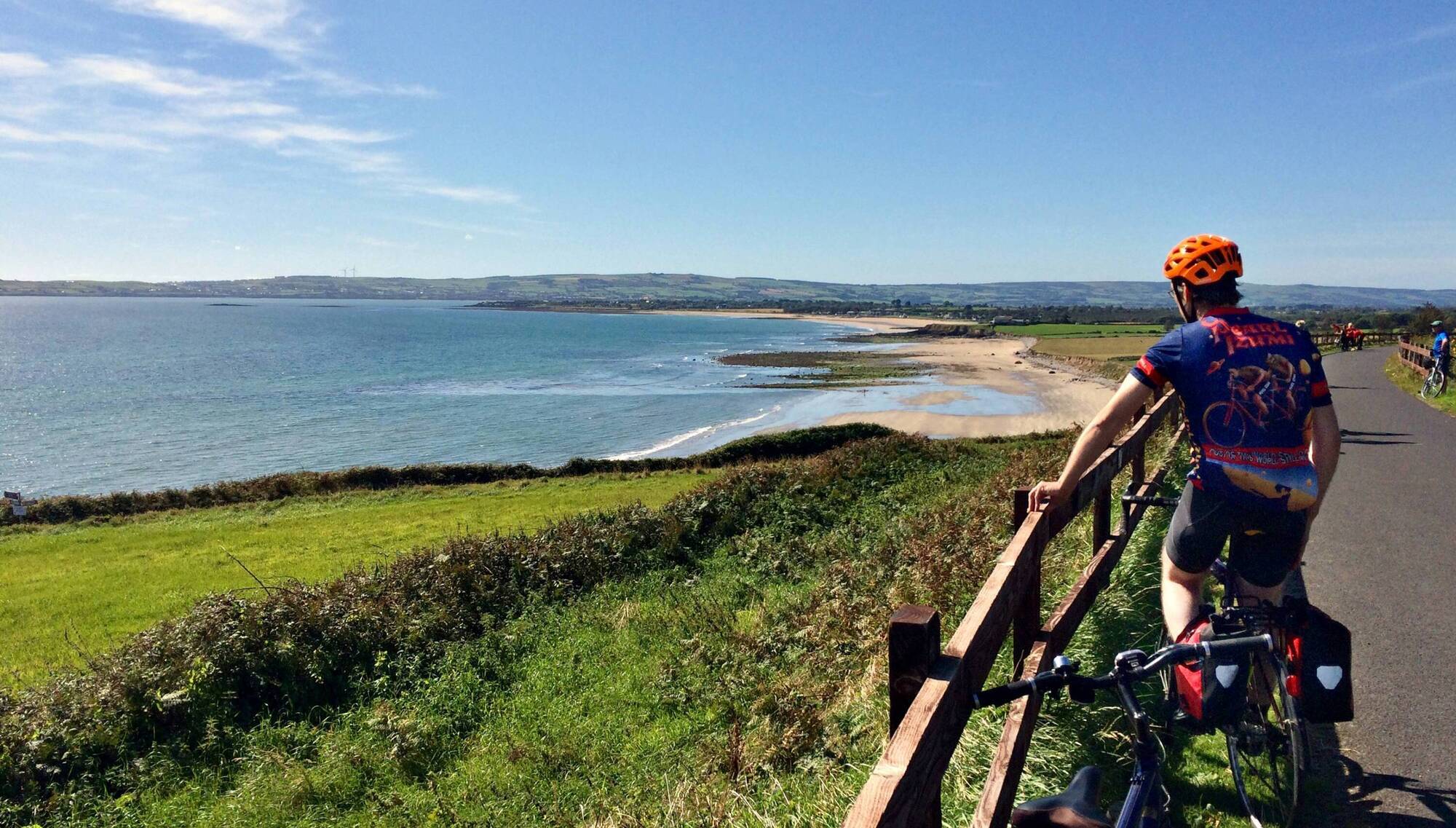
Growing numbers of cyclists, walkers and pedestrians are now using recreational greenways which are boosting local economies including tourism and rural development.
The farm lobby insists it is not against greenways but stress that these should be developed on public land wherever possible rather than on privately owned farmland.
It also strongly opposes the use of Compulsory Purchase Orders, which are legal tools that allow public bodies to acquire private land when the owners do not agree to sell voluntary.
The government has allocated €62 million for greenway projects in 2026, part of a broader €360 million capital funding package for active travel and sustainable transport.
IFA Infrastructure Chair Paul O’Brien says it supports rural development, tourism, and community recreation where these can co-exist fairly with farm livelihoods.
“However, we are opposed to unfair practices, compulsory acquisition, and any approach that disregards the rights of the people who live and work on the land.
“We are firmly opposed to the use of CPOs for Greenway development,” he said, stressing that future policy must be clearly based on voluntary agreement.
“The rights, livelihoods, safety, and wellbeing of farm families must be fully protected throughout the process, he said, Mr O’Brien said earlier this year that greenways are amenity projects, not essential public infrastructure such as national roads or power lines.
Many of the proposed routes, if implemented as planned, would sever and divide active farms.
“This is unacceptable. The severance of farmland cannot be justified for recreational projects and must be avoided in all cases.,” he said.
ICMSA Farm Business Committee chairperson Pat O’Brien said it is always opposed to the compulsory purchase of land for greenways.
These projects can be achieved through voluntary access and proper, on-farm and face-to-face consultation, he said.
Irish Natura and Hill Farmers Association vice president John Joe Fitzgerald also said that taking land through the CPO option has now become a red line for all those impacted.
“By facilitating CPOs, even as a last resort, we have unfortunately allowed this option or threat of this option to be used at a very early stage in trying to acquire the necessary lands,” he said.
Transport Minister Darragh O’Brien told the Dáil in June, in response to South Tipperary TD Michael Murphy, that a Code of Best Practice for National and Regional Greenways was published in late 2021.
It was developed by a sub-group representing the rural recreation, tourism, sport, farming, local business development and transport sectors.
The Code includes an overview of the public consultation processes, constraints study, route selection and statutory processes.
It also includes information on the use of State-owned lands and the acquisition of private lands for developing Greenways.
The intention is to ensure a transparent and pragmatic approach is taken in relation to land acquisition.
Engagement between affected landowners and the project team is a critical step to ensure that severance of farm holdings is avoided where feasible to do so particularly once a preferred route corridor is published.
An independent agronomist is available to assist landowners with their queries and provide advice on the impact of the proposals.
Minister O’Brien said the Code refers to the use of the CPO as a ‘measure of last resort’ if voluntary land acquisition agreements are not possible after sustained engagement with individual landowners.
It allows for continued negotiations at every stage to provide the opportunity for a voluntary agreement. Where this cannot be reached the statutory arbitration process is available.
“It is important to highlight that the majority of claims are resolved by negotiated agreement without the need for a decision from an arbitrator,” he said.
Minister O’Brien added that the Code acknowledges the important role of farmers and landowners in the process and highlights the importance of treating them fairly and equitably.
Lorcan O’Connor, chief executive, Transport Infrastructure Ireland, told the Oireachtas Transport Committee in May that it acknowledges the level of concern around the delivery of the greenway programme.
It was actively engaging to address these concerns in conjunction with the Department of Transport.
The department was progressing a review of the Greenway Strategy in consultation with stakeholders, including local authorities and interest groups.
TII will separately review the Code of Practice, he said, adding that the objective is to ensure high-quality, consistent delivery across the network, while also facilitating efficient project development and public confidence in greenway projects.