Europe aims to cut imports of livestock feed and protein crops
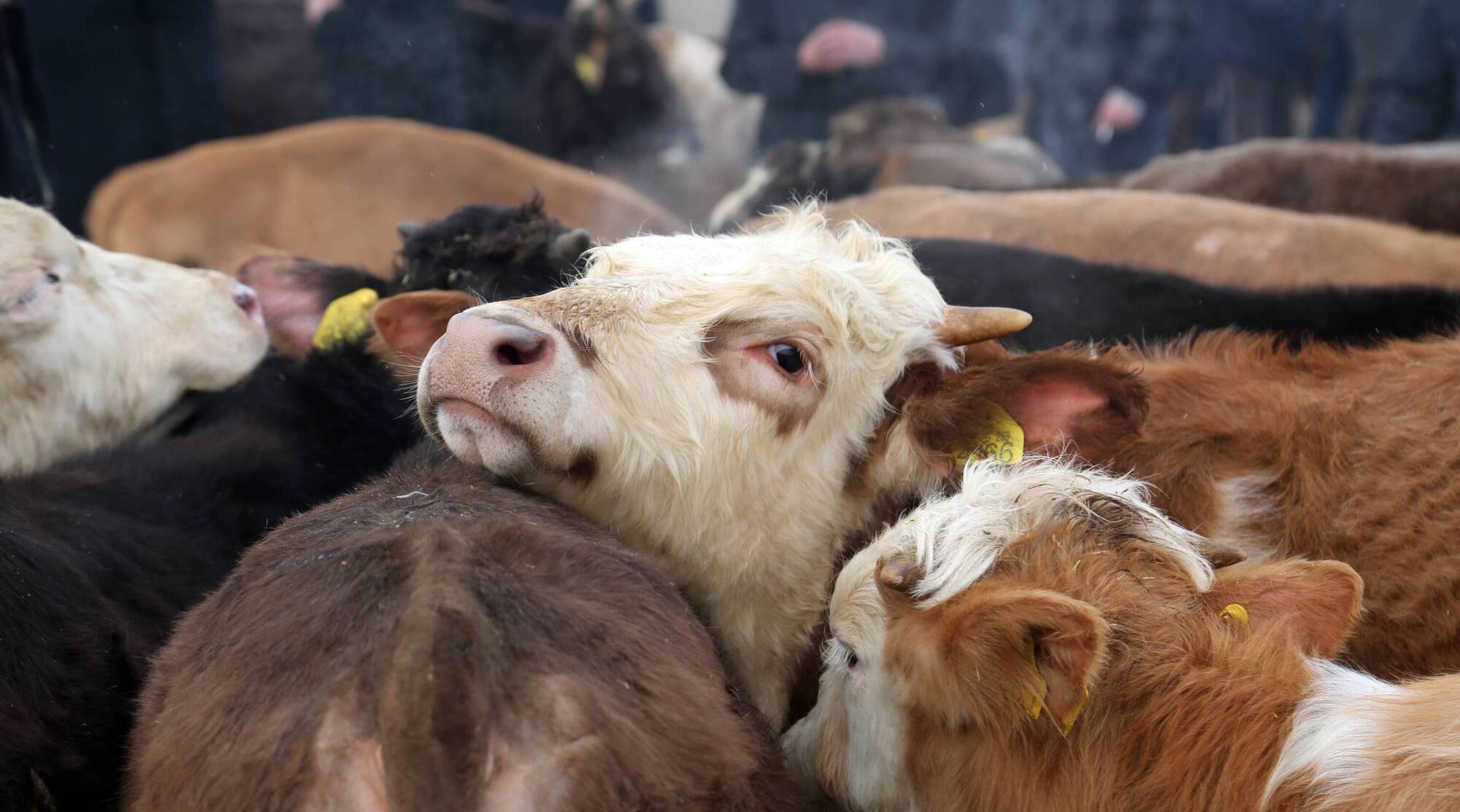
The Livestock Strategy aims to strengthen the sector, improve sustainability, quality and market perception of EU farming and foods.
The European Commission is aiming to cut the EU's dependence on imported livestock feed while introducing new measures on animal welfare, emissions reduction and crisis support through its first-ever Livestock Strategy.
The strategy, a first of its kind, published on July 7, aims to ensure Europe’s valuable livestock sector remains strong and resilient in the long term.
EU livestock farming amounts to approximately 40% of the total output in European agriculture. Despite this, stock numbers have declined since 2005 with the EU reporting 10% fewer bovines, 15% fewer pigs and 25% fewer sheep and goats.
The strategy includes measures to create a resilient, competitive and sustainable livestock sector, trying to encourage the livestock sector to be fit for all farms and regions and promote excellence within livestock production.
Commissioner for agriculture and food, Christophe Hansen said: “Europe's livestock sector is a success story, but today it is a success story at risk. The Livestock Strategy and the Protein Plan set out one common ambition: to strengthen Europe's food security, reinforce our strategic autonomy and help sustain vibrant rural communities, especially in regions at risk of land abandonment.
Read More
"To achieve this, we must move beyond polarising debates and focus on practical solutions. We want EU farmers to be profitable and more prepared to manage risks. We are proud of Europe’s excellence in food production and want this to be valued and recognised by enabling EU consumers to make well-informed choices. As always, my approach is based on dialogue — with farmers, member states, industry, scientists and civil society.”
Through the new strategy, the commission is aiming to increase preparedness to reduce risk exposure and enable farmers to recover more quickly after a crisis. It will also support member states in managing the impact of animal diseases to strengthen prevention, early detection and early action. Investment in climate resilience and reducing importing dependencies remain key priorities.
To improve competitiveness in the sector within the EU and globally, the commission will work to boost profitability and uptake of innovation. It will explore the possibility of financing the facilitation of transitioning to cage-free systems, and support circularity, bioeconomy, and biomass conversion.
Through efforts to improve competitiveness, the strategy will also focus on the fair income of farmers and ensuring international reciprocity. To deliver on this, the commission will work on greater alignment of production standards, especially on animal welfare, in line with World Trade Organisation obligations, as well as strengthening promotion of EU agri-foods in new markets.
Sustainability within the EU livestock sector remains difficult due to the wide diversity of farming across the regions.
The strategy will aim to promote tailored approaches to address these challenges. It proposes measures to improve animal welfare through targeted revisions for laying hens, broilers and pigs, which will be evidence-based and accompanied by transition periods and financial support.
It also includes new “harmonised methods” for calculating livestock emissions at farm level, climate mitigation practices, nutrient management and sustainable circulation of resources, strengthening co-operation between farmers and producers, and supporting sustainability and socio-economic goals within the sector.
The European Commission will work with member states to encourage sustainable livestock farming in vulnerable areas, especially regions where farming is declining or at risk of being abandoned. This will be supported by a Land Observatory and EU population policies.
As part of this work, the commission will also create a plan for small-scale and mobile slaughterhouses. This will help farmers process animals closer to home, reduce the distance animals need to travel, strengthen local supply chains, and support rural economies.
Excellence and quality are a major strategic asset for Europe’s agri-food sector. The strategy will make the EU’s excellence in production more visible and rewarding through strengthened EU origin labelling and quality recognition.
It will develop a ‘European Excellence’ scheme to better validate higher standards, sustainability, and specific production characteristics. It will also promote sustainable EU livestock products through dedicated promotion policies, geographical indications, the ‘Buy European’ campaign and organic production systems.
The strategy is also accompanied by a ‘Protein Action Plan’ aiming to reduce the reliance on non-EU imports of proteins and increase the supply and use of EU-grown protein crops.
Six countries, Brazil, the United States, Argentina, China, India, and Paraguay account for 90% of global soybean production. The EU livestock sector uses around 74 million tonnes of protein as feed annually.
Imports cover 25% of the protein used to feed EU livestock.
In 2025, only 25% of protein from oilseeds and protein crops was sourced in the EU. The plan aims to increase the share to 35% by 2035.
The commission aims to support European protein crop production and improve the competitiveness of EU-grown proteins.
By recognising the strong links between food, feed, energy and industrial value chains, it will also encourage innovation, investment, diversified diets and improved monitoring of protein dependencies.
IFA president, Francie Gorman, said the Livestock Strategy launched by the EU Commission doesn’t have enough focus on the difficult income conditions in the sector.
“The strategy identifies five priorities, but the low margins and cost pressures are relegated to the background note in the document released by the commission,” he said.
“It’s all very well to talk about ‘making the sector more self-sufficient, sustainable and resilient’. However, the future will only be secured if those considering a career in livestock production can see that it’s possible to make a living out of it.”
Mr Gorman said in Ireland, those in livestock production fall well behind other sectors when it comes to income. Despite a better year last year, thousands of farmers rely on EU supports for more than 100% of their income.
“The EU Commission spent a long time putting this report together, but the only conclusion that could be drawn from it is that the focus is on issues other than income,” he concluded.