Six out of 10 Irish sheep farmers now juggle jobs away from the farm
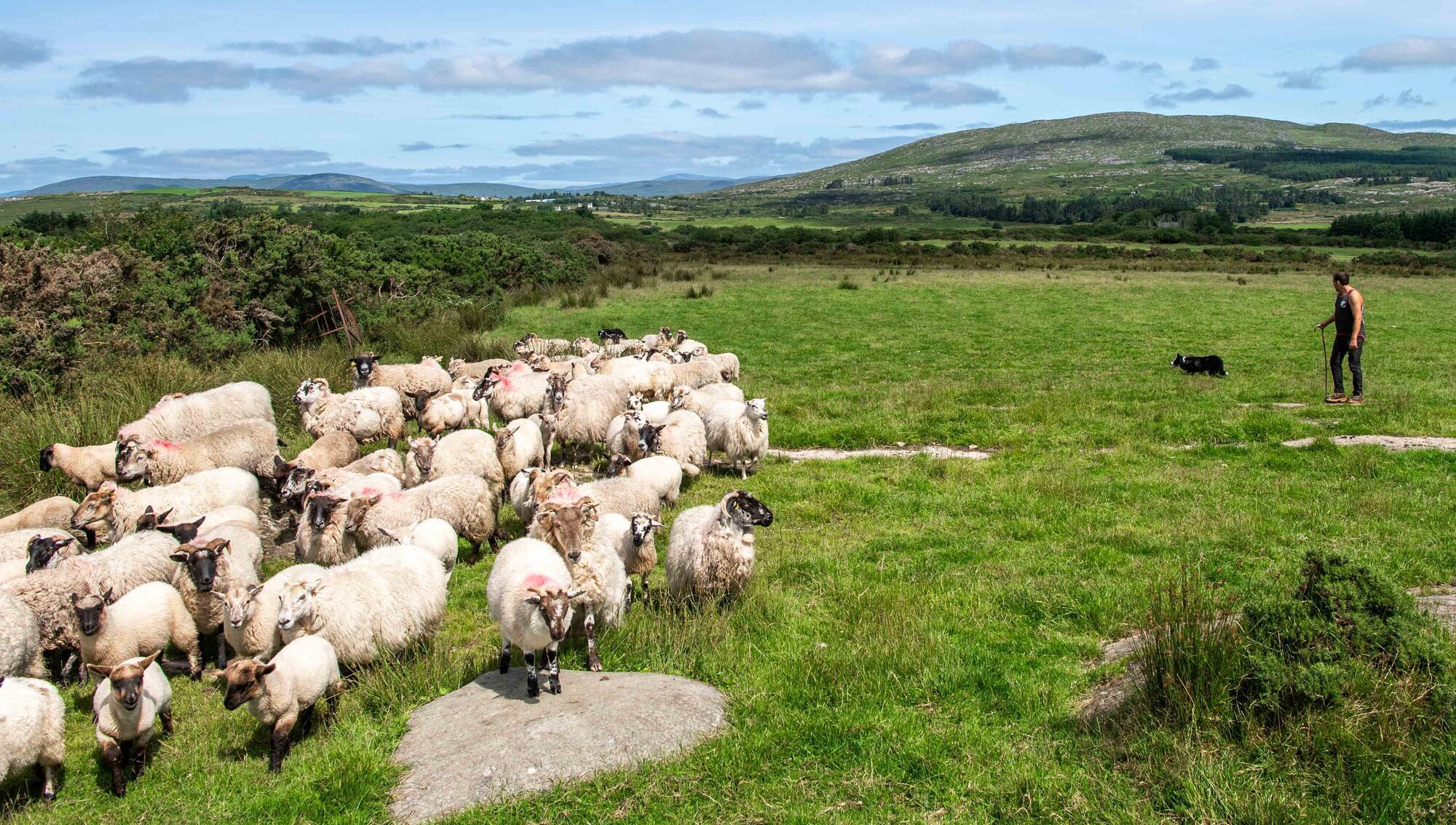
The survey findings also indicate that seven out of 10 of the farmers completed most of their sheep work on Saturdays. Picture: Andy Gibson
A Teagasc survey show that six out of 10 sheep farmers have non-farm jobs, including four or five with full-time off-farm jobs.
Between one and two work off the farm for between one and four days weekly. However, of sheep farmers aged over 65, only one in four works off-farm.
Teagasc sheep specialist Damian Costello discussed the survey findings in a recent Ovicast podcast.
He said: “The trend clearly indicates that the sheep farmer of the future is going to be predominantly part-time, making it all the more important that the sheep enterprise can be run in a very labour efficient way.”
The survey findings also indicate that seven out of 10 of the farmers completed most of their sheep work on Saturdays. This is not surprising, with so many working off the farm Monday to Friday, and maybe requiring the assistance of family members at the weekend.
Costello said: “We asked people do they take time off or annual leave from their off-farm job, in order to complete the farm work. We asked them to say how many days in the year they would estimate that would be. It turned out at an average of around 17 days.
“Only 6% indicated that they hire in any kind of casual labour at busy times. The vast majority of people, 62%, rely on family members for help, and 32% say that most of the sheep work is done on their own.”
All counties were well represented among the 446 survey responses, as were all age categories, with a good spread between hill and lowland systems.
“The average flock size that completed the survey was slightly higher than the national average, but at the same time, almost half the respondents were people that had less than 100 ewes,” he said.
Fewer than one in four said they had a designated sheep handling unit, used only for sheep, either fixed or mobile. So it was not surprising that 85% agreed that improving their handling facilities would reduce their workload.
Asked what were their three priorities in labour-saving infrastructure on the farm, sheep handling facilities, sheep fencing, and sheep housing came out on top.
Asked if they need a trailer to transport sheep between land blocks, 68% said yes. But 64% of the handling facilities are fixed only. “Are they loading sheep up on a trailer to carry them to the block where the fixed unit is located? That would certainly be a big drain on time,” Costello remarked.
One in eight sheep farmers had both a fixed and mobile handling unit, one in four had a mobile unit only. Costello said poor facilities may result in health treatments or other necessary tasks not being completed.
“69% of people said they had a handling race, but only 52% said they had a sorting gate at the front of the race,” Costello said. Farmers who don’t have a sorting gate have to manually catch each sheep and put them on the other side of a gate.
“Adding a race and a sorting gate to their existing facilities is not going to be a massive investment,” he remarked.
He said five items are must-haves for handling sheep: the collecting pen, the footbath, the weigh scales, the handling race, and the sorting gate. But only one in three in the survey had all five.
Three out of four had a footbath. “We would have always felt that a batch footbath would be a better option,” Costello said. But only one in 10 had a roofed batch type footbath which Teagasc recommends.
He explained:
On average, those in the survey said seven ewes at a time fit in their footbath. And 15 minutes of contact is recommended for footbaths. “If you have to put seven ewes in for 15 minutes, you'd have to fill your footbath 20 times to get through 140 ewes. Probably, you'd have to assume what will happen would be that there will be far shorter contact time, and less effective foot bathing,” Costello said.
Fixed and mobile sheep handling equipment in Ireland is grant-aided at a 60% rate. “Only 40% said they had availed at any time, for anything,” Costello said. “It was a relatively low uptake, given the level of grant funding that has been available over the years.”