Satellite tags reveal epic journeys of Ireland’s cuckoos
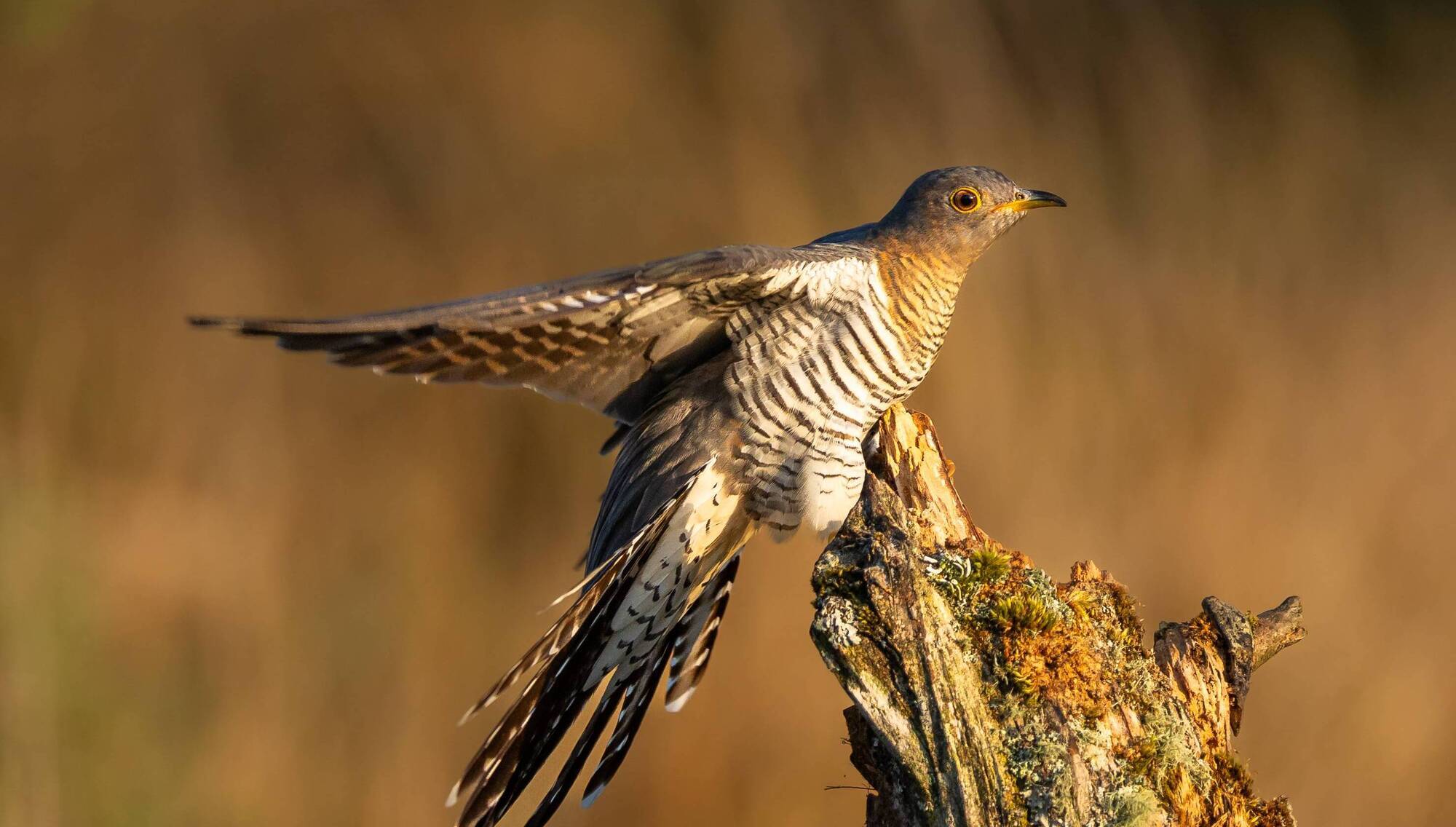
Cuckoos from Irish national parks on the 2026 tracking list include Seán (Wicklow), Rua (Burren), and Cores (Killarney)
The cuckoo's prime habitats in Ireland include Killarney, Connemara, Donegal, the Burren and Wicklow.

The cuckoo's prime habitats in Ireland include Killarney, Connemara, Donegal, the Burren and Wicklow.

The cuckoo, along with the swallow and the corncrake, has a long history in Ireland as a harbinger of summer.

It typically arrives in the last days of April and stays until early July before heading back to the African continent.


While the cuckoo has been well-studied during the breeding season, little is known about the routes they take once they migrate for the winter months.

In 2011, the British Trust for Ornithology (BTO) embarked on a new project to study the bird’s migration patterns.

The National Parks and Wildlife Service here inked up with the BTO team in 2023 to satellite track Irish cuckoos, which were given names and fitted with satellite tags.

Cuckoo, or cuach in Irish, is a unique bird in Ireland as it lays its eggs in other birds’ nests and does not raise its young.

More likely to be heard than seen, the distinct "cuck-oo" call of the male cuckoo carries across the landscape.

The cuckoo features in many old sayings, superstitions and tales.

These mainly revolve around the changing of seasons, weather predictions, farming and luck.

A very elusive bird, prime habitats in Ireland include Killarney, Connemara, Donegal, the Burren and Wicklow. But numbers have declined over recent decades.

Cuckoos from Irish national parks on the 2026 tracking list include Seán (Wicklow), Rua (Burren), and Cores (Killarney).

Their routes back to Africa are normally via Italy, across the Mediterranean and on to the Sahara Desert by Libya.

Early reports are that Seán, who left Wicklow on June 10, made his way to Andora on the Italian coast and was heading across the Adriatic Sea to northern Croatia.

Rua, who departed from the Burren a few days later, reached France, passed Lourdes, continued to the Pyrenees and was last reported to be moving backwards and forwards across the Spanish border.

Cores, who has completed several journeys as part of the project, was the first cuckoo from Ireland or Britain to arrive in the Democratic Republic of Congo in September 2023, four months after being tagged in Killarney National Park.

His journey back to Kerry this year was not without adventure. His signal was lost last autumn as he crossed the Sahara, but it was picked up again in March when he was in Ghana.

Having apparently spent four months in the forests of Congo, he was tracked in a Spanish mountainous region the following month.

Cores left Spain in April and after a flight across the Bay of Biscay, came ashore in western France.

Having headed north towards Ireland, he arrived on the Cork coast on April 22 before forging on to Killarney National Park.

Cuckoos mostly winter for four months in the Congo Basin rainforest because it provides a reliable, year-round abundance of their primary food source: caterpillars and insects.

The region's dense, equatorial gallery and swamp forests offer vital shelter and a perfect environment for the birds to molt and regain their energy before their spring migration.

Minister of state for nature Christopher O’Sullivan is urging the public to follow their movements on the British Trust for Ornithology website.

He said the call of the cuckoo represents the start of summer for many people and is a familiar and much-loved sound in the countryside.

“I’m really excited about this project, which will help us learn more about these fascinating and mysterious birds so that we can better protect them.

“I’m encouraging everyone to keep an eye on the website and see which routes they’re taking, how fast they’re travelling, where they end up — and who arrives first!

“Armed with greater understanding, we will be in a better position to protect the beloved cuckoo, so that generations to come can enjoy the sound of the bird for many more summers,” he said.

Over the past 15 years, the project has been providing useful insights into the pressures faced by the cuckoo population.

Sam Bayley, NPWS conservation ranger, said it has been an amazing opportunity to get a detailed understanding of both the cuckoo breeding home range, migration routes and wintering grounds.

One of the most renowned Irish cuckoos, a bird named KP, was tagged in Killarney National Park in May 2023 and became the first to successfully make the return journey home the following summer.

After wintering in the Democratic Republic of Congo, he was tracked in Morocco, Cameroon, Ghana and the Ivory Coast before flying northwards from the Western Sahara.

He made landfall on the southern coast of Ireland, south of Dungarvan and travelled on to Fermoy before heading west to Killarney National Park.

Cuach KP’s 9,000km epic journey to and from the Kingdom covered two continents, several countries and the Bay of Biscay.

People are fascinated by the ability of cuckoos and other birds to return each year to the same breeding grounds without satellite navigation.

Experts believe they use mental maps of the landscape, the sun, moon and stars, and the earth’s magnetic field to guide them on their way.

x

More in this section

Farming

Newsletter

Stay ahead of the season. Sign up for insights, expert advice and stories shaping Irish agriculture.

Cookie Policy Privacy Policy Brand Safety FAQ Help Contact Us Terms and Conditions

© Examiner Echo Group Limited