New national partnership hopes to manage invasive species
A new partnership between the National Parks and Wildlife Service and the National Biodiversity Data Centre will form the new Invasive Species Bureau
New national partnership hopes to manage invasive species

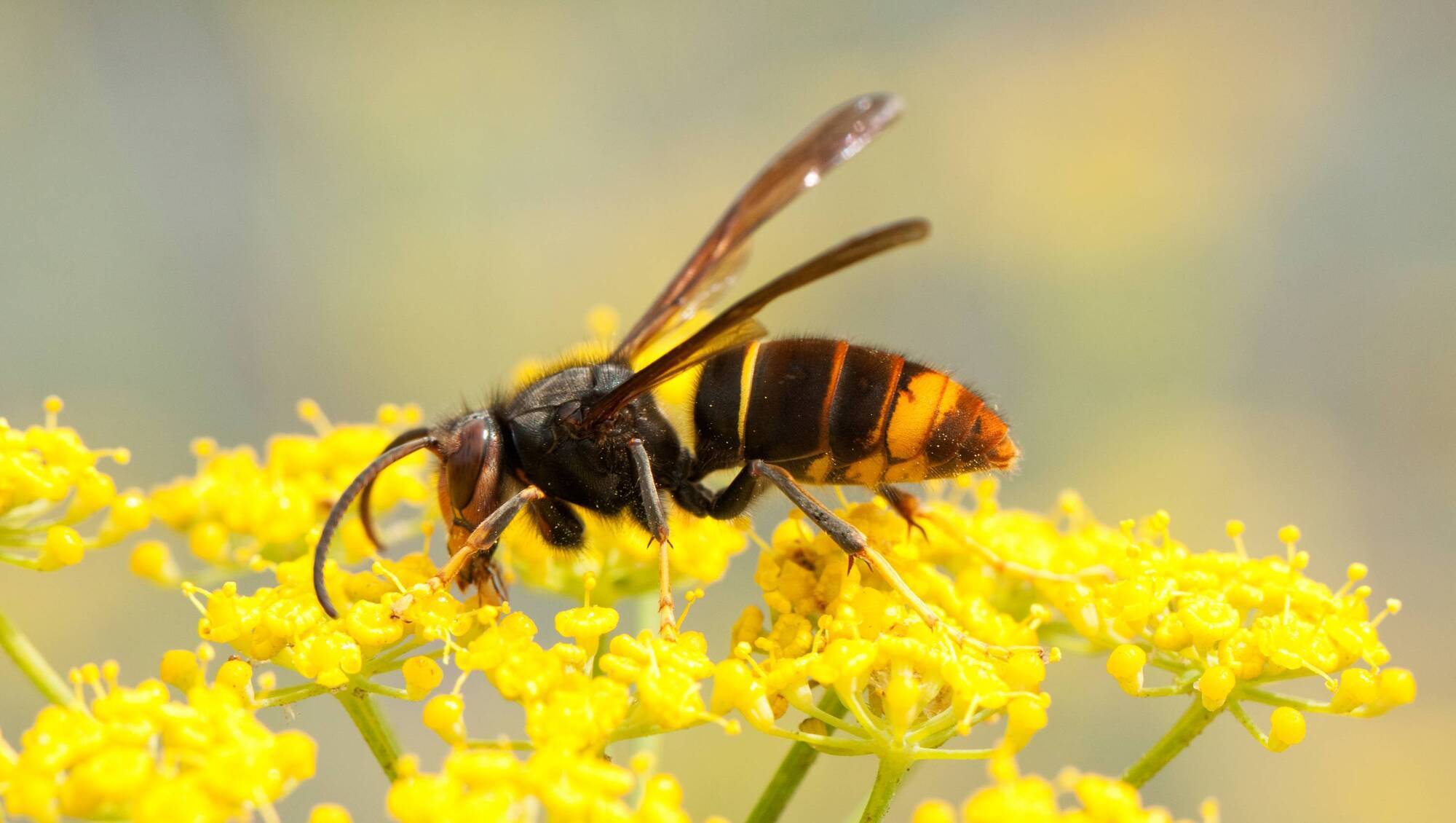
The Asian hornet is an invasive species that was discovered and removed in Cork last year.

A new ‘Invasive Species Bureau’ will be established to strengthen Ireland’s approach to managing invasive species.

The bureau will be formed following the new partnership between the National Parks and Wildlife Service (NPWS) and the National Biodiversity Data Centre (NBDC), which will establish an Invasive Species Bureau.


Nature and biodiversity minister Christopher O’Sullivan announced the partnership and also published the rapid response model for the Asian hornet, a new strategic approach for managing any future occurrence of the Asian hornet in Ireland.

Examples of invasive species found in Ireland include rhododendron, North American mink and Japanese knotweed. Last year, reported sightings of the invasive Asian hornet in Cork led to a rapid Government response, resulting in the location and removal of two Asian hornet nests.

Launching the new bureau at the National Biodiversity Data Centre in Waterford, Mr O’Sullivan said: “Left unchecked, invasive species are a major threat to nature and a threat to livelihoods. Our response to managing them must be based on early detection, public awareness, and collaboration — and backed by science.” 

Invasive species pose a threat to biodiversity as they damage native species of plants and wildlife. They have a significant impact across sectors such as agriculture, fisheries, forestry, transport and tourism.

The bureau formalises the partnership between the NPWS and the NBDC to support the implementation of EU regulations on invasive species, and to strengthen Ireland’s approach to managing them.

Mr O’Sullivan said: “One of my top priorities for the bureau will be to develop an invasive species management strategy, and support its implementation. This will provide us with solid data, coordinate key agencies and stakeholders, and unlock the power of citizen science so that we can spot these species early and stop them from spreading.

"This approach has proven highly effective in other countries, and will ensure that we meet our obligations in Ireland and the EU to tackle these species and bring them under control.” 

The minister also published the response model for the Asian hornet, which consists of a new roadmap that will coordinate efforts to ensure the Asian hornet does not take hold in Ireland.

Mr O’Sullivan said: “We remain vigilant about the Asian hornet given the threat it poses to native pollinators. This roadmap does just that — it ensures that we are well prepared to prevent it from gaining a foothold in Ireland.

"Each step within this roadmap — from early detection, through to investigation, eradication strategy and deployment of all control measures — is based on the best available scientific evidence.” 

Commenting on the public’s role in combating invasive species, the minister said: “The public plays an important role in our early warning system, too. We’ve now made it even easier for everyone to log onto the invasives.ie portal and report suspected sightings of the Asian hornet along with other invasive species.” 

More in this section

Farming

Newsletter

Stay ahead of the season. Sign up for insights, expert advice and stories shaping Irish agriculture.

Cookie Policy Privacy Policy Brand Safety FAQ Help Contact Us Terms and Conditions

© Examiner Echo Group Limited