Farming organisations react to €100m fuel support scheme
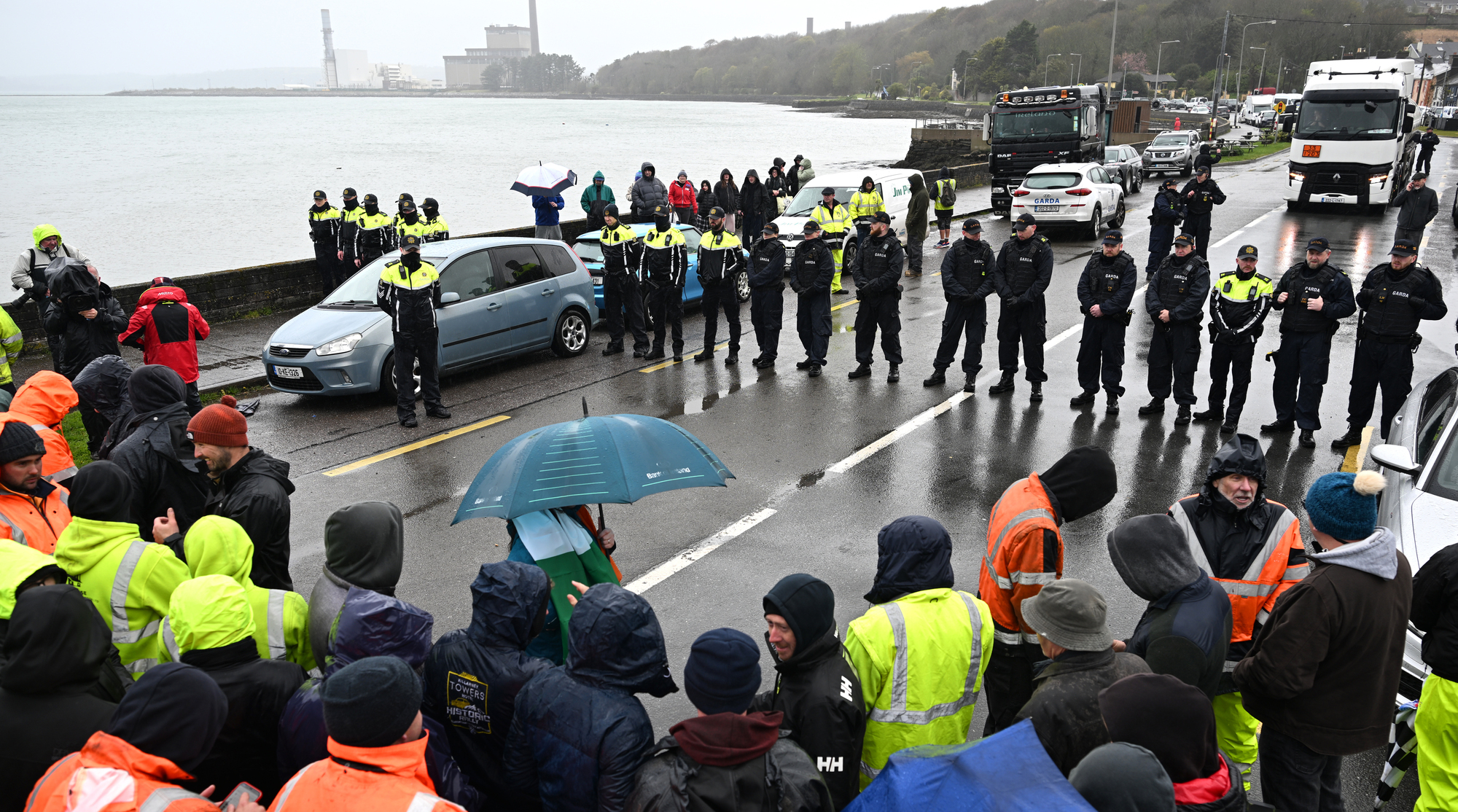
Fuel protests at Irving oil refinery in Whitegate, Co Cork, last week. Picture: Larry Cummins
The government’s announcement of a €100 million emergency package has been met with a cautious response from farming organisations.
The €100m Fuel Subsidy Support Scheme aims to assist farmers, agricultural contractors, and fishers facing an increase in fuel costs. The payments will cover the months of March up to the end of July, which coincides with peak fuel usage on farms.
Read More
The support package totals €100m, and €20m will be issued to eligible support participants each month. Eligible participants will receive a support rate equivalent to approximately 20cpl of green diesel used based on verified fuel consumption in 2025.
Farmers, contractors, and fishers will be able to apply for support through a single application process. To be eligible, an applicant must have an active farming or contracting status, tax compliance, and verifiable fuel usage.
The fishing, forestry and specialist horticulture sector will be issued €5m a month within the support scheme.
IFA president, Francie Gorman, acknowledged the support scheme announced by the Government as significant.
The IFA said there will need to be regular engagement to keep the situation under constant review to ensure the agri-sector is protected.
Mr Gorman said: “The structure and roll-out of this scheme must happen quickly, and the department needs to ensure it is efficient and effective. The concern among farmers and agri-contractors now is that it will be overly bureaucratic and too slow.
“The Government still needs to address the carbon tax in the next budget. The decision not to apply the increase due in May is the right one, but the whole tax is very unfair and punitive for farmers and rural Ireland.”
Mr Gorman also said the Government must do “far more” to address the frustration and anger of rural Ireland, with particular focus on the cost of doing business and over-regulation.
“IFA also proposed a fodder scheme and additional support for the tillage sector, and we will continue to pursue these,” Mr Gorman said.
Concluding, he said the IFA will continue “to campaign vigorously” but warned protestors that “we must guard against our valid campaigns being used by people with other agendas.”
ICSA Rural Development chair Edmond Phelan has said the Government’s fuel support package falls short of on-farm reality.
“Deferring the planned increase in carbon tax is a practical step, but the overall level of support falls well short of the costs now being faced on the ground.
"The speed and volatility of these increases are making even short-term planning very difficult for farmers,” he said.
He said cashflow is now emerging as another major issue.
“Many farmers and contractors are no longer being extended the same level of credit and are being asked to pay for fuel up front.
"Given the scale of these increases, that will simply be impossible for many.”
He said that while the €100m package will provide some relief, it only covers a fraction of the extra costs facing the sector.
Macra says the supports are a step in the right direction towards supporting young farmers and rural young people over the next five months.
Macra said they had been calling for the development of a crisis response scheme.
Following direct engagement with the minister of agriculture over the weekend, the organisation highlighted the need for targeted support and concerns surrounding the criteria of the proposals which may affect young farmer accessibility.
The organisation welcomes the usage-based support scheme and the confirmation of consideration for new entrants in the development of the scheme.
Read More
While Macra recognises that the development of such a scheme will take time, president Josephine O’Neill highlighted that swift and efficient delivery will be critical.
“Our members have been struggling to make ends meet as a result of the ongoing crisis. The announcement of a cut to excise duty on agri-diesel, petrol and white diesel will hopefully go a long way to relieving some of the pressures currently being faced,” Ms O’Neill said.
The Macra president also welcomed the Government’s deferral of the planned carbon tax increase, scheduled for May 1, another key ask of the organisation during negotiations.
However, she called on the department to continue negotiations in relation to the requested pause on carbon tax and CBAM tax on fertilisers.