Mycotoxins: A hidden danger for livestock producers
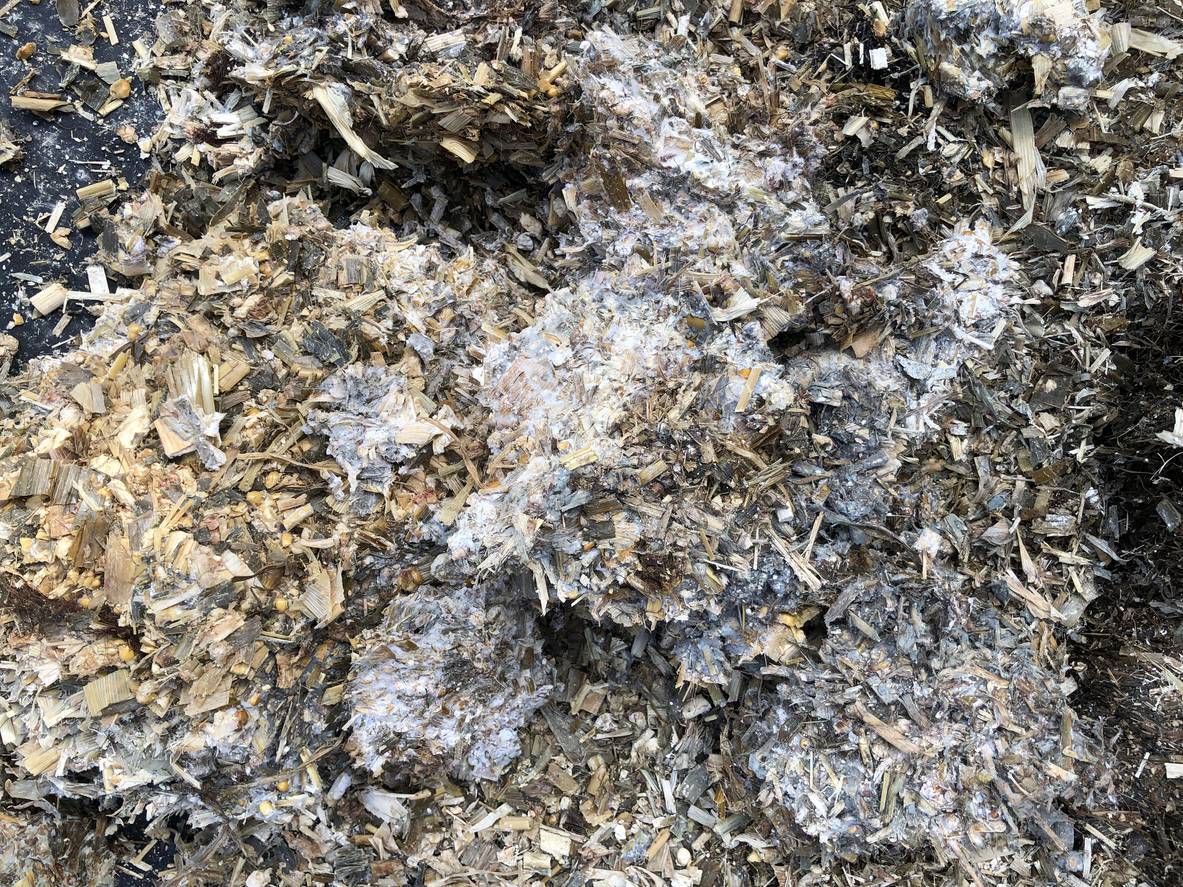
Mouldy maize silage in close up on a farm in England in early June
Following on from my piece last week on silage quality, where I mentioned the presence of mycotoxins, I had plenty of requests to expand further on the issue.
As silage pits and bales are being opened around the country, I have begun to see more and more mould and spoilage in those silages made during the dry spell in July and August.
These crops of grass were already exceptionally dry standing, before they were ever mowed down and the issue in my opinion has been brought about by over-wilting and the delayed harvesting of these swards.
These forages are much too dry in pits and bales and this is reflected in the poor preservation with very high pHs being detected. They were essentially toasted in the field and not for the better.
Obviously, most farmers will discard the visible moulds on the top and sides of pits or the outer layer of bales. However, if mould exists visually in the clamp or bale, then there is likely to also be plenty of mould that you can’t see.
Moulds are highly likely to be high in harmful mycotoxins. Mycotoxins are toxic contaminants which are produced by moulds and can be found in mixed feed, forages and straights, affecting animal health and feed efficiency. They reduce the bug population in the rumen causing poorer nutrient and mineral absorption.
Essentially, there is a battle between good bugs and bad bugs in the rumen and if the bad bugs win out then the food consumed is not utilised efficiently.
Furthermore, these bad bugs can have a hugely detrimental effect on the animal's immune response and general health.
Warning signs that you could have a mycotoxin issue include:
- Excessive pit face moulding/spoilage;
- Poor animal performance: For example, poor milk yields or solids, cattle slow to flesh and achieve good cover, poor growth in youngstock;
- Poor animal demeanour and coats;
- Swollen legs and hocks;
- Loose dungs;
- Poor intakes of fee or erratic feed intake, from low to high;
- Poor fertility performance;
- Significant levels of Mastitis.
It is possible to test for mycotoxins, however, this can be a costly exercise and can take a long time for results to return.
One way to establish if you have an issue is to include a 'mycotoxin binder' in your diet to see if your animals respond.
A positive response to the Binder should be pretty quick if you have an issue. I have seen some significant responses in the last few years, with animals eating significantly more feed, dung firming up and improved performance.
Obviously including a mycotoxin binder in a diet is no excuse for poor management, so you still need to practice good pit management and discard obvious moulds.
Mycosorb A+ is an excellent example, that I have seen give excellent mycotoxin control in various situations. It can be added to your minerals, your compound feed or added to a TMR with the inclusion of a farm pack.
Be aware that some binders on the market are charcoal based, and unfortunately, these also capture minerals in the diet and may solve one problem, but cause another one.
One interesting thing about mycotoxins is that sometimes you can see that a feed may have mycotoxins in it, but may seem harmless until another ingredient is added to the diet and triggers the mycotoxins to affect the animals being fed.
If you have a mycotoxin issue, the material you suspect as being the culprit, may actually not be the problematic material.
- Brian Reidy is an independent ruminant nutritionist at Premier Farm Nutrition.