We refuse to be cheap feed: Cork oat grower calls for Irish grain mandate
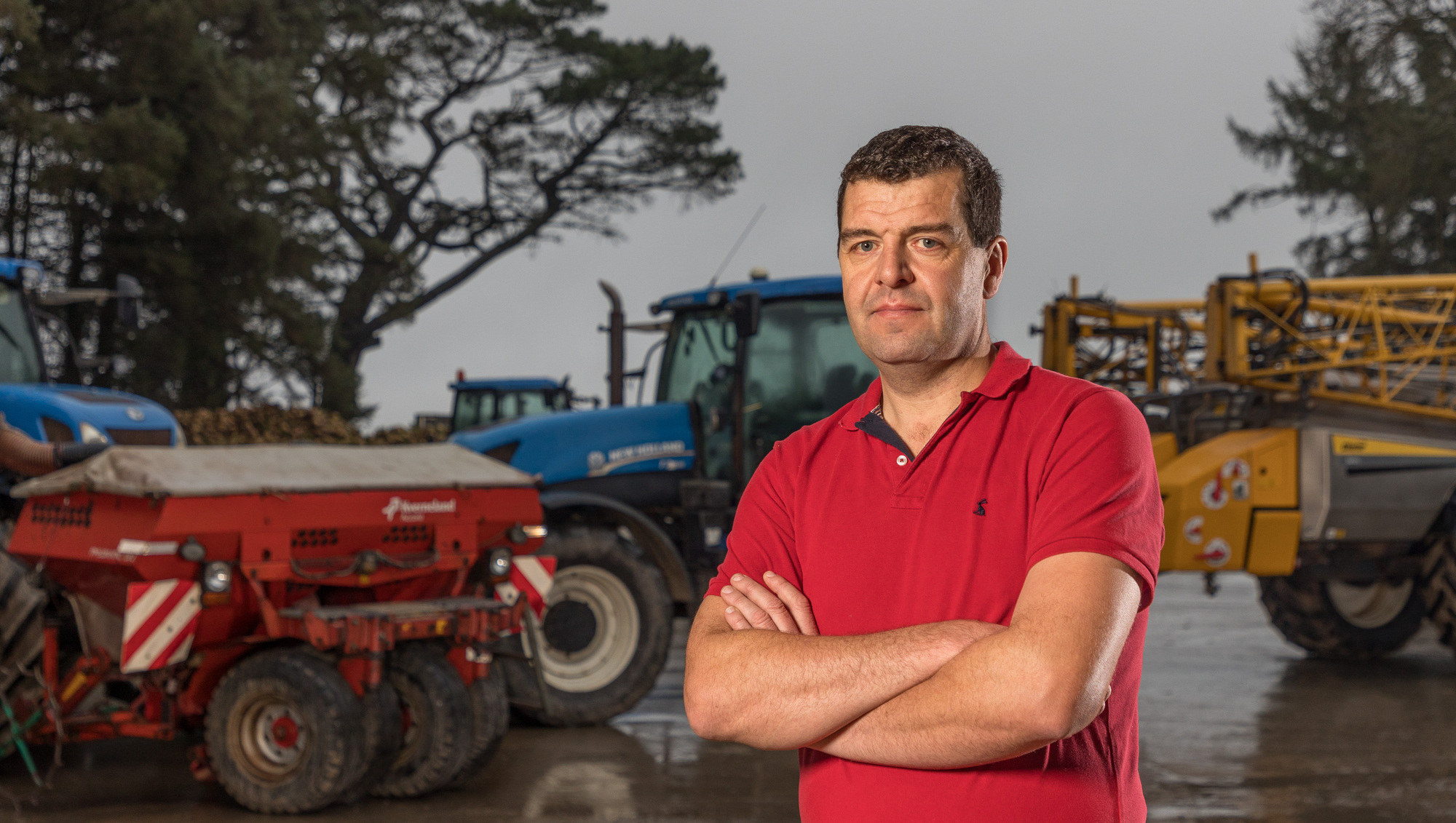
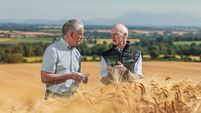
Flahavan’s Oat Grower of the Year Martin O'Regan on his farm outside Kinsale. Pictures: David Creedon
It was a big boost for Martin O'Regan from Coolyrahilly, Kinsale, to be named Flahavan’s Conventional Oat Grower of 2025.
The recognition was very welcome at a time of significant challenges for the tillage sector, to which agriculture minister Martin Heydon has responded by targeting €50m to underpin tillage farm incomes, and protect the future of the sector.
Runner-up for the award in 2024 and 2022, Martin's win comes 25 years after his father Jim started growing for Flahavans.
Now, an annual Flahavans contract for about 700 tonnes is a valuable asset for Martin and Jim's farming company. "We are very lucky to have it," says Martin.
Conventional oats adjudicator Ciarán Collins of Teagasc commended Martin as a standout contributor year after year, noting his reliability and passion set a benchmark. He was commended for the "outstanding performance across his Isabel Oat supply, consistently producing exceptionally clean grain, underpinned by strong agronomy and a keen focus on environmental care".
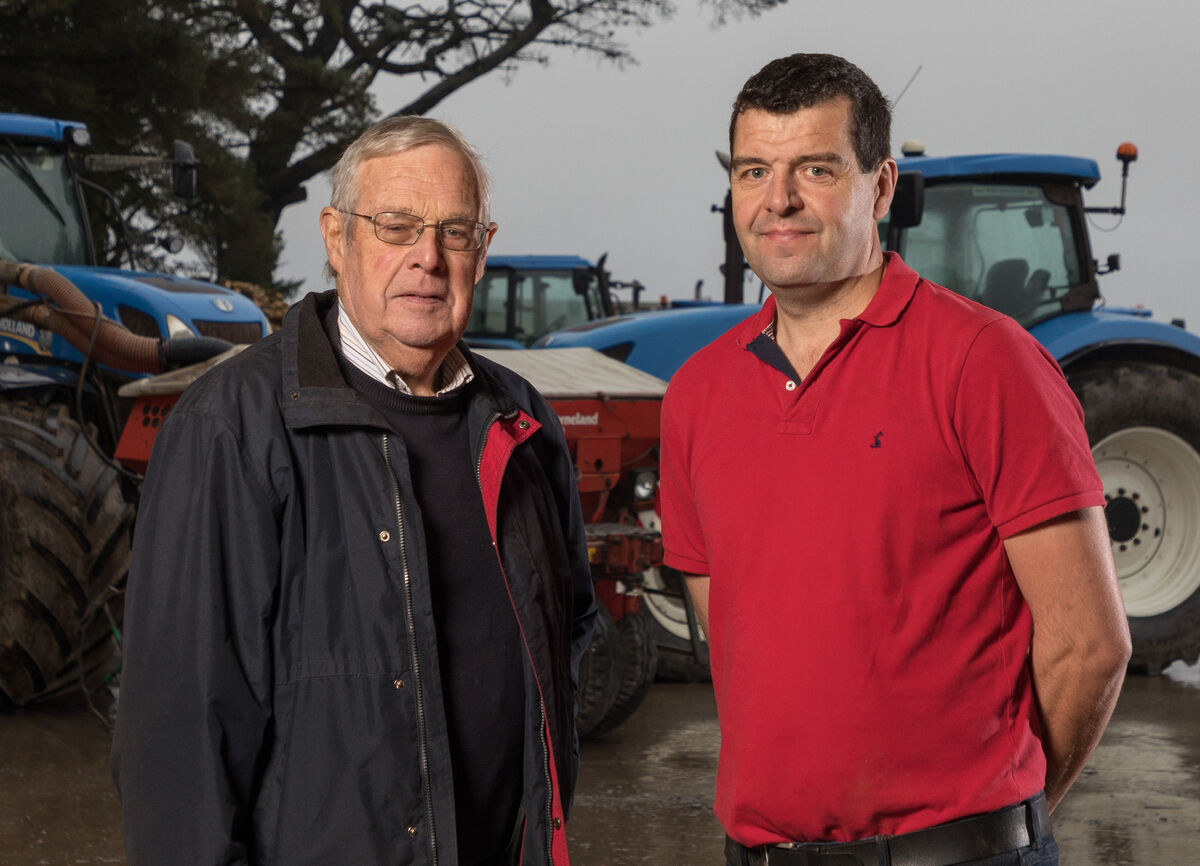
Martin said: "The benefits to the following crop are fantastic, and when you add in the benefit of chopping the straw and incorporating it into the soil, it is a very easy choice to make in your crop rotation.
"I am lucky to work with Teagasc as well as a number of extremely talented agronomists. This year, I worked very closely on the oats with David Nyhan of Barryroe Co-op".
"We have always found Flahavans a pleasure to deal with. Everyone from Johnny Flahavan to the lads in the weighbridge. Always willing to help. Especially during the busy harvest when time is critical, they go the extra mile to help the tillage farmer".
That level of appreciation for their efforts is rare for tillage farmers.
Jim said: "Tillage farmers in Ireland are among the best in the world, and that is something that I feel is taken for granted in this country, particularly by Bord Bia and other Government bodies".
It's a valid point, considering 90% of all traded grain in Ireland is certified by the globally recognised Irish Grain Assurance Scheme (IGAS), said to be Europe's most comprehensive system of grain traceability, and standards for production, transport, handling and storage.
"I am a member of IGAS, and I know that every product that I apply to my crops can be traced and has been tested rigorously to make sure the crops that we produce here in Ireland are as safe as possible," says Martin.
Tillage is also the farming sector with the lowest carbon footprint. "Oats grown in Ireland, when the straw is incorporated into the soil, can achieve close to net zero carbon emissions," says Martin.
Meanwhile, it has been challenging for all Irish farmers to weather rising costs of labour, inputs, and machinery costs, while meeting EU and nationally imposed environmental and quality standards.
Tillage farmers have had to hang on in there while accepting decimated prices, for example €180 for barley which made €300 in 2022.
They have endured increased competition in the land rental market from the dominant dairy sector, and from solar farm investors. Every year, more of the pesticides they once relied on are being banned in the EU.
Arguably, tillage is also hardest hit by climate change, bringing longer and more intense periods of bad weather.
These challenges are taking a toll.
It is not as bad as the 1985 to 2012 period, when tillage shrank from 400,000 hectares to as low as 275,000 ha.
There was a 17.3% reduction in the number of farms growing cereals between 2010 and 2020.
Overall, the area of cereals declined by 11.9% since 1991.
Some tillage farmers are turning away to take up more agricultural or construction contracting work with their machinery, or taking up other part-time non-tillage work, says Martin O'Regan. Some of their children are not interested in carrying on in tillage, he says.
How can tillage farmers be helped? His solution is radical. "If a minimum content requirement of Irish grain in every tonne of ration was brought in by Bord Bia, which was to be increased by a half a percent every year for the next 10 years, it would be like the straw chopping scheme, to set a base price for Irish grain, which would bring a lot of positivity to the sector, and show the next generation that there is a positive future in tillage farming, and that the quality feed and food we produce is recognised."
It's a bold vision born out of Martin and other tillage farmers' refusal to be a source of cheap feed and straw for the livestock sector.
It's an inevitable backlash against a feed and livestock sector which prefers to import feed grain, mostly from outside the EU, produced with the help of pesticides long banned in the EU. And most of the grain and proteins imported are from genetically modified crops, which EU farmers are not allowed to grow.
Hypocrisy is hardly too harsh an accusation, when the livestock sector is happy to use these crops from South America, but downright refuses to allow South American livestock products into the EU in the Mercosur trade deal.
Tillage farmers are similarly disgusted by whiskey and beer being made in Ireland primarily from imported grain. Currently, use of Irish grain is not required in an Irish Whiskey Geographical Indication registered with the European Commission.
But agriculture minister Martin Heydon has said this "needs to be examined".
A Technological University Dublin investigation in 2022 showed the Irish distilling industry uses about 115,000 tonnes of imported maize each year. Ireland is also a net importer of barley malt for brewing and distilling.
Tillage farmers now fear their contracts to supply malt barley may be cut by up to 25%.
Along with Irish industries (with the notable exception of Flahavans) not supporting our high-quality grain production, growers get no real return for being our most climate-friendly farmers. Eight years ago, farmers were told managed cropland, grassland, and forests could generate carbon credits, but they are still as far away as ever.
But the EU was not so slow to introduce a rule four years ago requiring all stubble fields to be cultivated within two weeks after harvesting. Farmers had to buy stubble cultivators, or hire contractors. Now, those expensive machines are idle, after the rule was scrapped, on grounds that early stubble cultivation had harmed birds.
EU laws also brought in the rule that farmers with over 30 hectares of arable land must grow at least three crops. It's the main reason oats increased to 25,408 hectares in 2020, up 28.9% from 2010. It is an ideal crop for complying with the rule, while maintaining the crop rotations vital for productivity.
Unfortunately, it was not accompanied by markets for the new grains. While food grade oats for Flahavans (at €205 per ton) is profitable for growers, feed oats at €180 is not profitable. Teagasc says it matches barley for animal feed value, but Martin O'Regan says the Irish livestock sector prefers feeds like palm kernel from the Far East, or soya hulls, also from outside the EU.
This results in a carryover of unsold feed oats on the market from year to year. Fortunately, some export markets are being found for it.
So oats may be a mixed blessing for the tillage farmers. In contrast, it has been all positive for their straw production. Worth only half a ton of barley grain a decade ago, the straw is now worth more than a ton of grain.
The straw chopping scheme has set a base price, and is a much-needed outlet for oaten, wheaten, rye, and oilseed rape straws, which meet little demand from the livestock sector. Straw chopping will become even more valuable if there is ever a payment for the carbon content in the soil, which it increases, when incorporated.
The livestock sector has responded by importing straw, mostly from the UK, when Irish straw got more expensive. Tillage farmers like the O'Regans say these imports increase the risk of importing black grass. This invasive weed has finished cropping on some UK tillage farms, because it became immune against weedkillers. It has been added to the noxious weeds list in Ireland, making it an offence to not prevent its spread.
"If this was an issue that affected the livestock sector, like foot and mouth, it would be front page news, but because it only affects the tillage sector, it is not treated with the same respect,", says Martin.
He hopes the agronomists who walk his crops can continue to give early warning of black grass (preferably followed by manually removing the weed). He says ploughing also helps to control it better in Ireland than the min-till or direct drill methods which are more popular in the UK.
He warns imported straw bales in curtain-sided trucks could also contain the flies that spread bluetongue disease. "We would suggest that a ban on all straw importation is the only viable solution until we are certain there are no invasive weeds or diseases coming in."
Growing a large area of winter and spring cereals and beet for livestock farmers, the O'Regans are one of the bigger scale tillage operators in Munster, employing five permanent workers, and up to four more in busy periods.