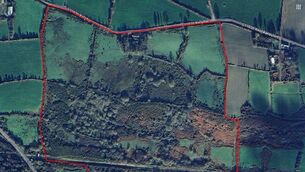
Karen Walsh: CPO is further complicated if a land holding is fragmented
Last week on this page, I said it starts for a landowner with being served with a CPO notice.
You can object on planning and/or legal grounds, and a public local enquiry is held, after which the Minister can confirm, vary, or turn down the CPO.
There are limited grounds to appeal a CPO through the High Court.
Otherwise, the land owner is requested to enter into discussions regarding the acquisition of the property.
Last week’s article went on to explain how the property is valued, including what the owner can claim for.
No. But you have to be given not less than 14 days’ notice.
The entry will not affect your rights to compensation, and you can claim interest on the compensation from the date of entry.
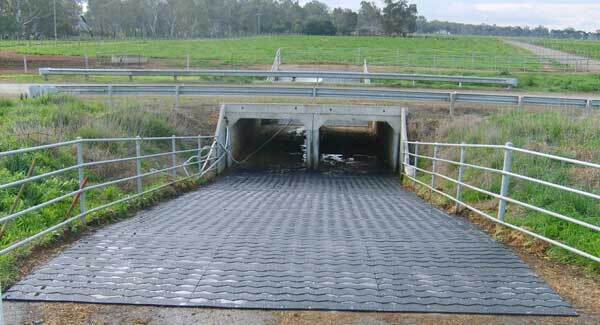
Where a land holding is fragmented by a new road, additional questions to consider will include whether to force the local authority to buy the remaining inefficient portion of land or accept an underpass. Most farmers initially opt for the underpass.
It is not always the best long-term solution.
Think about the practicalities, and your daily farming requirements.
It may not always be a good solution for the farmer.
The choice is obviously his or hers alone.
The acquiring authority is obliged to fence and secure any properties affected by their action, or pay for the cost of doing so.
How and where this is to be done can have considerable long-term consequences.
This should be discussed and documented.
Sometimes agreement on compensation will be impossible to achieve.
The Acquisition of Land (Assessment of Compensation) Act 1919 provides for such difficulties to be resolved through arbitration.
Both parties, the landowner and the acquiring authority, are bound by the Arbitrator’s decision. The Arbitrator must follow the legislation when assessing compensation.
The Arbitrator is completely independent of the acquiring authority.
He will listen to both sides to the dispute and make his award accordingly, based on the evidence presented.
Negotiation before arbitration is very important.
It can be beneficial to settle the matter before arbitration.
Seek good professional advice early, so that comprehensive preparation of the case can begin, thus ensuring a successful outcome.
In general, arbitration should be used as a last resort.
Costs of dealing with the claim up to arbitration are for the acquiring authority to pay.
Costs of the arbitration are at the discretion of the arbitrator, and may be awarded against either party.
You usually are entitled to recover most of your reasonable costs from the acquiring authority if, in the course of the arbitration, you secure an award for compensation higher than what has been offered.
Each case will be dependent on its own circumstances, for example, if an arbitrator is of the opinion that a landowner did not put forward adequate reasons to support his claim for compensation in good time to enable the acquiring authority to make a fair decision on compensation, it could be argued that the landowner should be responsible for the costs in that instance.
It is for this reason that I advise that a team be assembled as soon as possible in order to submit a full and detailed claim for compensation on your behalf in good time.
It is important that you have comprehensive legal advice on the options open to you both in relation to any objections which you may wish to make and also in relation to the procedures to be followed in progressing those objections to the fullest degree permitted.
Even if you do not wish to object to the proposed CPO, it is important that you have a full understanding of the process and the implications for you of the exercise of the powers of purchase by the relevant body or authority.
It is also important that you have advice on the compensation package that may be available to you for the loss of your property.
The landowner must resist the temptation to settle for what may seem like a handsome offer when compared to that offered to his neighbour.
Each case will be different, and the compensation paid will not usually be comparable without analysis of all the facts.
Chief Justice O’Higgins once described the law surrounding the compulsory purchase of land as involving “an arduous journey into the obscure”.
It is a complicated matter.
It need not be an arduous journey if you obtain good advice early.