SFP fields need annual graze
All fields declared for the Single Farm Payment must be grazed, topped or cropped every year, advised Tim Hyde of Teagasc, Athenry, Co Galway, at the Beef 2014 event in Grange, Co Meath He said some 1,350 farmers, or 1% of Single Payment applicants, are inspected each year for all cross-compliance requirements.
SFP fields need annual graze

In addition, 5% of farmers who have cattle are inspected under Cattle Identification and Registration requirements, and 3% of farmers who have sheep are inspected. Failure to comply with cross-compliance or Good Agricultural and Environmental Condition (GAEC) regulations will lead to penalties being applied to all direct payments.

The Department of Agriculture may give no notification, or up to 14 days of notification, depending on the regulations being inspected. Notification is given only “where such notice does not jeopardise the objective of the inspection”. It is important that all records as required are maintained and available for inspection. Further information is available in the Teagasc cross-compliance workbook, or the Department’s www.agriculture.gov.ie website. A self-assessment booklet is available at http://www.teagasc.ie/publications/view_publication.aspx?PublicationID=189


At Beef 2014, the following top tips for staying compliant in different areas of farming were issued.

Nitrates Directive

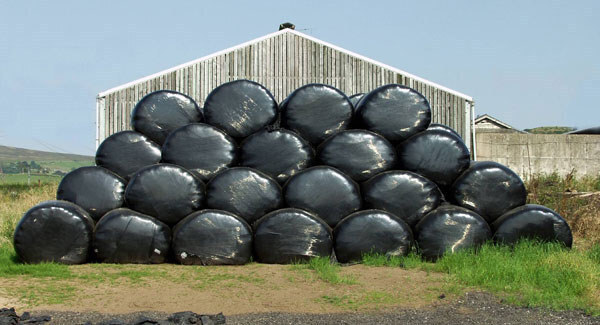
In REPS, silage bales may not be stored more than 2m high (not a cross-compliance requirement). Effluent leaking from bales, if not collected, will incur a penalty. Silage bales cannot be stored within 20m of any dry drain, stream or river.

• Do not store waste silage or farmyard manure in a silage pit. Rain coming off silage plastic is clean (provided no farmyard manure is put on top of the plastic) and can be diverted to clean water outlets, but preferably not directly to streams or watercourses. When covering a silage pit, extend plastic over the effluent collection channels. Where the pit is opened at the high end, direct the rain running off the plastic away from the feed face, to the clean water system. Rain on self-feed silage areas must be collected with the manure. The face of the silage pit must be kept clean. If the silage apron is regularly cleaned, the rainwater runoff will be regarded as clean water.

• Set aside a concrete-floored area for farmyard manure (FYM) from calving pens, calf houses and waste silage. Rainfall onto FYM is a problem; if it is collected, there must be storage for the closed period (between 16 and 22 weeks), and no spreading . • FYM cannot be stored in a heap in fields during the closed period. FYM cannot be stored on hardcore, but may be allowed to build up under cattle in loose houses. FYM cannot be stored within 20m of any surface water (rivers/streams/drains).

• Runoff rainwater need not be collected from yards to which stock do not have access. Mixing with water from soiled areas is a common problem leading to penalties, increased storage requirements and elevating spreading costs. If rainfall on yards is mixing with slurry/faeces, this material cannot be spread during the closed period.

• Cattle crushes and farm roads should be scraped, and solids collected and stored. The rainfall runoff will be classed as clean water and will not require storage. Rainfall on roadways along which cattle are moved does not have to be collected. However, the last 100m should be regularly scraped. Do not allow run-off flow directly into a stream. Ensure roadways are sloped towards the field, where run-off can filter through the soil.

• If slurry is moved off any farm in 2014, record this and notify DAFM by December 31, 2014.

• A 2m uncultivated and unsown zone for tillage crops is required alongside surface waters identified on the 6-inch OSI map (see http://maps.osi.ie/publicviewer) .

• Organic fertiliser setback distances from surface waters have been increased from 5m to 10m during the two weeks before and after the closed period.

Good Agricultural and Environmental Condition (GAEC)

• All continuous tillage soils (six years or more) must be soil organic matter tested.

• Removal of hedgerows/ditches is not permitted unless a similar length is replaced elsewhere on the holding in advance of the removal.

• Trimming of hedgerows can only be between September 1 and February 28.

General cross-compliance

• All farmers involved in spraying need to be aware of the Sustainable Use Directive.

• Prevent contamination of all stored feedstuffs during the winter months.

• Burning agricultural waste such as hedge/bush cuttings must be notified in advance to your local authority Environment Section. Burning of growing vegetation is illegal between March 1 and August 31.

• Sheep dip facilities need to be leak proof. Draining pens need to be concreted and sloped into the collection tank.

• Ensure oil and fuel tanks are in working order, and bunded to contain leaks.

• Don’t locate outdoor feeding points within 20m of rivers/streams, or on rock.

• No application of non-selective herbicides or ploughing permitted after December 1.

• Where land is ploughed or a non-selective herbicide is applied between July 1 and November 30, an acceptable green cover must emerge within six weeks.

• Grassland cannot be ploughed between October 16 and November 30.

• Late harvested crops (such as maize, potatoes, vegetables) do not require a green cover.

Common reasons for penalties under Statutory Management Requirements cross-compliance

• Exceeding the maximum individual and/or maximum total dose for a pesticide.

• Poor/incomplete record keeping (for example, mixing up rates, not recording all applications).

• Mixing up products and PCS numbers for similar products.

• Failure to record all products used, for example, half cans in-store, but no purchase record.

• Using products in a knapsack sprayer when not authorised on the product label.

More in this section

Farming

Newsletter

Keep up-to-date with all the latest developments in Farming with our weekly newsletter.

Cookie Policy Privacy Policy Brand Safety FAQ Help Contact Us Terms and Conditions

Š Examiner Echo Group Limited