Opinion: Expansion in dairy sector must be from efficient base

Global dairy demand is growing by at least three times Ireland’s annual milk output. As we approach the end of the 31-year EU milk quota regime, many Irish dairy farmers have ambitious plans to increase the size of their business to capitalise on the increased global demand.
However, as in any business, this expansion must be from an efficient base.
In common with other milk processors, Aurivo is committed to ensuring that the best production and financial technologies are disseminated to family farms to ensure current and additional milk output is produced in the most efficient way.
The new Aurivo/ Teagasc Joint Farm Focus Initiative, launched last week, brings together the full resources of Teagasc and Aurivo in an intensive and co-ordinated advisory programme for milk suppliers in our region on all aspects of efficient milk production.
Led by Aurivo farm profitability programme manager, Dr Roberta McDonald, it is focused on the principles of profitable milk production; herd fertility, flexible grass utilisation and excellent financial management.
Teagasc Profit Monitor figures for dairy farms in the border, Midlands and west show the best performing farms averaged almost €2,200/ hectare, achieved through high milking platform stocking rates, intermediate levels of feed inputs and the increased utilisation of grazed grass.
These farms, in addition to Teagasc Ballyhaise research farm in Co Cavan, have laid down the markers for what can be achieved in the region through best practice, flexible farm management in different soil types and a changeable climate.
Yields of 13 tonnes of grass dry matter/ hectare have been achieved on the Teagasc dairy research farm at Ballyhaise in Co Cavan in the past five seasons.
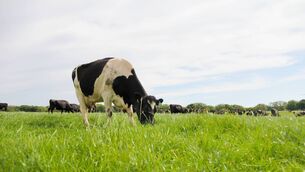
This grass growth performance and more is being achieved in the region by some milk suppliers who have adapted good grazing techniques and are producing milk at optimum cost.
There are some farmers in our region achieving milk solids of 1250kg/ hectare some of whom are achieving an extra 4c-10c/litre milk price above the base level.
Focus farms, workshops, open days, discussion groups and social media will allow our suppliers to interact and gain from the technical and practical aspects our Joint Farm Focus Initiative experts can bring, as well as the experiences they can discuss.
Similar to national figures, around 35% of our suppliers are members of discussion groups established under previous joint programmes. The Joint Farm Focus Initiative aims to support and develop the great work being done with existing groups, and to establish new groups in the region for those suppliers not already involved.
The rejuvenation of the industry depends, in addition to our existing suppliers, on the support received by young people seeking a career in dairy farming and those interested in converting from existing non-dairy enterprises.
In the past number of years there has been a steady supply of new dairy entrants in the Aurivo region. The Joint Farm Focus Initiative seeks to support sustainable and profitable development of new dairy farms in the region.
Investigating and promoting viable options for land mobility in the region is another objective. Aurivo is an active participant in the Macra na Feirme Land Mobility Service launched last week to discuss options such as share- farming, long-term leasing and other land use options.
This Joint Farm Focus Initiative is only the start of our investment in the futures of our dairy farming families.
— John Daly is general manager agribusiness, Aurivo.