The Danish approach to copyright and deepfakes: Is this a model for the EU?
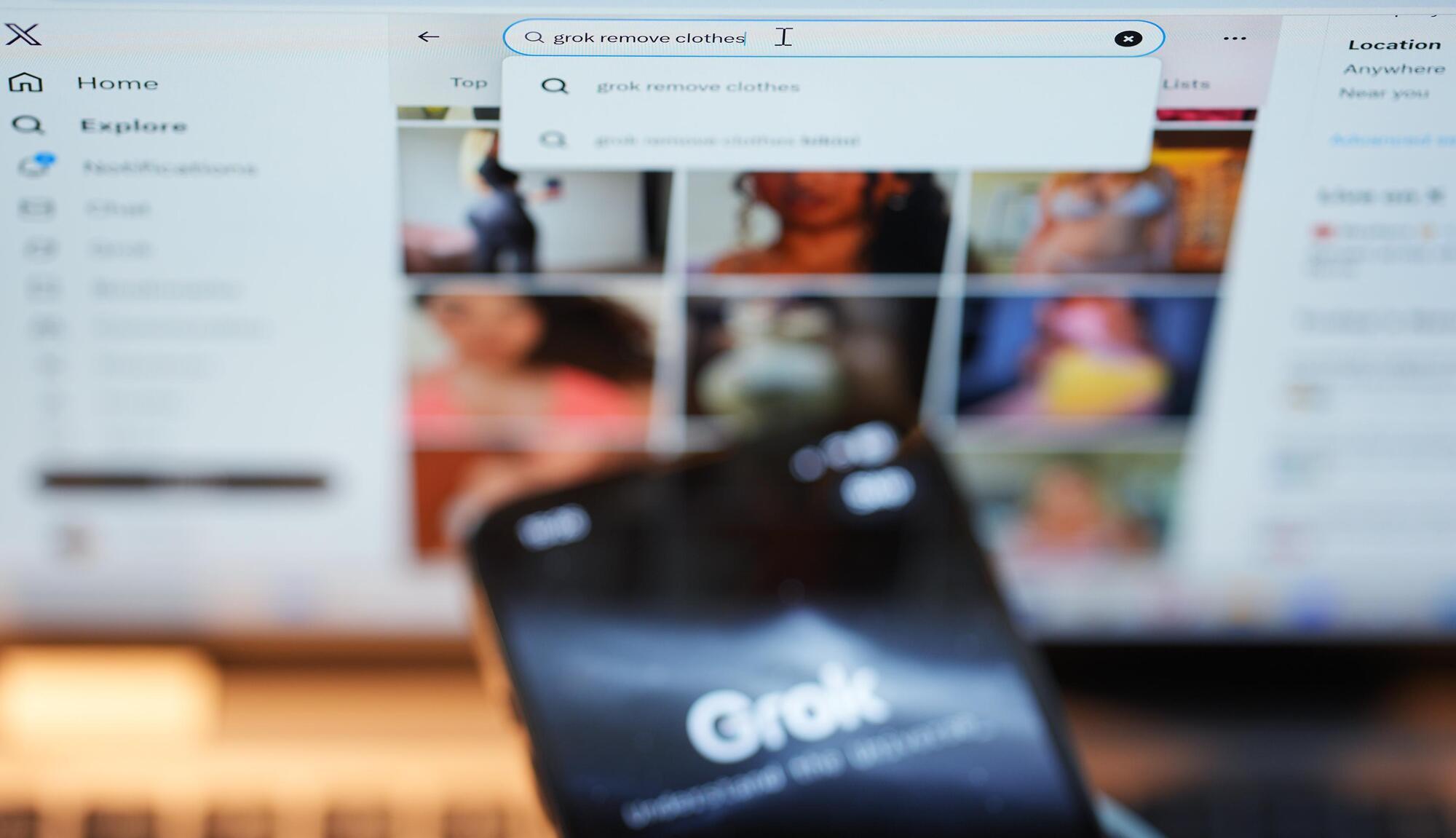
One of the bill’s principal objectives is to have major technology companies remove manipulated content as quickly as possible.
Artificial intelligence has made it possible to reproduce a person’s face, voice and mannerisms with startling realism, often without their knowledge or consent. The consequences extend beyond celebrity impersonations. Ordinary people can become victims of fabricated intimate imagery, fraudulent audio messages, reputational attacks and videos falsely portraying them making statements they never made.
Existing legal remedies struggle to provide adequate protection. Europe’s legal toolkit was not built for this challenge. Denmark has decided to do something about it.
On October 8, Denmark’s minister of culture, Zenia Stampe, introduced a bill intended to make it unlawful to share realistic digital imitations of a person’s appearance or voice without consent. The proposal also addresses performers and artists, recognising their particular vulnerability to digital replication.
Together, these measures seek to protect personal identity and creative performance.
Denmark is not the first country to confront the dangers of deepfakes. What makes its proposal distinctive is the legal instrument it employs: amendments to the Copyright Act. However, it does not introduce a new copyright, but a protection of personal characteristics.
Could this distinctly Danish solution provide a model for the European Union? And might Ireland follow suit?
The Danish initiative responds to a fundamental gap in existing law: a person’s identity is not necessarily protected by copyright. Copyright ordinarily protects original creative expression, not the individual whose face or voice appears in a photograph, recording or video.
Someone can therefore be convincingly impersonated even when they own no relevant copyright and have created no protected work themselves.
The bill seeks to address this gap by restricting the unauthorised public dissemination of realistic digital imitations of an individual’s personal characteristics. Its significance lies in recognising that appropriating personal identity warrants independent legal protection, without requiring victims to establish infringement of an existing intellectual property right.
This represents an important conceptual shift. Protection of a person’s likeness and voice concerns autonomy, dignity and control over identity.
It should not depend on commercial value, professional status or public recognition. A fabricated video of an ordinary individual can be just as damaging as a deepfake involving a politician or entertainer.
The proposal’s most compelling advantage may be practical. A clearly defined right could give victims a more straightforward basis for challenging unlawful deepfakes and notifying online platforms that content is illegal.
The EU’s Digital Services Act provides mechanisms for notifying platforms of allegedly illegal content. However, effective notice-and-action procedures depend partly on identifying the legal basis for illegality.
A clearly articulated national right could make it easier for victims to explain why an imitation should be removed, potentially improving the speed and predictability of platform responses.
This matters because remedies arriving weeks after a deepfake goes viral may offer little relief. Reputational damage, emotional distress, economic loss, and financial fraud can occur almost immediately, while copies may continue circulating after the original content disappears.
Clearer rights could also deter misuse by making legal consequences more foreseeable.
A right to control one’s digital likeness cannot be absolute. Deepfakes are not invariably harmful or deceptive. They can serve political satire, artistic experimentation, parody and social criticism.
The Danish proposal recognises this tension through exceptions for caricature, satire, parody, pastiche, criticism of power and social criticism. These safeguards are essential in a democracy, where political expression frequently relies on exaggeration, ridicule and provocative representations.
The proposal seeks to distinguish legitimate expression from harmful deception, particularly where misinformation creates serious risks to others’ rights or essential interests, or dangers to life or property. The objective is to protect creative and critical expression without allowing claims of satire to become a blanket defence for harmful impersonation.
News reporting presents another challenge. Journalists may need to reproduce an existing deepfake to expose a disinformation campaign, explain manipulation techniques or report on an unfolding controversy. Prohibiting such reproduction could conceal evidence the public needs to understand.
The appropriate principle seems to be necessity and proportionality. Previously created deepfakes should be reproducible in reporting on current events only to the extent necessary to inform the public.
Reporting about a deepfake is not equivalent to endorsing or deceptively circulating it. Context and clear identification of manipulated material are therefore crucial.
These distinctions require careful application. Any European model must strike a defensible balance between protecting personal identity and safeguarding freedom of expression under the EU Charter of Fundamental Rights and the European Convention on Human Rights.
One of the bill’s principal objectives is to have major technology companies remove manipulated content as quickly as possible.
Therefore, the Danish government suggests that the amendments will enter into force at the turn of the year.
The proposal offers Europe a valuable starting point because it places a simple principle at the centre of the debate: people should not lose meaningful control over their identities and creations merely because technology makes impersonation cheap and convincing.
The most useful lesson may not be the specific legal technique but the underlying legislative logic: protect everyone, define the harm as realistic, unauthorised imitation rather than attempting to regulate AI-generated content in the abstract; and make the right enforceable through mechanisms that platforms can understand and apply.
Denmark has done what smaller states can sometimes do particularly well: move first and put a concrete proposal on the table.
The stakes extend beyond individual privacy, reputation and the creative industry. As the Danish government argues, advances in technology are making it increasingly difficult to distinguish authentic material from manipulated content.
This presents a fundamental democratic challenge. Democracy depends on trust: trust between citizens and trust that the information we receive about other people and the world around us is genuine.

Deepfakes threaten that trust by making deception easier to produce and harder to detect. An effective response must not undermine the freedoms that democracy exists to protect.
Denmark’s proposal offers a promising starting point for reconciling these competing demands. The task for Brussels is to turn that national initiative into a European framework that protects individuals and creators, preserves legitimate expression and helps sustain public trust in an age when seeing and hearing can no longer be taken as believing.
- Karen Rønde, EU policy director, Amedia, vice-chair Danish Press Publications' Collective Management Organisation
- The Copyright and Human Creativity in the Age of AI conference takes place as part of Ireland’s presidency of the Council of the European Union in the Irish Film Institute, Dublin today, Wednesday, October 14. It is jointly hosted by NewsBrands Ireland and the Irish Recorded Music Association. Further details here


CONNECT WITH US TODAY



Be the first to know the latest news and updates