Environment a major blind spot in the AI Summit agenda
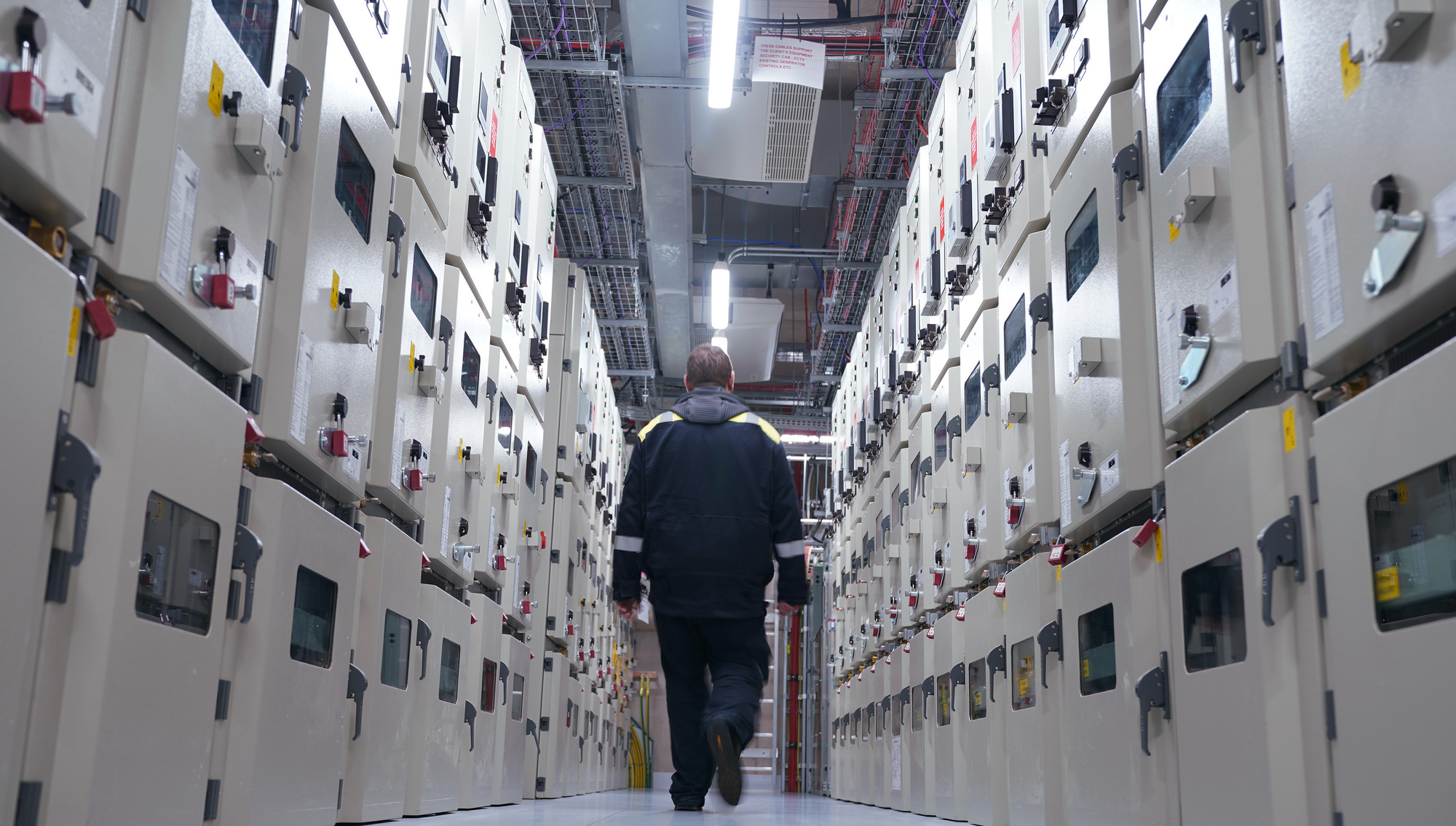
At a time when public concern about both data centres and the regulation of technology companies is growing daily, no mention of the climate and environmental impact of AI represents a huge disconnect between the priorities of the public and the government. File photo
This week’s AI Summit, a flagship event of Ireland’s EU presidency, brings speakers from the world’s biggest tech companies to Dublin to discuss competitiveness, digital sovereignty, and Artificial Intelligence investment opportunities.
The event, hosted by the Department of Enterprise, Tourism and Employment and entitled Harnessing AI to Revolutionise Europe’s Competitiveness, is structured around three themes: creating value, building Europe’s AI infrastructure, and frontier AI developments.
However, the AI Summit has a big blind spot; there is no mention at all (in the formal agenda at least) of one of the biggest risks of AI — the climate and environmental impact. At a time when public concern about both data centres and the regulation of technology companies is growing daily, this represents a huge disconnect between the priorities of the public and the government.
As the technology is rapidly evolving, the devastating environmental impacts of AI and the links between AI expansion, data centre electricity consumption, and fossil fuel reliance are quickly coming into focus.
Read More
AI-focused data centres require “accelerated servers” with specialist hardware, to train and run AI models. The International Energy Agency (IEA) estimates that these AI-enabled data centres account for an estimated 24% of data centre electricity consumption today, but are expected to reach over 50% by 2030.
It is well-documented that Ireland is struggling with data centre expansion, particularly with pressure on the electricity grid. The government has attempted to address the sector’s electricity use by requiring new data centre applications to commit to 80% renewable power, with a six-year “glide path” to allow for the development of the infrastructure.
However, modelling by Friends of the Earth has shown that even assuming a huge jump in renewables in 2030, renewable capacity under any scenario is not enough to meet additional demand from data centres.
Grid challenges also include the intensive computing power required to train and use an AI model which can lead to rapid power load swings impacting grid power quality. This is particularly significant in areas like Dublin with clustered data centre development.
As the Friends of the Earth analysis showed, data centre energy demand has already added a cumulative average of €360 to household electricity bills between 2015 and 2023. Further AI development will only exacerbate these cost implications for households.
While claims are being made about AI being part of “climate solutionism”, for example by supporting smart energy management, net benefits are highly uncertain. The IEA suggests that “well-documented AI use cases” have the potential to save 3% of global final energy consumption by 2035.
However, the agency also cautions that an AI-driven growth boost could increase the level of global energy demand by between 1-4% in 2035, potentially cancelling out efficiency gains. To date, the IEA states, overall energy demand growth driven by increased internet usage and AI has “outstripped the pace of continued efficiency improvements”.
This is not an exclusively Irish problem. The EU is pushing massive AI expansion, driven by concerns over digital sovereignty, i.e. having control over its own digital resources and security.
This summer, the EU proposed the new Cloud and AI Development Act (CADA), which aims to triple EU data centre capacity by requiring member states to aggressively promote data centre expansion nationally.

The preferred policy option in the CADA proposal would require member states to appoint a national facilitator to support data centre permitting, identify fast-track areas for data centre expansion with accelerated 12-month permitting, allocate national funding support to data centres, set national deployment targets and leverage EU funding for strategic data centre projects.
Applying such policies in Ireland would be wholly inappropriate and take the sector’s already disproportionate environmental and social impacts from dangerous to catastrophic.
As new analysis in the CADA Impact Assessment shows, at 31MW capacity per 100,000 people, Ireland has three times the data centre capacity of the nearest EU member state. The EU average is 1Mw per 100,000 people.
Ireland is also in part responsible for the digital sovereignty issues faced by the EU. The cloud computing market is dominated by three major players who hold a combined 70% market share: Microsoft, Google and Amazon Web Services.
Ireland has allowed these companies to take a disproportionate share of the country’s resource capacity, notably energy and construction resources, leaving little space for Irish or European innovation.
A new report published last week by Maynooth University’s Social Science Institute convincingly argues that the government has exaggerated the economic and societal benefits of data centres, which have supported “negligible” indigenous economic development. The report points out that capital invested in data centres could instead have been used to build 50,000 homes.
Ireland’s place at the epicentre of the AI boom also means it has the potential to be a leader in regulating the sector. In the context of growing community concerns, an immediate moratorium on new data centre developments is needed, and the government should reject the proposed CADA provisions for accelerated permitting.
Regulation is also required to reduce environmental impacts from existing data centres, with multiple options available such as mandating disclosure of total electricity and water use by individual data centres, placing additional levies on digital services and data centre electricity use, and requiring greater transparency on data traffic, including how much computer power is used for essential versus ancillary services.
AI development is becoming one of the biggest threats to a healthy, climate-stable future, yet as the AI Summit illustrates, those involved in expanding AI don’t even put it on the agenda.
Going forward, the environment must be central to policy and corporate conversations about AI.
- Dr Aideen O’Dochartaigh is associate professor in Accounting at Dublin City University Business School. Professor Jennie C. Stephens is professor of Climate Justice at the National University of Ireland Maynooth and co-convenor of the Climate Justice Universities Union.


CLIMATE & SUSTAINABILITY HUB
CONNECT WITH US TODAY



Be the first to know the latest news and updates