Alan Healy: A pro-business budget, but dark clouds are still gathering
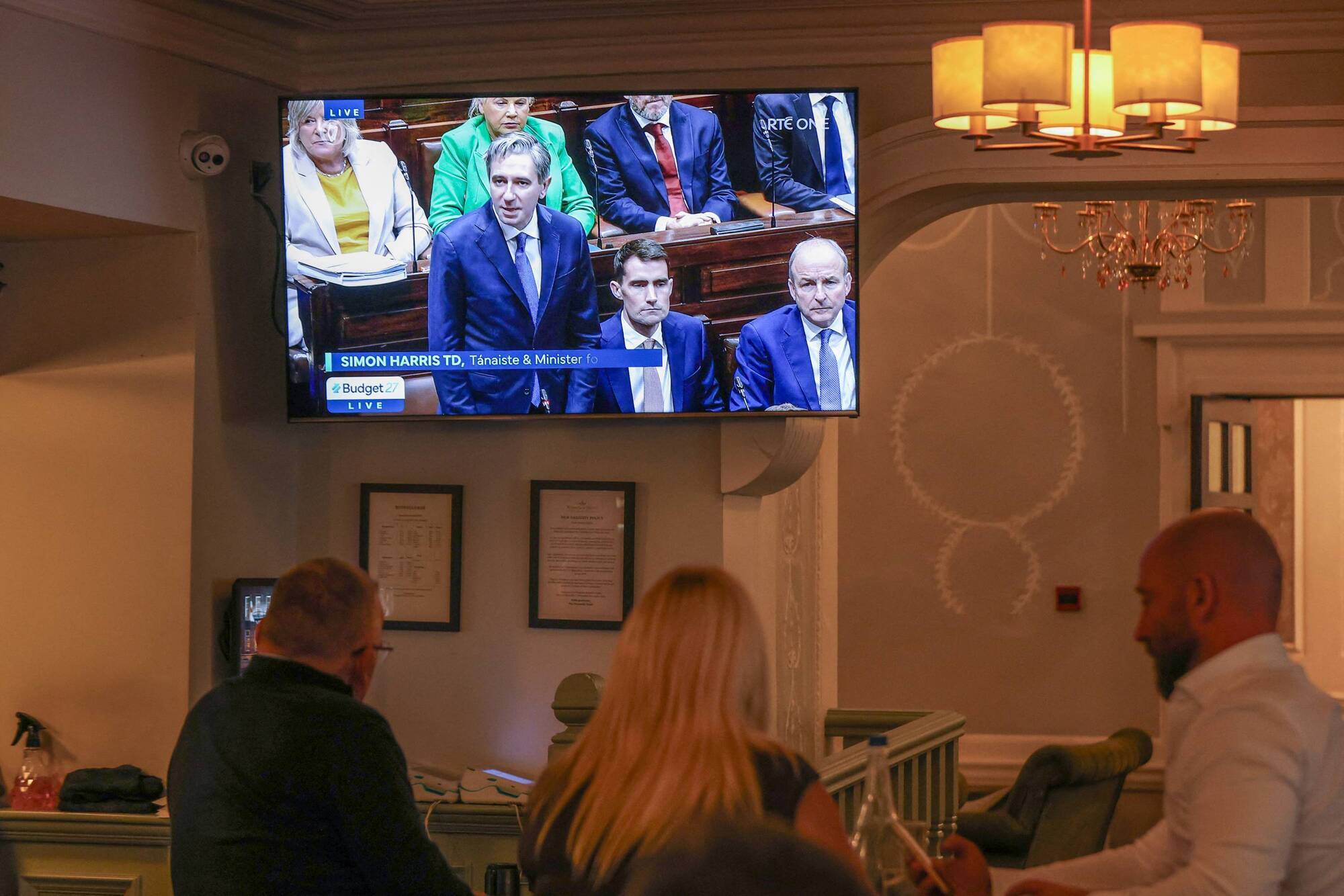
The cut in capital gains tax is joined by a series of other measures to encourage business and economic growth, but the future is far from certain. Picture: Paul Faith / AFP via Getty Images
Despite an increase in the minimum wage, what the ministers announced yesterday may be seen as the strongest pro-business budget in years.
In recent weeks, the run-up has been dominated by talk of tax credits, bands and energy supports, and while the government delivered on these fronts, it also announced a series of measures with one eye on growing businesses into the future.
The question remains whether they have done enough to support households and the business community today, who are still facing an uncertain near future with rapidly rising fuel prices and interest rates.
It has long been clear that the days of Budget Day announcement surprises are long gone, and in their place are a well-flagged series of leaks and lobbying actions to soften the ground. Budgets are now a multi-year affair, with some measures announced a few budgets ago. Many measures announced yesterday will need to be clarified in the coming weeks and could take some time before the benefit is felt.
The cut in capital gains tax from 33% to 31%, the first reduction since 2013, is one that has been sought out for many years, and it was joined by a series of other measures to encourage business and economic growth, but the future is far from certain.
Looking at measures designed to help Irish companies scale and the tweaks to corporation taxation measures, Budget 2027 has one eye on the future.
It is a positive that the Ireland Strategic Investment Fund (ISIF) has been handed a pot of €1bn to help scale indigenous companies. Ireland is very good at founding companies and incubating them, but not so great when those successful firms want to scale and grow internationally. Often they end up relocating to the US to gain access to a much larger pot of capital. ISIF will run a programme over three years, its biggest ever, working alongside Enterprise Ireland.
The budget also seems to offer some continuity, with changes to encourage more private, angel investment and tweaks to the way corporation taxes are paid.
At the other end, the CGT cut will reward those founders who took the risk to build when it comes to selling their companies.
And in the post-budget debrief, much focus will rest on the investment accounts, opening on July 1 with a €50,000 tax-free threshold. The plan hopes to dislodge the mountains of deposits held in Irish banks and credit unions by Irish households, often earning very little interest and to get it actively invested in stocks, bonds and ETFs.
But releasing those savings has the potential to see some directed towards Irish firms, further increasing their access to capital.
Taken together, the measures are the most concrete attempts in years to create an investment culture in Ireland. However, Entrepreneur's Relief and Retirement Relief were left untouched, so it still falls short of the rhetoric about rewarding risk.
While these are welcome first steps, Ireland is at the start of a long road to easing our dependence on multinationals.
The look to the future is laudable, but the here and now is inescapable. David Broderick, director of the Small Firms Association, put it succinctly when he said the budget measures are "adequate for long-term investments but bad for day-to-day operations".
Their biggest concern is the rise in the minimum wage by 79 cents to €14.94, which the SFA says is the 12th year in a row of increases.
Add statutory sick pay and auto-enrolment, and the higher employer PRSI threshold, up from €552 to €600 a week, looks like modest compensation.
Like every budget, much gets announced that has to be fleshed out later, if it is ever addressed. The ISIF programme has no specifics yet. Rural and local pubs are getting a €15m scheme, but there is no clarity yet on how it will operate. Today, many will be asking what defines a rural pub.
Ireland is just months down the line from the fuel protests that ground the country to a halt. Fuel prices at the pumps are rising again, and the possibility of further protest is very real. The conflict in the Middle East is far from over and will likely continue into next year. There is now a global tightening of refined diesel, still the lifeblood of the global economy, no less so than here in Ireland.
There is no guarantee that the government will be able to unwind the excise cuts in the Budget as it plans to do from March. If it is forced to extend it again, it may end up eating into other Budget measures.
Overall, has the Government restrained itself and listened to its designated driver, the Fiscal Council? The "Fast and Loose" title of their Budget response suggests not. They forecast spending increases of almost 9% this year, pointing out that health alone could overspend by almost €1bn this year and there is no allocation for the Christmas bonus.
Their biggest warning from the Fiscal Council, however, is that six in every seven euros of corporation tax is being spent, and just three firms pay nearly half of it. Debt is set to rise by more than €35bn by 2030, and the annual interest bill is set to more than double to €6.4bn. Budget 2027 is expansionary. The overall package is worth €8.5bn, taking spending next year to about €118bn, and the self-imposed 5% limit on spending growth has once again gone by the wayside.
The direction of this budget is the right one. Ireland needs more large homegrown companies, and also a culture that encourages better use of savings. But there is the reality that issues wider in the world, outside of our control, have the potential to derail any benefit.


CONNECT WITH US TODAY



Be the first to know the latest news and updates