Trump rekindles trade war with 50% tariff threat on Canadian goods
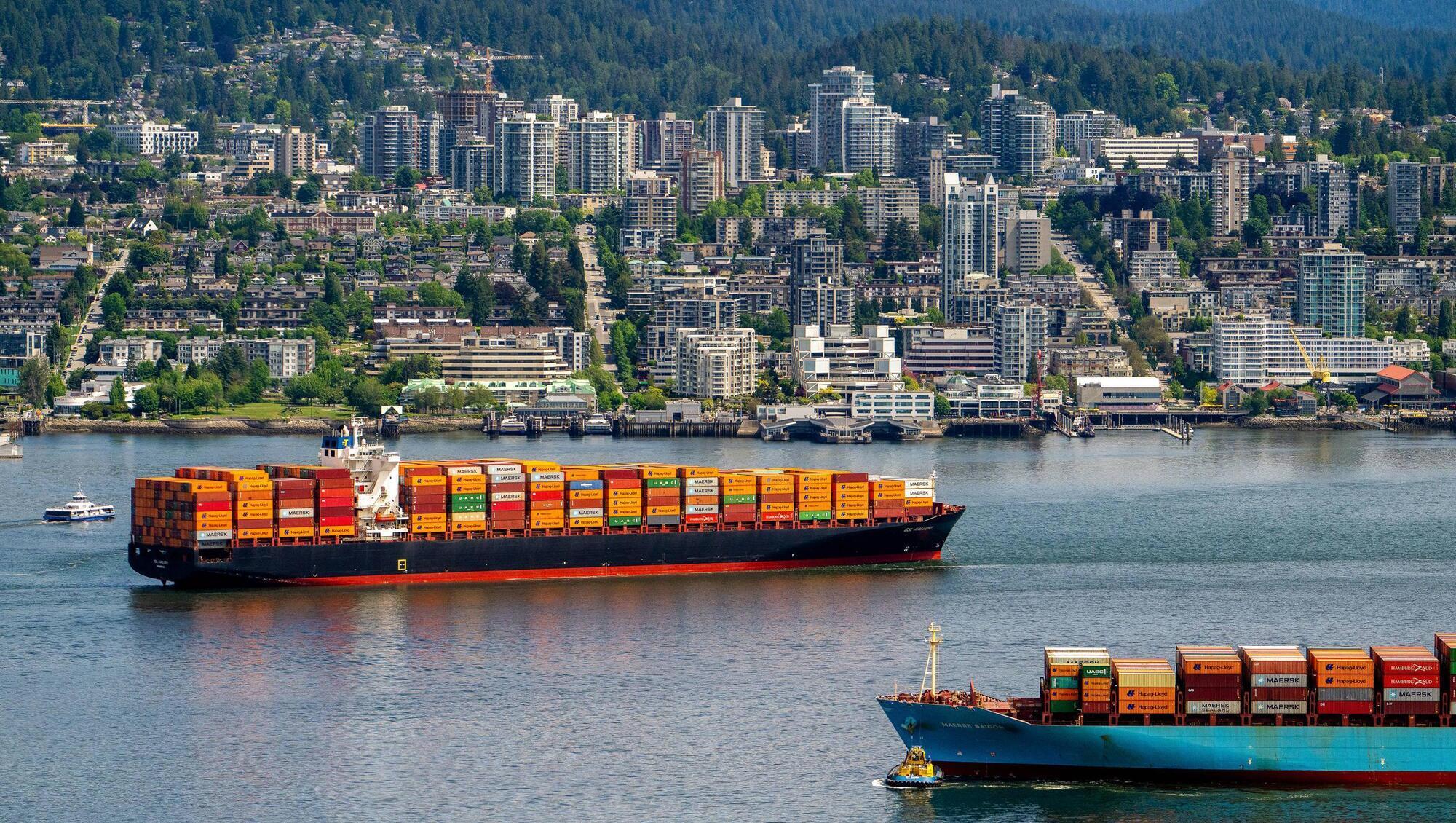
Container ships at the Port of Vancouver. The Trump administration vowed to impose a fresh 50% tariff on some Canadian goods over what it said was unfair treatment of American alcohol, cars and dairy. Picture: Bloomberg
The Trump administration vowed to impose a fresh 50% tariff on some Canadian goods over what it said was unfair treatment of American alcohol, cars and dairy, further inflaming trade tensions between the two neighbours.
The items subject to the new tariff include milk, hockey equipment, beer and plywood — but not major resource imports such as energy, potash and critical minerals. Goods covered by separate duties on industries, including autos and steel, will also be spared.
Read More
Crucially, for the items on the new tariff list, there will be no exemptions for exporters shipping under the rules of the existing North American trade pact between the US, Canada, and Mexico. The Office of the US Trade Representative estimated that $20bn (€17.5bn) worth of imports — about 5% of total Canadian goods sent to the US last year — would get hit.
The Canadian dollar fell on the news.
If Trump follows through with the levies, which are set to take effect in 30 days, the move would mark one of the most severe trade actions he’s taken against the US’s second-largest trading partner. But the US president has made such threats before, only to pull back after negotiations or because of market concerns. He signed a proclamation ordering the tariffs earlier Monday, a US official said.
“This is definitely a big escalation. We always knew that things would probably get worse before they got better,” said William Pellerin, an international trade lawyer based in Canada at McMillan. “With respect to the United States, every time we get close to a deal or things look like they might be settling in, the temperature gets raised.”
The tariffs are being applied under Section 338 of the 1930 Tariff Act, which gives the president the power to impose duties of as much as 50% on countries deemed to discriminate against US commerce. The provision has never before been used to impose tariffs, according to the US official.
The action threatens to further strain relations with Canadian prime minister Mark Carney, who joined Trump to view the World Cup final in New Jersey on Sunday. Last week, Trump threatened higher tariffs to punish Canada for the wildfire smoke that blanketed US cities including New York and Washington.
Further complicating the trade relationship, the US earlier this month declined to extend its trade agreement, known as USMCA, with Canada and Mexico, setting up what could be years of contentious negotiations. In January, Trump threatened a 100% tariff on Canadian goods and services if Canada struck a trade deal with China. Nothing came of that threat.
In a statement, Carney described the new tariffs as “the latest in a series of unilateral US trade actions that began with the US imposing a series of tariffs in direct violation” of USMCA.
“These include tariffs on the Canadian auto sector,” the prime minister said. “Canada, as is its right, has merely matched those measures.” But he said that Canada had made a series of detailed proposals to resolve trade disputes with the US, and it’s prepared to continue those discussions.
The US action on Monday dates back in part to a decision by some Canadian provinces to pull US alcohol and other products from the shelves in response to tariffs Trump imposed last year, around the time he repeatedly said Canada should become the 51st state.
“Specifically, Canada has taken US alcohol products off Canadian shelves, given better market access to dairy products from the European Union, and has put a cap on US vehicle exports to Canada from companies reshoring to the United States,” Trade Representative Jamieson Greer said in a statement.
The senior administration official said the US was still exploring options for penalising Canada over the wildfires, but that Monday’s action was unrelated.
Since Trump returned to power last year, the president and his officials have pushed Canada for concessions and sometimes received them. A year ago, Carney’s government dropped a digital services tax that the US technology industry and the White House were opposed to. But weeks later, the president raised the tariff rate on Canadian goods anyway.
Then, last August, Carney announced he would drop many of Canada’s retaliatory tariffs against the US as the two sides were in negotiations. But Trump broke off those discussions in October.
Many Canadian exporters have been able to avoid tariffs through the use of the USMCA exemption. Available trade data showed that 81% of Canadian goods were USMCA-compliant in May, up from 34% in February 2025, before Trump’s first tariffs took effect.
Ontario Premier Doug Ford — who ordered US wine and alcohol taken off store shelves in his province after Trump’s tariffs last year — urged Carney to retaliate if the US follows through. “If these tariffs proceed, Canada should respond tariff for tariff, dollar for dollar,” he said in a social media post.
The new tariffs are a “major escalation” and Canada needs to negotiate with the US, said Matthew Holmes, head of public policy at the Canadian Chamber of Commerce. But the government should give up nothing in advance, he said.
Bloomberg

CONNECT WITH US TODAY



Be the first to know the latest news and updates