Europe would not be able to sustain war of attrition with Russia, defence officials say
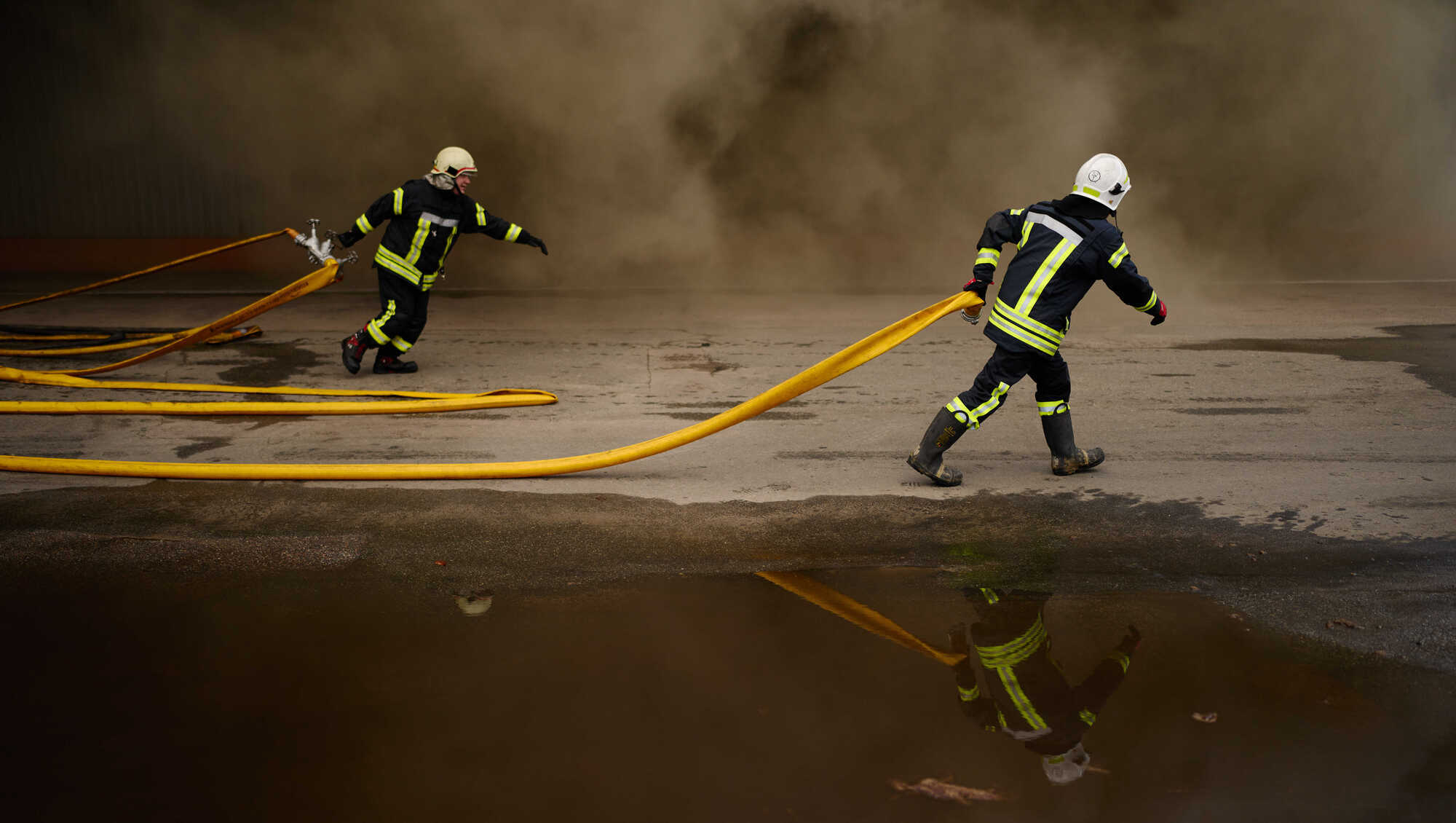
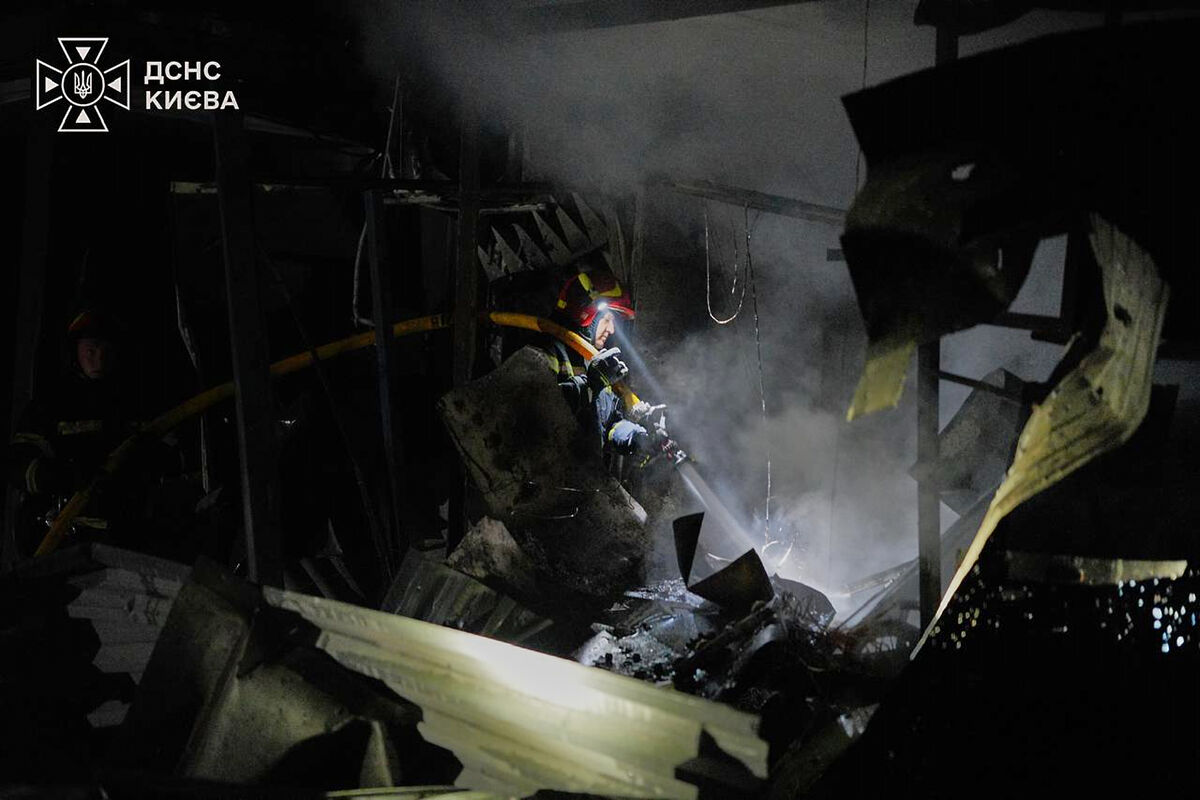
Firefighters try to extinguish a fire at a destroyed warehouse after Russian drone attacks on the outskirts of Kyiv, Ukraine, Friday, Aug. 28, 2026. (AP Photo/Francisco Seco)
Defence planners working with Nato fear that if war broke out with Russia, Europe could not currently sustain a prolonged war of attrition owing to a public lack of war readiness, a conference on the future of European military coordination heard this week.
The pessimism reflects concern that Russia may be winning a so-called hybrid war with Europe, weakening the options available to Nato war planners in the event of military conflict.
The surge in support for the populist forces in Europe’s main military states is also endangering proposals for a group of five European countries, including the UK, to take on a new coordination role as the US prepares to reduce its commitments to the conventional defence of Europe.
Defence officials, speaking at a forum convened by the Munich Security Conference (MSC), the leading security foundation, said the European public may not have the appetite for a prolonged war, requiring Nato to focus its plans on a relatively quick conflict.
One recent British cabinet member admitted the west had been “crap” at educating its public about the scale of the hybrid conflict with Russia. Another UK diplomat claimed successive British prime ministers had done nothing to explain the scale of the threat.
They said this had left ministers locked in an unenviable task of persuading unprepared voters to cut welfare spending to fund defence. “The level of the debate has been at that of a kindergarten,” the UK diplomat admitted.
Read More
The private criticism has been fuelled by the UK government’s inability to adopt a call in its 2025 strategic defence review to launch a national conversation on the scale of the security threat facing Europe and to build national resilience.
A second diplomat said the collapse of the cold war dividing line with Russia had left Moscow free to exploit the anxieties of European publics on the left and the right. The remarks reveal a wider concern in senior European politicians that they may be losing the so-called hybrid war with Russia, and this may be reflected in rightwing populist surges next year in Poland, France and Italy.
Most populist parties, including Germany’s Alternative für Deutschland (AfD), are sympathetic to Russia and want an end to the Ukraine conflict.
The MSC discussion – held under rules forbidding identification of the speaker – was given added urgency by the German government this week blaming Russia for an attempted drone attack on Leipzig airport last month.
One of the suspected culprits in the attack on 4 August, where an armed drone exploded, has been identified as a Belarusian citizen with a Russian passport who appears to have entered Europe using an Italian tourist visa.
The MSC, an independent but influential foundation, has been promoting the idea of the five main European military powers working much more closely: one means of bringing the UK, outside the EU, to the centre of European defence planning.
Decisions in Washington on its troop deployments that could effectively leave Europe in charge of its own conventional defences are expected in the next few months. But the scale of hybrid war and the potential impact of next year’s elections, as well as the surge by the AfD in Germany, on plans for a stronger European defence coordination was described at the conference as “the elephant in the room”.
One proposal is for the EU to publish a collective statement on the Russian threat that the populist forces would be challenged to accept or decline.
The E5 group of European defence ministers already meet regularly, but they are at the early stages of agreeing of how to jointly procure capabilities such as integrated air and missile defence, deep precision strike and space-based early warning systems that are all currently provided mostly by the US.
“Europe is stagnating at a time when the external threats were assuming a dimension which is really very serious. These are really huge and existential challenges requiring greater integration in defence,” said Wolfgang Ischinger, the chair of the MSC.
He argued the E5 grouping offers a way of including all the European countries with substantial defence industrial capacity and may later be able to incorporate Ukraine in the context of a truce since Kyiv now has the largest and strongest army in Europe.
Advocates of the E5 insist it will neither duplicate nor underline Nato, but fears were expressed that the US would nevertheless block a stronger European pillar inside Nato. “The US are better at talking about burden shifting than power sharing,” said one diplomat.

CONNECT WITH US TODAY



Be the first to know the latest news and updates