New taxes on distance travelled or congestion charges needed to offset fall in fossil fuel charges, warns fiscal watchdog
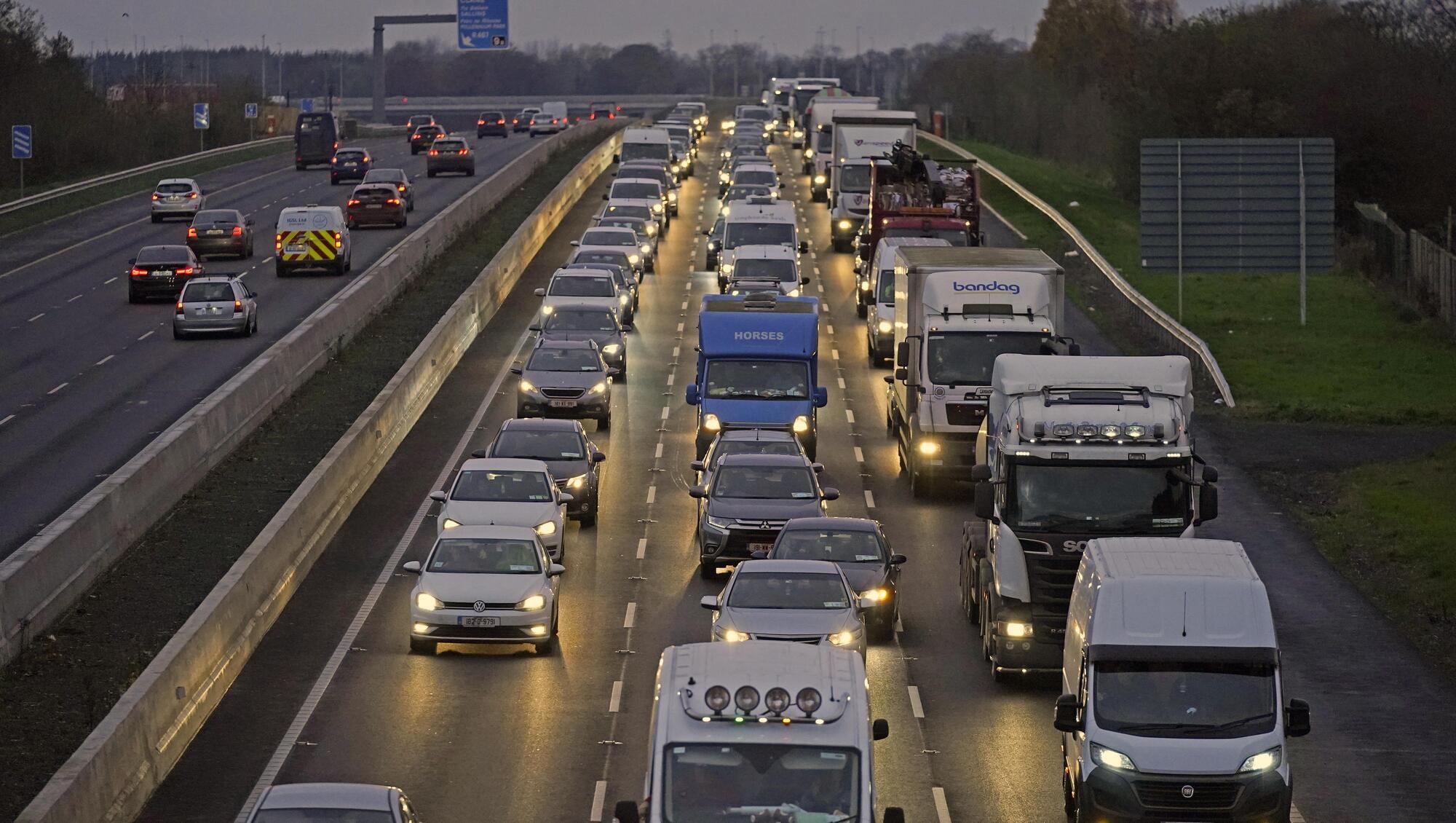
Options frequently considered to replace fossil fuel taxes internationally include taxes on distance travelled or congestion charges
The switch by motorists to electric vehicles (EVs) will result in a fallout in fossil fuel taxes that will need to be replaced by alternative revenue sources, Ireland's fiscal watchdog has warned.
Publishing a research paper on the hidden costs of climate inaction, the Irish Fiscal Advisory Council (Ifac) has called for new tax measures such as congestion fees or distance-based road charges to counteract the fall in overall tax revenue as a result of fewer fossil fuel cars.
There are more than 200,000 EVs currently on Irish roads, with Ireland committed to ensuring that 30% of the national vehicle fleet is electric by 2030. Replacing the taxes on fossil fuel cars to reflect their phasing out in the motor market will be a "key part" of maintaining fiscal sustainability, Ifac said.
Despite the rise in EV adoption, Ifac says the current rate of uptake remains insufficient to meet Ireland's 2030 target, with it taking more than 30 years to hit the target at current rates instead of just five.
Options frequently considered to replace fossil fuel taxes internationally include taxes on distance travelled or congestion charges, but Ifac warned of a trade-off to the speed at which they are introduced.
If implemented too fast, the watchdog warned that it could slow the adoption of EVs, while not having sufficient alternatives in place. However, if enacted too slowly, the political capacity to increase taxes will become more difficult as motorists get used to paying lower taxes on EVs.
Ifac said this can begin with governments enacting "proxy" charges based on odometer readings or vehicle weight/pollution class to establish the principle of paying for road use. This, the watchdog said, could be placed on all road users.
Once administrative capacity is built up, Ifac said the tax system can then transition to real-time distance and congestion pricing, which can "actively manage traffic demand and create economic value beyond what fuel taxes can deliver."
Ifac said a credible plan could reduce the overall cost of climate change for Ireland's budget balance to just 1% of gross national income (GNI), equating to less than €4bn.
"Replacing these taxes does not mean increasing the overall tax burden on average taxpayers," Ifac said. "It means changing the way taxes are levied on travel."
The fiscal watchdog also called out the government's temporary fuel subsidies, which it called a "costly, short-term solution."
"They offer temporary relief while leaving households exposed to future price shocks," Ifac said. "They also divert public funds away from permanent infrastructure upgrades and undermine Ireland's efforts to transition its economy to clean alternatives."
Between 2022 and 2026, temporary energy support measures are estimated to cost just over €5bn, which is the equivalent of a €10,000 subsidy covering the price of 500,000 EVs, Ifac said. This would bring prices for certain EVs, including the Dacia Spring, BYD Dolphin Surf, Leapmotor T03 and Hyundai Inster, all under €12,000.
Ifac said the same amount spent on temporary fuel measures could fully fund the retrofitting of 120,000 homes.
"We can wait for global action and leave our economy exposed to big budget risks and volatile energy prices," said Ifac chairperson Seamus Coffey.
"Or we can take control by investing in our own homes, transport, and energy networks. Spending the money here in Ireland would help ensure lower living costs and better health outcomes for citizens, making it the sensible approach.”

CONNECT WITH US TODAY



Be the first to know the latest news and updates