Inside Ireland's international child abduction cases and the fight to bring children home

An Irish mediator has helped families navigate complex foreign courts, diplomatic barriers and legal systems after children are taken abroad
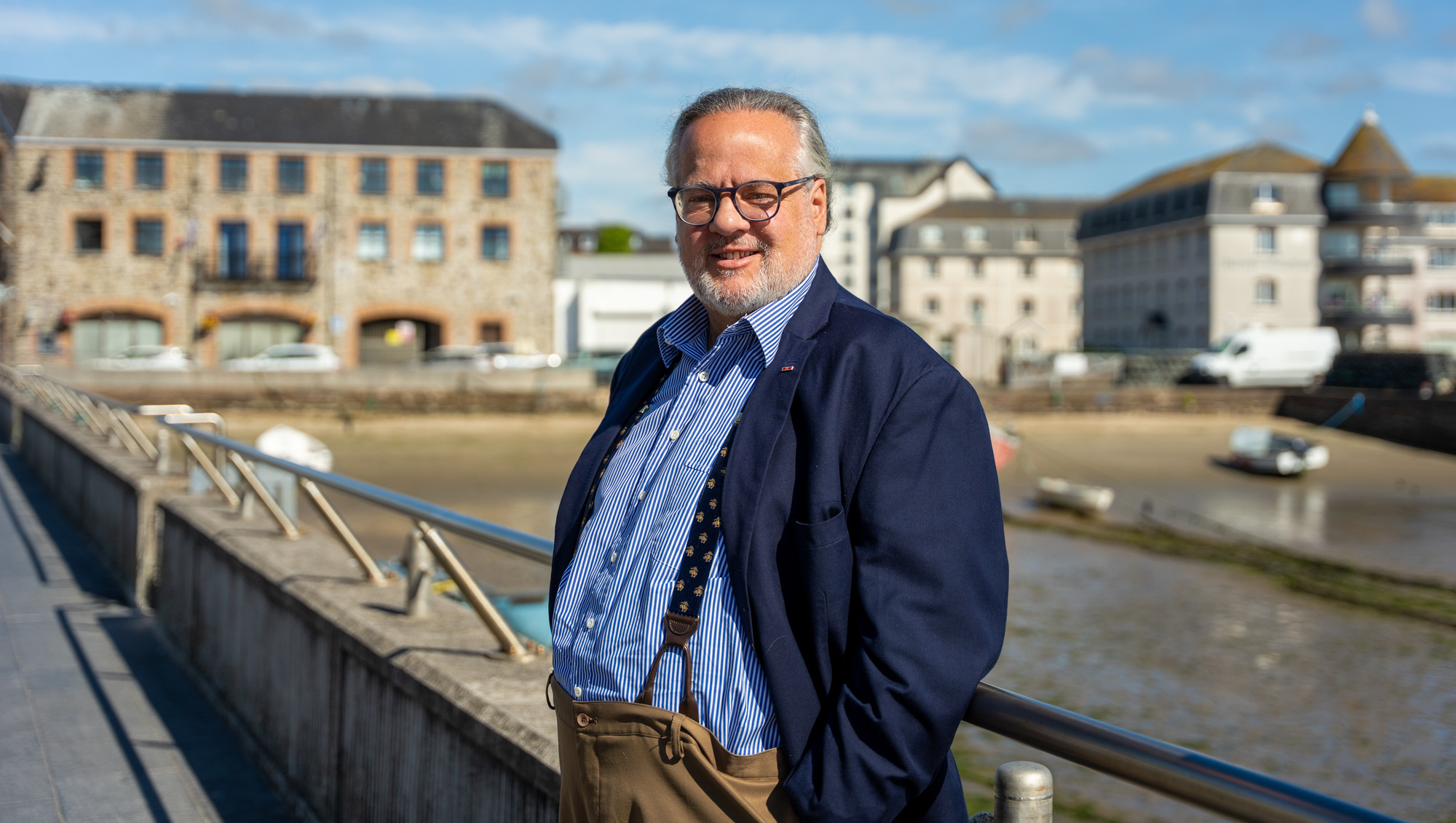
Miceál O’Hurley has successfully reunited nine children with a parent here. File picture: Des Barry

Miceál O’Hurley has successfully reunited nine children with a parent here. File picture: Des Barry

For most parents, the thought of a child being taken abroad by the other parent without their consent is unimaginable.

But every year, Irish families find themselves trapped in international legal battles after a relationship breaks down and one parent leaves the country with their child and doesn’t return.

For the parent left behind, the search for justice can become a long ordeal involving foreign courts, diplomats, politicians, and international law.

It is in these desperate circumstances that senior mediator Miceál O’Hurley steps in. Over the past decade, Mr O’Hurley has been consulted on 137 cases of international parental child abduction, helping families navigate some of the world’s most complex legal systems.

To date, he has successfully reunited nine children with a parent here. In 2025, the central authority in Ireland confirmed it worked on a total of 132 parental child abduction cases.

Mr O'Hurley has also assisted in the enormous legal and emotional challenges families face when custody disputes cross international borders.

“It is far from an easy problem to solve,” he says. “People think if an Irish court orders a child to be returned, that’s the end of it. Unfortunately, that’s often just the beginning.” 

When an Irish court determines that a child was habitually resident in Ireland and awards custody, that order is enforceable here. However, once a child has been taken overseas, enforcing it depends on the laws of the country where the child is living.

The Department of Foreign Affairs can only assist when Hague-compliant countries are involved.

Many countries co-operate under the 1980 Hague Convention on the Civil Aspects of International Child Abduction, which provides a legal framework for returning children who have been wrongfully removed or retained.

However, not every country is a signatory, and legal systems vary significantly from one jurisdiction to another. Most of the cases Mr O’Hurley has handled involve countries where family law is influenced by Sharia law.

While Sharia law is interpreted differently across the Islamic world, custody decisions in some countries are shaped by religious principles and domestic legislation that differ considerably from Irish family law.

“It becomes much more than a legal case,” he said. 

You’re dealing with different cultures, different languages, different legal systems and different expectations about the roles of mothers and fathers. 

His role extends well beyond mediation. 

Drawing on his experience in conflict resolution and international relations, he works with lawyers, diplomats, politicians, and government officials across several countries to try to resolve cases that often appear impossible.

One of his most recent successes involved a Sligo mother whose daughter was taken to Dubai by her father. The child, who held British citizenship, became caught between multiple legal systems and national authorities after the relationship broke down.

Although the mother ultimately succeeded in the courts here and in Dubai, bringing her daughter home required months of further negotiations involving passports, visas and diplomatic intervention.

Sligo-Leitrim TD Marian Harkin worked on the Irish side while Sharon Bowles, a member of the British House of Lords, assisted in Britain. Both helped to secure the documents needed before the child could finally return to Ireland. 

Sligo-Leitrim TD Marian Harkin worked on the Irish side of a case that involved a Sligo mother whose daughter was taken to Dubai by her father. Photo: Sam Boal/Collins Photos

In the Middle East, Mr O’Hurley’s associate Happy Khalil Basheer provided regional expertise. The case unfolded against the backdrop of conflict in the Middle East, with the family forced to navigate not only legal barriers but the dangers posed by regional instability.

“It shows how these cases become about so much more than custody,” he says. “Legal decisions are only one part of it. You still have to get the child safely home.” 

He says many parents arrive at his door after exhausting every legal avenue available in Ireland.

“The courts can only make decisions within their own jurisdiction,” he says. “When a child is taken abroad, enforcement becomes the real challenge.” 

Unlike many areas of family law, international parental child abduction is highly specialised. Many solicitors will never encounter such a case during their careers, while politicians often find themselves navigating unfamiliar territory when constituents ask for help.

“There aren’t many experts because thankfully these cases are still relatively rare,” he says. “But for the families involved, they are devastating.” 

The emotional and financial cost can also be overwhelming. Parents often spend years paying Irish solicitors while simultaneously funding legal representation overseas.

Some relocate temporarily simply to remain close to their children while custody proceedings continue, leaving behind jobs, homes, and support networks.

“You certainly don’t get paid well for this work, if you get paid at all,” he says. “By the time parents come to me they’ve usually spent everything they have trying to get their children back.” 

Mr O’Hurley said his greatest frustration is the length of time these cases take. Even after court orders have been secured, practical issues such as travel documents, visas, and co-operation between governments can delay reunifications for months or even years.

Throughout it all, he believes one voice is too often forgotten. “The courts call it a tug of love,” he says. “But the child’s voice almost disappears. 

Adults are arguing over jurisdiction and custody, while the child is living through the consequences. 

As Ireland becomes increasingly multicultural, he believes international parental child abduction will continue to present new challenges for families and the legal system alike.

He said he would like to see stronger diplomatic co-operation and more bilateral agreements with countries outside the Hague Convention framework to help resolve cases more quickly. 

A bilateral agreement between Ireland and Egypt was first referenced in 2013 during the abduction of Faris Heeney — but to date has not come to pass.

The child was only two years old when he was dressed up like a girl, and taken through Dublin Airport on his half sister’s passport. His uncle was later jailed for the abduction but has since been deported to Egypt.

Norma Heeney and her son Faris Heeney. A bilateral agreement between Ireland and Egypt was first referenced in 2013 during his abduction., To date, it has not come to pass.

Mr O’Hurley’s work is not simply about navigating legal systems or opening diplomatic doors. It is about giving families a chance to be together again and ensuring that children caught in international custody disputes are not forgotten.

“When you’ve spent years helping a mother bring her child home,” he says, “there’s no better outcome than seeing them reunited.” 

He said there is also not enough support for the children when they do return home. “The children are hurting, they are angry with one parent for taking them and another for not coming to get them sooner,” he said.

“There is just not enough supports there and an understanding of the separation the child has faced and the damage that causes. It is a broken attachment and we don’t focus on this enough whenever we do get the children back”.

More in this section

Lunchtime News

Newsletter

Get a lunch briefing straight to your inbox at noon daily. Also be the first to know with our occasional Breaking News emails.

Cookie Policy Privacy Policy Brand Safety FAQ Help Contact Us Terms and Conditions

© Examiner Echo Group Limited