Alan Healy: As Europe builds railways, Ireland goes a different direction
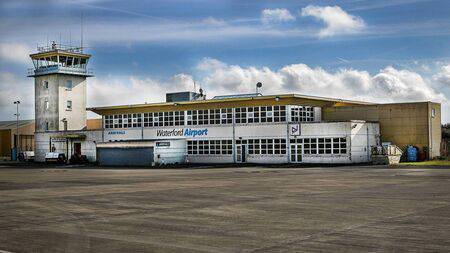
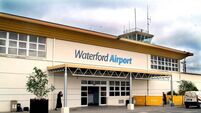
Work has begun on a €30m runway extension to allow Waterford Airport to accommodate international jet aircraft.
Waterford turned the sod last week on an ambitious €30m plan to see a return of international aviation to the South East.
Funded by private US investment, the planned runway extension would allow jet aircraft to fly into the airport, with the developers setting an ambitious target of 400,000 passengers annually within three years.

Infrastructure development, or the lack of it, has plagued the country for years, with the population now weary of delayed projects and planning paralysis. So it is refreshing to see words put into direct action. However, the question for Waterford is not whether it can be built, but if it can be filled.
The developers plan to lengthen the runway to 2,287 metres and widened to 45 metres to accommodate large commercial jet aircraft. They are targeting a completion date next year.
Once completed, it will mark a significant addition to Irish aviation, but it joins a very crowded regional market. Assuming Waterford attracts a suitable airline, the province of Munster will now have four international airports, two owned privately and two owned by the State, each competing on landing charges to secure routes.
Speaking to the , Waterford Airport chief executive William Bolster was careful to frame the project in collaborative terms. The airport, he says, will "complement" Cork rather than compete with it. It will have a 680,000-strong population within a 60-minute drive.
Read More
Cork Airport, which, together with Dublin, is operated by DAA, hit an all-time record passenger numbers last year of almost 3.5m, a figure even higher than the late 2000s when the airport saw as many as 11 daily domestic flights to Dublin and Belfast. Shannon just had its busiest year in 16 years.
Kerry Airport also had its busiest year of just under half a million passengers and has also carved out a strong corporate jet business targeting multinational businesspeople and luxury tourism.
You can look at this in two simple ways. Either the Munster market is saturated, and any entry will just cannibalise routes from other airports, or record passenger numbers show there is room for more competition and securing new destinations.
However, Waterford's expansion and Ireland's overall aviation growth come at a moment when the broader trajectory of European transport is moving in a different direction.
Given our island status, our relationship with aviation is different from that of other European countries. Without land borders and perched in the Atlantic, we cannot replicate the French model of replacing all short-haul routes with high-speed rail. There is no track to lay under the Irish Sea.
This month, work began on an 18km tunnel between Denmark and Germany that will cut the Copenhagen to Hamburg journey to under three hours. The impressive feat of engineering will not scale to the almost 600km distance between our southern coast and Northwest France, which means aviation remains our connector for decades to come.
Shannon, Cork, Dublin and Kerry are not convenient airports. For the populations they serve, they are the only practical connection to the wider world.
The European Commission published a high-speed rail action plan in November and has set a target of a 35,000-mile pan-European network by 2050. The mood music, even if the delivery is patchy and the costs have ballooned, is unmistakably rail which could lead Ireland increasingly isolated, in a literal sense.
Ireland's reliance on aviation is borne out by the country's dominant position in a variety of its sectors. Duty Free was invented in Shannon in the 1950s, two-thirds of the world's leased aircraft are managed out of Ireland, and cheap, short-haul air travel was introduced to Europe through, and still dominated by, Ryanair.
And no analysis of Waterford's aviation future can avoid Michael O'Leary, partly because Ryanair's participation is so central to the business case, and partly because O'Leary has been characteristically candid about his assessment.
O'Leary has said previously that he would consider one or two daily London services, but only if the base costs are, in his words, "free." He has described the 400,000 passenger target as "pie in the sky" and has noted, pointedly, that Waterford sits within the catchment areas of both Cork and Dublin. "It is not a commercial proposition," he said, not as an insult, but as an observation about geography.
Whether Waterford succeeds will depend on whether it can find routes and passenger types that the other Munster and Dublin airports cannot serve efficiently.
The €30m is real, the runway will be real, and the ambition for the South East is real. For an island nation that cannot tunnel its way to Europe, and where aviation is a necessity, the question for Waterford Airport and Munster is whether there is room for one more.