EU leaders set to agree to jointly purchase gas to boost supply and replace Russian dependency
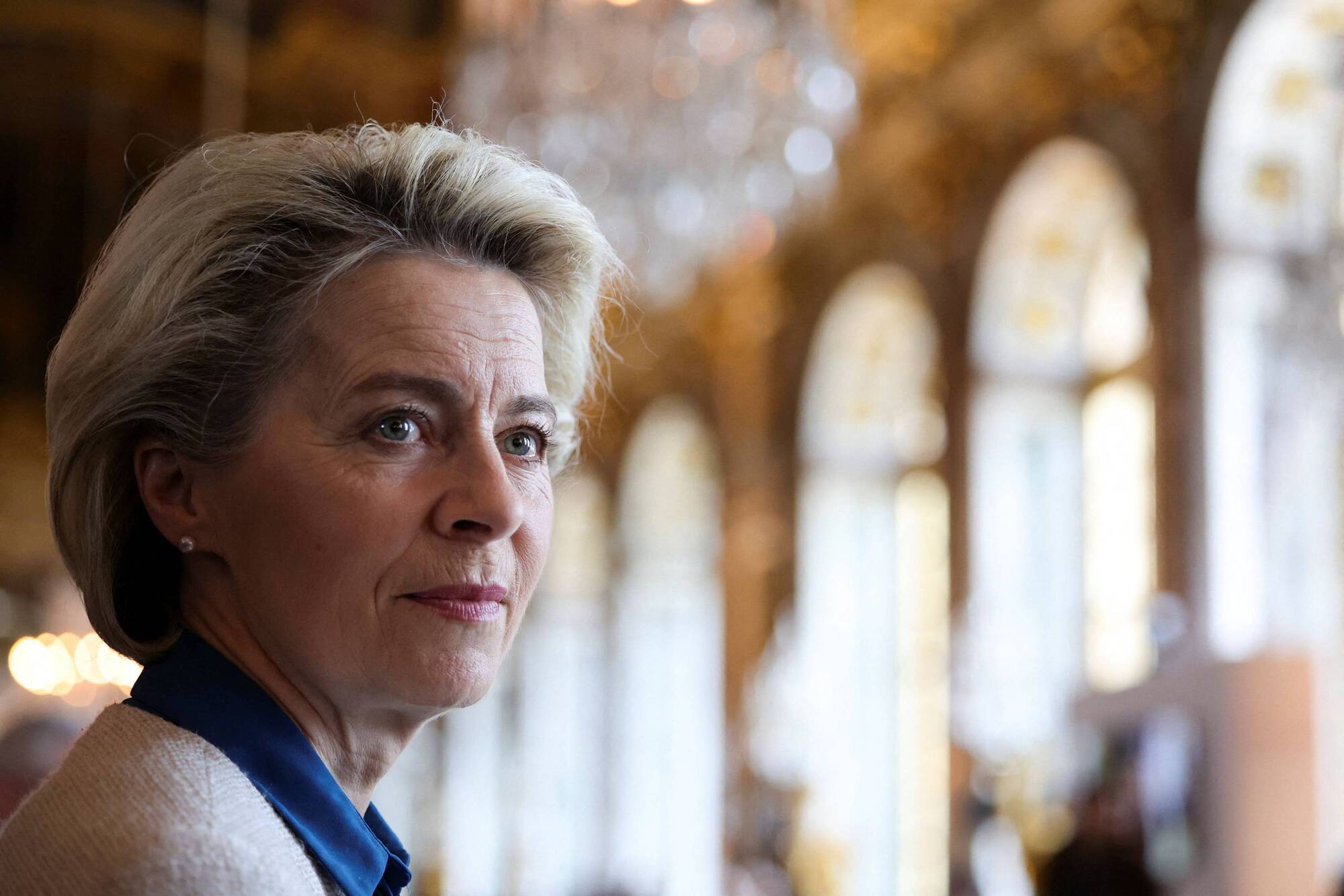
European Commission president Ursula von der Leyen.
Leaders from EU countries will agree at a summit this week to jointly purchase gas, liquefied natural gas and hydrogen ahead of next winter, according to a draft of their summit statement.
The invasion of Ukraine by Russia, Europe's top gas supplier, has caused energy prices to soar to record highs and put the EU on a mission to cut Russian gas use this year — a move that will require a jump in imports from other suppliers, such as Qatar and the US.
"With a view to next winter, member states and the Commission will urgently... work together on the joint purchase of gas, LNG and hydrogen," EU leaders will say following a summit on Thursday and Friday, according to a draft summit statement.
The European Commission last year proposed a system for EU countries to jointly buy strategic stocks of gas, which some members — including Spain — had called for as a way to provide a buffer against potential supply disruptions.
Fears of supply shocks have grown since Russia launched what it calls "a special military operation" in Ukraine. Russia supplies 40% of EU gas.
Brussels has said it will help countries kick-start joint gas buying this year, and is expected to propose rules this week requiring countries to fill gas storage to 90% ahead of winter each year.
EU storage is currently at 26% of capacity.
The draft statement said countries agreed to co-ordinate measures to fill storage and start doing so "as soon as possible".
Leaders will also consider fresh measures to cushion consumers from soaring energy prices, and discuss how to potentially "optimise" the functioning of energy markets.
They will ask the commission to take "necessary initiatives" to do this, according to the draft statement.
European gas prices had already risen in the months leading up to the invasion, prompting governments to spend billions on tax breaks and subsidies to shield citizens from the costs.
Finding a joint EU response, however, has proved difficult.
EU countries are largely responsible for their national energy policies, and disagree on whether EU-wide action is needed to tame prices.
Spain, Belgium, Portugal, Italy and Greece are among those calling for intervention in Europe's energy markets, to cap prices or decouple the price of electricity from the soaring price of gas.
States including Germany, the Netherlands and Denmark oppose market intervention, and warn of causing disruptions to energy markets that could undermine investments in clean energy.
Belgium said on Monday it would take the lead in pushing for a cap on European gas prices, ahead of this week's summit.
Belgian energy minister Tinne Van der Straeten said Belgium was "taking the lead in Europe" on the proposal for a price cap, combined with joint purchasing of gas among EU countries, and that both ideas had support from Spain.
• Reuters
CONNECT WITH US TODAY



Be the first to know the latest news and updates