Data centres aren't the risk — lack of energy infrastructure is

The latest CSO figures show data centres used 23% of all metered electricity in 2025, up from 5% in 2015. File picture
To the electricity grid, a data centre is simply a very large, steady customer, and it is usually treated as a problem.
Yet a big, controllable load is exactly what a grid running on wind needs. Whether it becomes a burden or an asset is decided not by the technology but by how we plan around it.
The latest CSO figures show data centres used 23% of all metered electricity in 2025, up from 5% in 2015. Their demand grew 10% in a year, while the rest of us together grew ours by 2%.
That annual rise was broadly equivalent to the electricity used by between 160,000 and 200,000 average Irish homes, depending on the assumptions used for household consumption.
There is real value here. These are the engine rooms of the cloud, finance and pharmaceutical firms Ireland spent decades attracting. A report by KPMG for Government estimated the sectors that depend on them supported economic activity worth more than €100bn in 2024.
Much of that is enabled rather than created, but the construction, jobs and tax that follow are real. Yet households and small businesses here already pay the highest electricity prices in the EU, about 40% above average.
It would be wrong to blame those prices on data centres. Ireland's electricity has been among the dearest in Europe for years, long before this boom, driven largely by our exposure to imported gas, alongside network costs and other structural factors.
No regulator has quantified what data centres add to a bill. But adding large, steady demand to a system reliant on gas does not make prices easier to lower.
Every advanced economy leans on strategic industries that use a great deal of energy. Germany has carmaking, France has aerospace, and Ireland has become Europe's digital gateway.
The question is not whether such industries use electricity. It is whether they create enough lasting value to justify the infrastructure they need. That cannot be answered for electricity alone, because power, gas and industry are linked.
Aughinish Alumina in Limerick is one of the largest users of Ireland's gas network and helps recover its fixed costs. If it closed before other demand replaced it, those costs would fall on fewer users, unless the network shrank or was funded differently. That is a real regulatory question and shows why data centres cannot be judged on their own.
The grid is the real constraint, though the picture is more mixed than headlines suggest. EirGrid warns of a challenging period to 2028 and expects data centres to approach a third of our electricity in the 2030s.
Yet the risk of winter shortfalls has fallen sharply in two years, helped by a new interconnector and extra back-up. The real challenge is timing. We are adding demand fast while the offshore wind meant to power it runs late, and the windy regions that could host it have the weakest grid.
Then there is our climate law. The EPA now expects Ireland to cut emissions by at most a quarter by 2030, against a legal target of half. Demand met by gas rather than wind widens that gap. Doing nothing is not neutral. The honest answer sits between the two loudest camps.
Those who want unconditional growth to ignore the physics of a small grid and our own law. Those who want a ban to ignore that a properly designed data centre can bring its own clean power, store it, pipe its waste heat to a nearby town and reduce demand when the system is under stress.
Tallaght already heats homes and public buildings with heat from a data centre, so that story is not a fantasy.
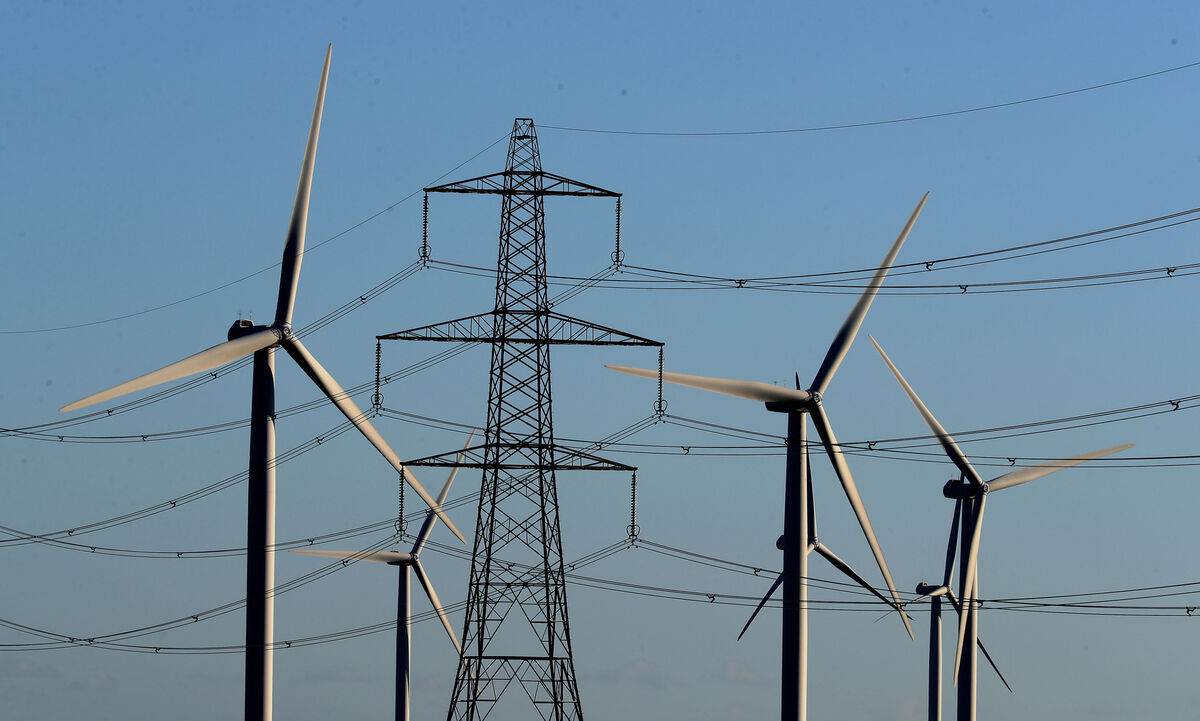
The regulator has drawn the line in the right place. Since December, new data centres must meet at least 80% of their annual demand from new renewable projects built in Ireland, and must provide their own generation or storage, on site or nearby, to match the capacity they draw.
That policy is being tested in the courts, and Ireland should defend it, because it describes the right kind of data centre, sited where the grid has room, and honest about what it uses. Two further steps would strengthen public confidence.
First, greater transparency in how the costs of major electricity network reinforcements is allocated between large users and consumers. Secondly, a single, co-ordinated public reporting framework bringing together data on electricity demand, water use, emissions, renewable sourcing and wider system impacts. Better information leads to better policy and greater public confidence.
None of this is anti-investment. It is the opposite. Ireland's greatest risk may not be data centres themselves. It may be our habit of attracting world-class industries while failing to build the infrastructure they require.
The challenge is no longer attracting investment. It is building the electricity system, the planning framework and the grid to support it.
Get that right and the demand straining the grid today will help power its future, and Ireland will not just host the industries of the coming decades. It will help shape them.
Get it wrong and we keep paying among the highest bills in Europe while missing our own climate targets.
- Professor Aoife M. Foley is chair in Net Zero Infrastructure at The University of Manchester


CLIMATE & SUSTAINABILITY HUB
CONNECT WITH US TODAY



Be the first to know the latest news and updates