Microsoft boss: Skills critical to Ireland's digital leadership
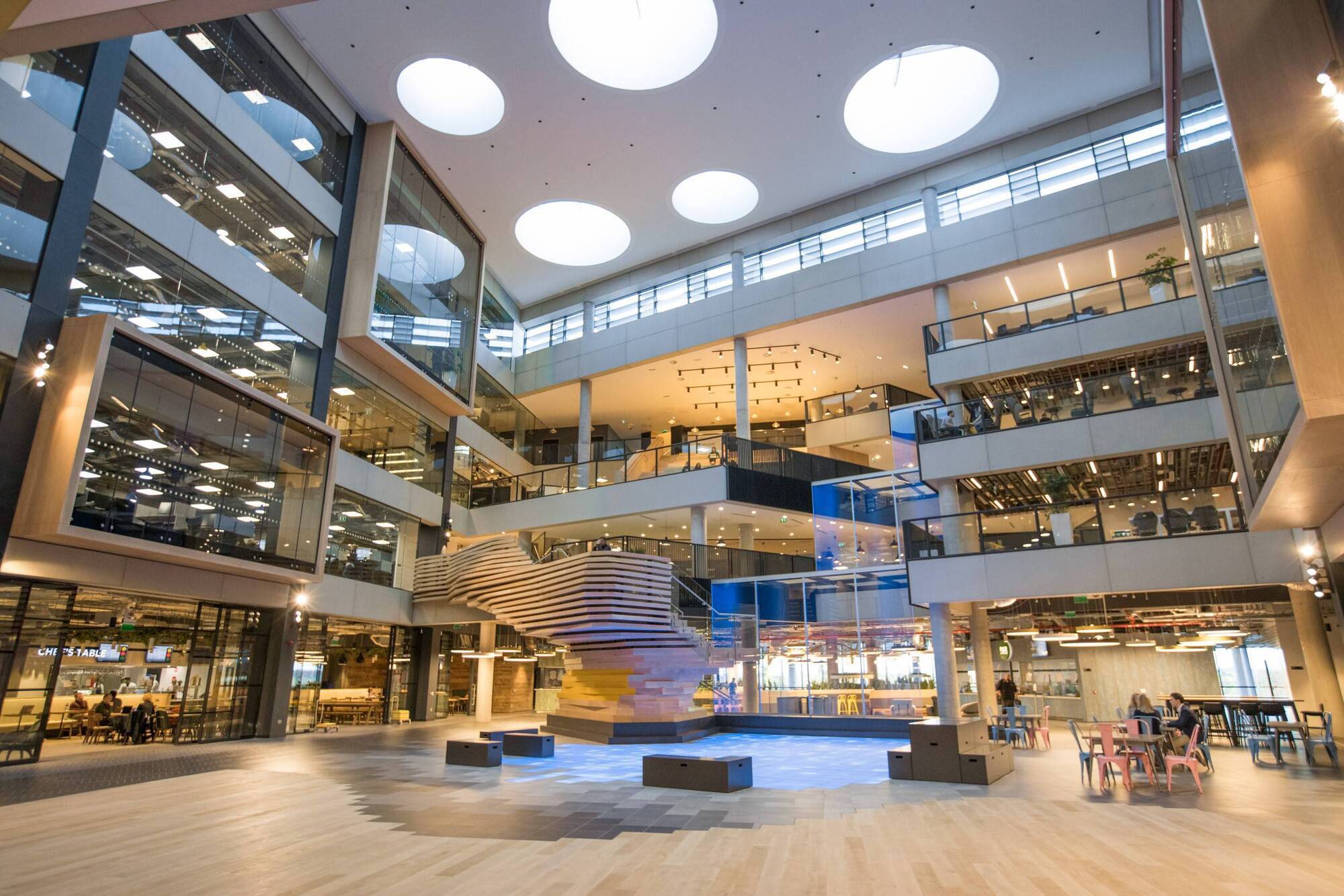
Inside the Microsoft EMEA Operations Centre, Dublin, where the Global MBS Operations (Microsoft Business Solutions). With predictions that 90% of all jobs in 2030 will require digital skills, the Microsoft Dream Space experience has engaged more than 80,000 young people in science, technology, engineering, and maths (STEM) to date.
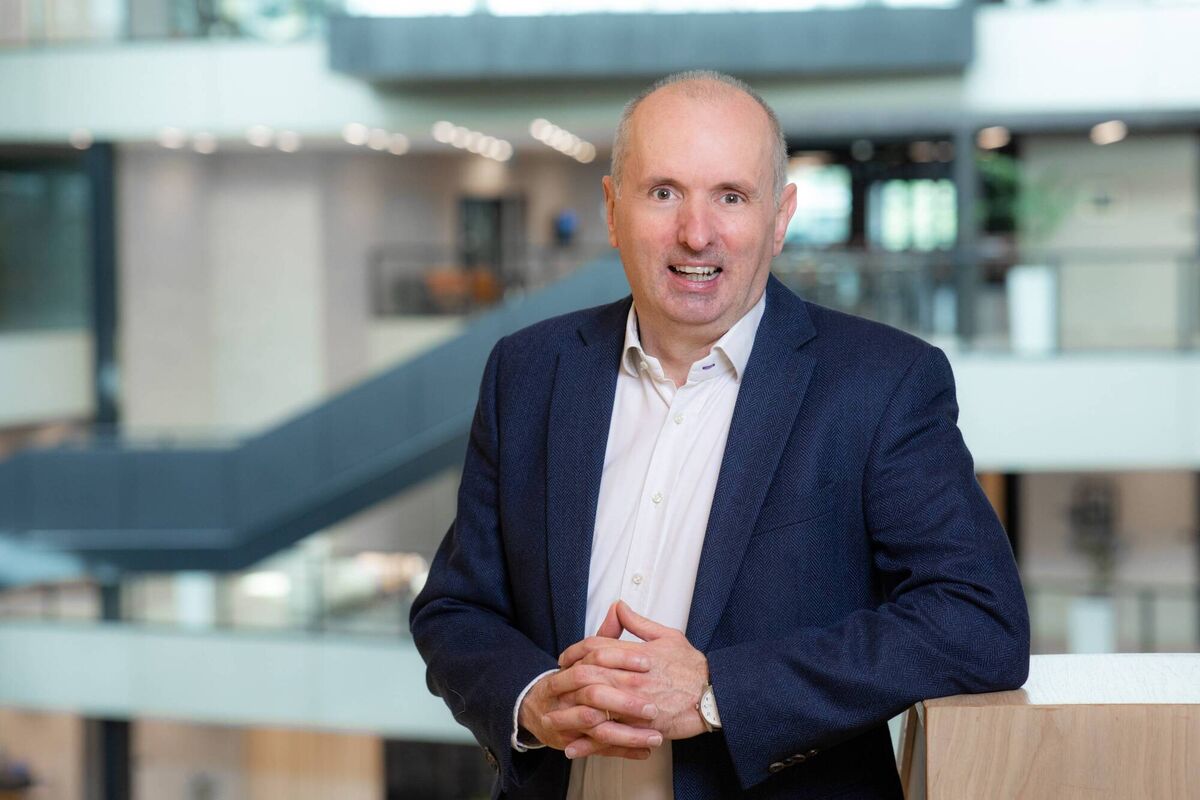
James O'Connor, Vice President of Microsoft International Operations, outlines the company's initiatives to help people in Ireland develop vital digital skills
Two years ago, we couldn’t possibly have anticipated the critical role digital technologies would play in allowing and enabling our economy and society to adapt and transform amidst the pandemic.
They have helped to protect lives and livelihoods, supported people to stay connected, enabled much of the workforce to successfully work remotely and students to learn from home, underpinned business continuity, and, in many cases, enabled organisations to pivot and grow.
I’ve witnessed a lot of change since I first joined Microsoft in 1993. However, the rapid shift in how we live, work and do business has been unparalleled.
Digital leadership
I believe now is the time to harness that progress and experience as we work together to position Ireland as Europe’s digital leader by 2025. Accelerating Ireland’s journey to a digital future will bolster our sustainable recovery while enabling new and better services for citizens, increasing competitiveness, boosting productivity, and, significantly, delivering the jobs of the future.
A sustained focus on cloud services, digital health solutions, and cyber security presents immediate opportunities for Ireland to cement its digital leadership credentials.
Importance of in-demand skills digital technology alone is not enough to achieve our ambitions. To become a true digital leader, we must ensure that our people have the skills that are not only in-demand in today’s digital world, but which will be vital in Ireland’s economy of 2025 and beyond.
From digital marketing to cloud services, CX (customer experience) to engineering, the jobs of the future are already here. According to the World Economic Forum, 90% of all jobs in 2030 will require digital skills.
Despite advancements in embracing technology, there is a lingering digital skills gap that must be addressed. Today, only 54% of our population has basic digital skills. That’s why Microsoft Ireland has placed a particular focus on helping people gain the digital skills they need to participate fully in society, while also creating the next generation of digital leaders.
Pathways for Life
Ever since Microsoft became one of the first multinationals to invest in Ireland 37 years ago, we have sought to encourage and empower people of all backgrounds and levels of experience to gain the skills to participate equally in a digital economy.
From our 12-year active involvement in the Springboard upskilling initiative to our own programmes underpinned by that initiative, such as Microsoft Ireland’s Pathways For Life, we are committed to equipping people who lack basic digital skills with the supports that they so badly need to develop these new skills.
We know too that the future of business transformation and innovation lies in having a skilled talent who can unlock the full potential of the Cloud and other digital technologies. That’s why we’re supporting industry to not only upskill their workforce but to foster a culture of life-long learning that will enable them to compete and innovate.
In December, we joined forces with Mayo, Sligo and Leitrim Education and Training Board to launch the Microsoft Cloud Traineeship programme to equip people with the in-demand skills required to transition into cloud-based roles.
This follows the roll-out of the Microsoft Skill Forward programme of webinars which provides upskilling opportunities in emerging areas such as AI, data and security.
Partnership approach
Given the magnitude of our ambition, we have fostered many valuable partnerships to help us carry out our initiatives and reach more people.
In direct response to the thousands displaced during the pandemic and as part of our Pathways for Life education and training programme, we launched StepIn2Tech last year in collaboration with FIT to train 10,000 people with the digital skills required to transfer to in-demand roles within the digital economy.
One of those was David whose job had been impacted by the pandemic. Discovering StepIn2Tech has given him the skills to secure a place on a pre-tech apprenticeship which will provide a steppingstone into a career in technology.
Meanwhile, the Microsoft Dream Space experience, through which we have been able to engage more than 80,000 young people in science, technology, engineering, and maths (STEM), was recently given a boost through our collaboration with RTÉ, which culminated in the recent launch of Ireland’s Future is MINE, an exciting national digital skills competition aimed at primary schools.
We’ve also joined forces with Maynooth University, Ireland’s fastest growing university, to roll out the Digital Wealth and STEM Passport for Inclusion projects — school programmes designed to address the digital skills gap in education and further strengthen Ireland’s future talent pipeline.
The reality is that no one entity can equip Ireland’s current and future workforce with the in-demand skills that will shape our economy and society today and tomorrow. As an active industry partner on the Human Capital Initiative prioritising skills development, we know that businesses must work together with Ireland’s education sector, NGOs and with Government.
Remaining competitive into the future
Ireland’s attractiveness as a location of choice for FDI has, and will, continue to lie in its focus on the future and ensuring that our workforce has the skills and tools to innovative and compete internationally.
With an evolving global investment environment and an increasing number of international competitors, this focus gains an even greater significance.
Although Ireland currently ranks 13 in the IMD World Competitiveness Ranking, we must strive to do better. By skilling up Ireland, we can take the lead in an increasingly digital world and reinforce Ireland’s future competitiveness.
The road ahead
As we look ahead, one thing is clear — standing still is no longer an option. The Government’s development of a new National Digital Strategy provides a unique window of opportunity to accelerate the digital transition underway across the public and private sectors so that Ireland can become Europe’s true digital leader.
Realising that mission requires an inclusive approach, one that affords every person the opportunity to develop the in-demand skills to succeed. The launch of a report on education inclusion for learners with intellectual disabilities by Minister Simon Harris in December is a welcome development in this regard.
I’m hugely optimistic about the country’s digital future. With its remarkable cluster of tech companies and world-leading research, there has never been a more opportune moment for Ireland to establish its digital leadership credentials on the European and world stage.
And so, I am calling on business leaders, educators, community champions, and policymakers to come together to make skills and lifelong learning a priority.
Working together, I’m confident that we can build a digital economy and society which empowers every person and organisation to achieve more.
CONNECT WITH US TODAY
Be the first to know the latest news and updates