Renewables sector struggles to meet demand for engineers and project managers
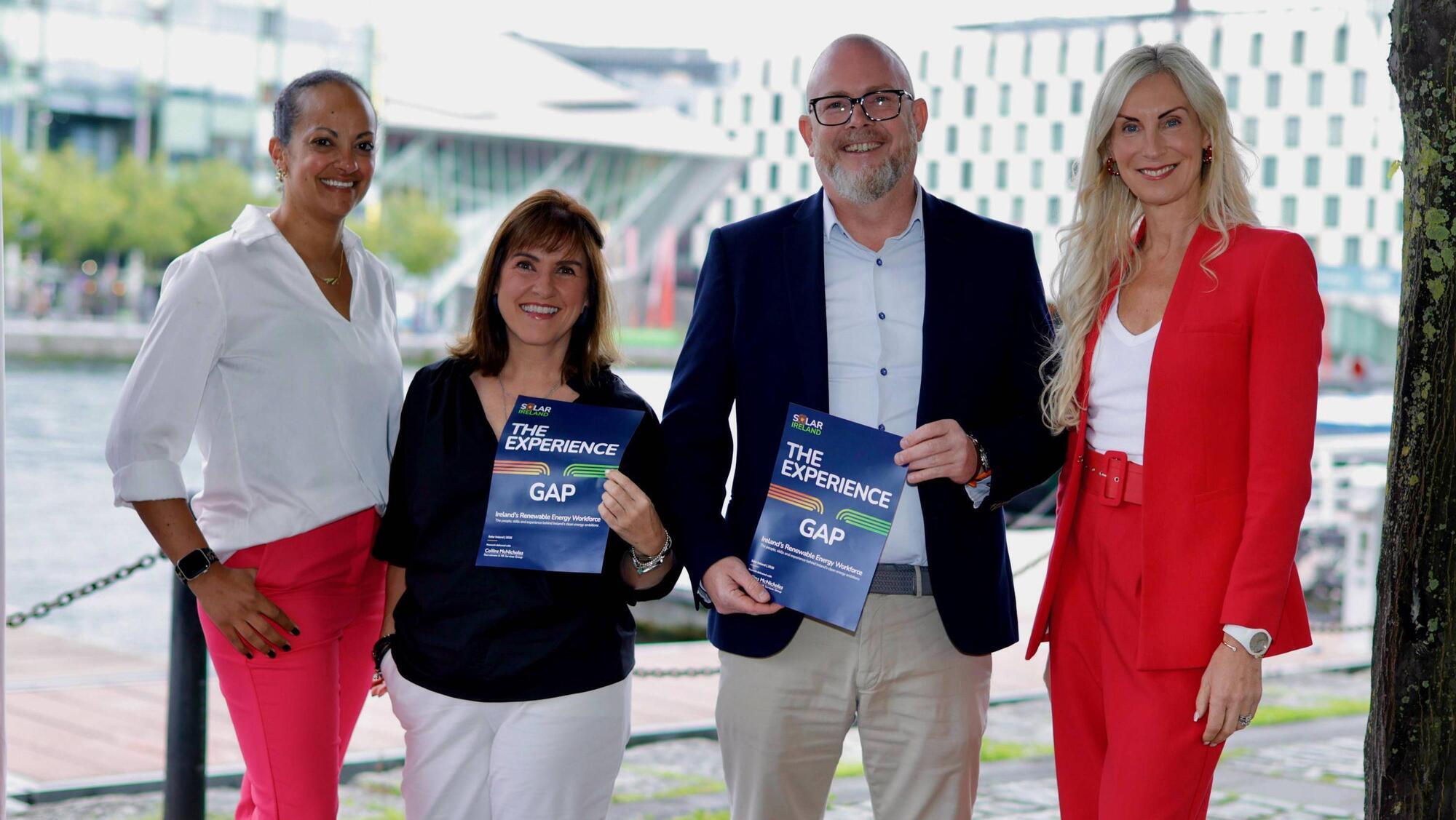
Launching of the ‘The Experience Gap: Ireland’s Renewable Energy Workforce’ are Priscila Pfeiffer McGeehan, Director of Communications & Strategy, Solar Ireland; Alison Hodgson, Director of the CIPD in Ireland; Michelle Murphy, Director, Collins McNicholas; and Ronan Power, CEO of Solar Ireland. Picture: Rafal Kostrzewa
Ireland's renewable energy sector is facing a growing challenge sourcing engineers and project managers to work in the sector, with a lack of practical experience emerging as a bigger barrier to recruitment than skills shortages.
Solar and onshore wind projects are estimated to support between 10,500 to 11,500 direct and indirect jobs in Ireland. The research published on Tuesday gathered from more than 50 organisations in the industry found that demand for workers is expected to accelerate further, with most employers anticipating their workforce requirements to increase over the next six to 18 months.
Read More
The report by Solar Ireland entitled ‘The Experience Gap’ carried out with recruitment platform Collins McNicholas, found that almost three-quarters (74%) of employers surveyed identified a lack of experience as a barrier to filling roles, while 60% cited skills shortages more generally.
“Ireland’s renewable sector is growing, and that means the workforce has to grow with it. But one of the clearest messages from this research is that qualifications alone aren’t the issue," said Solar Ireland chief executive Ronan Power.
"Employers need people with practical experience of delivering projects. If we need more experienced people we need to create more opportunities for people to gain that experience. That means apprenticeships, placements, graduate programmes, site exposure and better routes for experienced people from other sectors to move into renewables. If every employer competes for the same limited pool of people, we haven’t solved the problem. We need to grow the pool.”
The report found that engineers and project managers were among the roles proving hardest to recruit. There is also strong demand for electricians, ecologists, planners, and people with experience navigating planning applications for renewable energy and grid infrastructure.
Among participating organisations, 46% primarily operate in solar, 34% identify as multi-technology, 6% primarily operate in onshore wind and 2% in energy storage, with 12% selecting another area.
Collins McNicholas director Michelle Murphy said: “The constraint isn’t simply about qualifications or attracting people into the sector. It’s the depth of experience employers need, and smaller, growing businesses can feel that particularly acutely."
CONNECT WITH US TODAY



Be the first to know the latest news and updates