Sci-fi depiction of social isolation is all too real
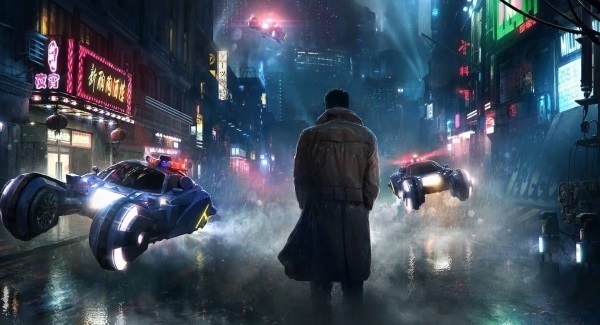
The ‘Blade Runner’ sequel might be fanciful in imagining a future without mobile phones but its portrayal of loneliness is bone-chillingly real. We really are living on a lonely planet, writes Clodagh Finn

Sci-fi depiction of social isolation is all too real

THE disappointing box office receipts paint a different picture, but the Blade Runner sequel simply mesmerises for much of its two hours and 43 minutes — quite a feat in cinematic terms.

It’s a boldly imagined visual odyssey that whisks you off into the middle of the century in a kind of hallucinogenic time-ship.

What is truly mindbending, however, is that director Denis Villeneuve has created a hi-tech future complete with genetically engineered almost-humans, flying cars and hologram housemates, yet there is not a single smartphone in sight.

In 2049, nobody — neither human nor replicant — has a mobile phone.

There are video-calls and voice-controlled drones, but the iPhone has been consigned to the dustbin of recent history. Heartening news in an era when the term “screenager” is used to describe teenagers who can spend up to nine hours a day on their devices.

Director Villeneuve did explain that he chose not to include smartphones as a nod to the 1982 original in which director Ridley Scott created a planet where space travel was an everyday event, yet people still used payphones.

Of course, movies are not meant to mimic real life, but science-fiction often provides a blistering social commentary on the present-day. As one eloquent critic put it, sci-fi can be the “canary in humanity’s coal mine”, telling us where and how we are being blown off course.

And just like the original, Blade Runner 2049 has plenty to say about where we are going wrong, with its focus on urban sprawl, environmental doom and the general air of decay.

The brand names that featured so prominently in the first film are still there, reminding us that corporate influence continues to insinuate itself into the warp and weft of our everyday.

All the same, it’s interesting to see that obesity seems to have vanished into, well, thin air.

Yes, I’m getting carried away, merging real-life and the big screen. Blade Runner 2049 is a masterful follow-up to a classic, but it is still fiction.

All the same that does not necessarily mean that it is untrue.

What this film says about social isolation resonates so deeply with the reality of what is happening all around us that it chills to the bone. The film’s portrayal of the corrosive and all-pervasive effect of loneliness is shockingly real.

There isn’t a single character that has anything approaching a warm human, even replicant, relationship. Most of the characters live alone and work alone.

The star of the movie, Detective K (Ryan Gosling), has a hologram as a housemate/confidante/lover, and he’s lucky to have her.

Joi (Ana de Armas) is a comforting force who, by turns, is a soothing Fifties housewife, an alluring girlfriend or a party animal — whatever form K wants her digital presence to take.

She is waiting for him in his unwelcoming flat, asking him how his day went while rustling up something new in the kitchen and cooing over him as she serves it. More 1949 than 2049. Little wonder some commentators have been angered by the portrayal, saying it is nothing more than a male fantasy.

Others have condemned the film for failing the Bechdel test — which demands that a work of fiction has two named female characters talking to each other about something other than a man.

The issue here, though, is not the lack of female characters engaging in conversation, it’s simply the lack of characters making any real connection at all.

The gnawing sense of aloneness that radiates from the screen is deeply unsettling. It is social connection, rather than the mobile phone, that is the real casualty in Villeneuve’s thought-provoking vision.

If only his futuristic world were a fiction. Loneliness may well prove to be the biggest public health issue facing us in the decades ahead.

We’re quick to point out the dangers of the more obvious risks — smartphone use, for instance, and the other great hulking ills of modern society, such as smoking and obesity.

Just this week, figures published in the Lancet told us what we already know — that a third of Irish children are overweight.

The findings were released just as the Government announced a soon-to-be-introduced tax on sugar-sweetened drinks, but where are the measures to counteract a real but silent killer, loneliness?

Yes, it’s hard to define. It’s insidious and under-recognised, but it is arguably more damaging to health than smoking.

The evidence is stacking up to show that loneliness is linked to a range of conditions — dementia, depression, stress, heart disease, even early death.

A recent US study of all scientific literature on the subject found that a lonely person is up to 30% more likely to die early than a non-lonely person.

The studies have, to date, tended to highlight the experiences of older people. The image that continues to stand out for me is the story of one pensioner who used to ring the talking clock just to hear a human voice.

Loneliness, however, affects all ages and far more of us than you might imagine. Some experts say the number is as high as one in four.

The effects of social isolation are as real as thirst, hunger or pain, says social neuroscientist John Cacioppo, who examines the public health implications of loneliness in his book Loneliness: Human Nature and the Need for Social Connection.

Yet it is little talked about, as if there is shame or failure attached to it. That’s a point made beautifully and poetically by Olivia Laing who writes about having been “a citizen of loneliness” in the wonderful The Lonely City: Adventures in the Art of Being Alone.

Much of the pain of feeling lonely is to do with concealment and being compelled to hide your vulnerability, she says. But why hide?

If only we could answer that question, we might begin to realise that even on this lonely planet, we are not alone.

x

More in this section

The Business Hub

Newsletter

News and analysis on business, money and jobs from Munster and beyond by our expert team of business writers.

Cookie Policy Privacy Policy Brand Safety FAQ Help Contact Us Terms and Conditions

© Examiner Echo Group Limited









