Michael Clifford: Cultural leap proved too great for embattled Garda Commissioner
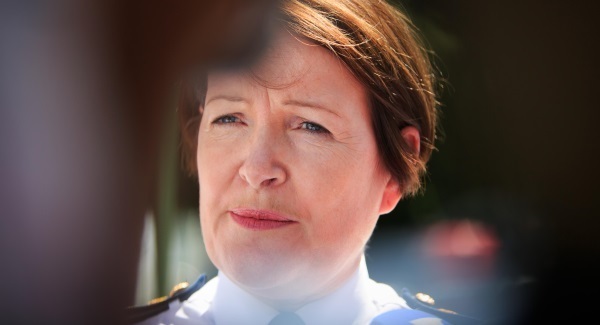
On appointment to the role of commissioner three years ago, she pledged to eliminate the negative aspects of garda culture, and accentuate the positive.
Yet her tenure ultimately demonstrated that she was not capable of standing apart from all she’d known and learned to effect real change.
She promised much when she was initially appointed as interim commissioner in March 2014 and ultimately confirmed in the job in November that year. She was going to reform the force. She was going to listen to “our critical friends” inside the ranks of An Garda Siochana. She was going to do things differently.
If anybody was capable of changing from within, then it was Ms O’Sullivan. Sheer ability and drive had seen her rise through a male dominated bastion all the way to the top.
The word from government following the interview process was that she was far and away the best candidate. In terms of ability, experience and knowledge of the workings of the force, that is not in doubt.
The vacancy arose following the retirement of Martin Callinan who had become immersed in a number of controversies around the ticket fixing scandal, the Maurice McCabe affair and relations with GSOC.

Acutely aware of how her predecessor handled these matters, Ms O’Sullivan fashioned herself as a new broom. And for a while the public pronouncements and management spiel about being on a “journey” made all the right noises.
In September 2014, when the issue of ticket fixing arose again, she astutely seconded McCabe to the Professional Standards Unit to fix it. And she was fulsome in her praise of his work.
The first alarm bells really sounded days after publication of the O’Higgins report into McCabe’s complaints of criminal investigations in May 2016.
It emerged through this newspaper that behind the closed doors of the commission, her counsel had stated that he was instructed to attack McCabe’s integrity.
O’Higgins was told that it would be demonstrated that McCabe had made his complaints out of a grudge against the force. The line of attack was terminated when McCabe produced a tape recording of a meeting in which he had been alleged to have expressed this grudge.
The Disclosures Tribunal currently sitting will determine whether or not Ms O’Sullivan was anyway involved in an attempt to get at McCabe. However, her reaction, and particularly her failure to even contact McCabe - who believed he’d been done a grievous wrong - spoke volumes. The rethoric about “listening to our critical friends” began to ring hollow.
The Templemore funding controversy showed the commissioner in a similar light. As with the Maurice McCabe case, Templemore was largely a legacy issue. But the evidence that she was reluctant to drag it out into the open saw another major crack appear in the shaft of her new broom.

Details of a critical meeting in July 2015 with the civilian head of human resources John Barrett was hotly disputed between the two. Barrett claimed he had laid out in detail the financial irregularities at the training college. Noirin claimed the opposite. Most observers gave greater credence to Barrett’s version.
The upshot was that the Commissioner did not inform the Comptroller and Auditor General of the irregularities days later, and didn’t inform the Government for months.
The old failing of brushing the bad stuff under the nearest carpet had come back to haunt her. A new broom would have come out immediately with hands up, pointing to the past.
The breadth test scandal and erroneous prosecutions for road traffic offences, the latest controversy to dog the force was just confirmation that little has changed under Ms O’Sullivan’s stewardship.
Her dealing with the Policing Authority were also marked by testiness, obfuscation, and delay in addressing awkward queries.
In recent months, each new piece of news or appearance before a public body has brought calls from opposition politicians for her resignation. There is no doubt that she was under tremendous pressure for an extended period that must have impacted on all facets of her life.
Morale within the force was also badly affected with the succession of scandals and the commissioner’s response to them.

In her resignation statement she claimed that she had been the subject of an unending cycle of “questions, instructions and public hearings” that were taking up all her time and impacting on her efforts to effect change.
Unfortunately, the real problem was the manner in which she dealt with these, many legacy, issues.
Repeatedly, and possibly instinctively, she reached for the old way of doing things. Delay, deny, brush away, spin, do anything that will minimise or prevent any scandal being visited on the force which reflects badly on the management in situ.
That was precisely what she had pledged to change and she had shown herself incapable of leading in that regard.
Her record prior to 2014 is exemplary and trail blazing in terms of her gender. However, it’s difficult to escape the conclusion that the commissioner’s job, under the prevailing circumstances, proved to be too big for her. The cultural leap required was just too great.